
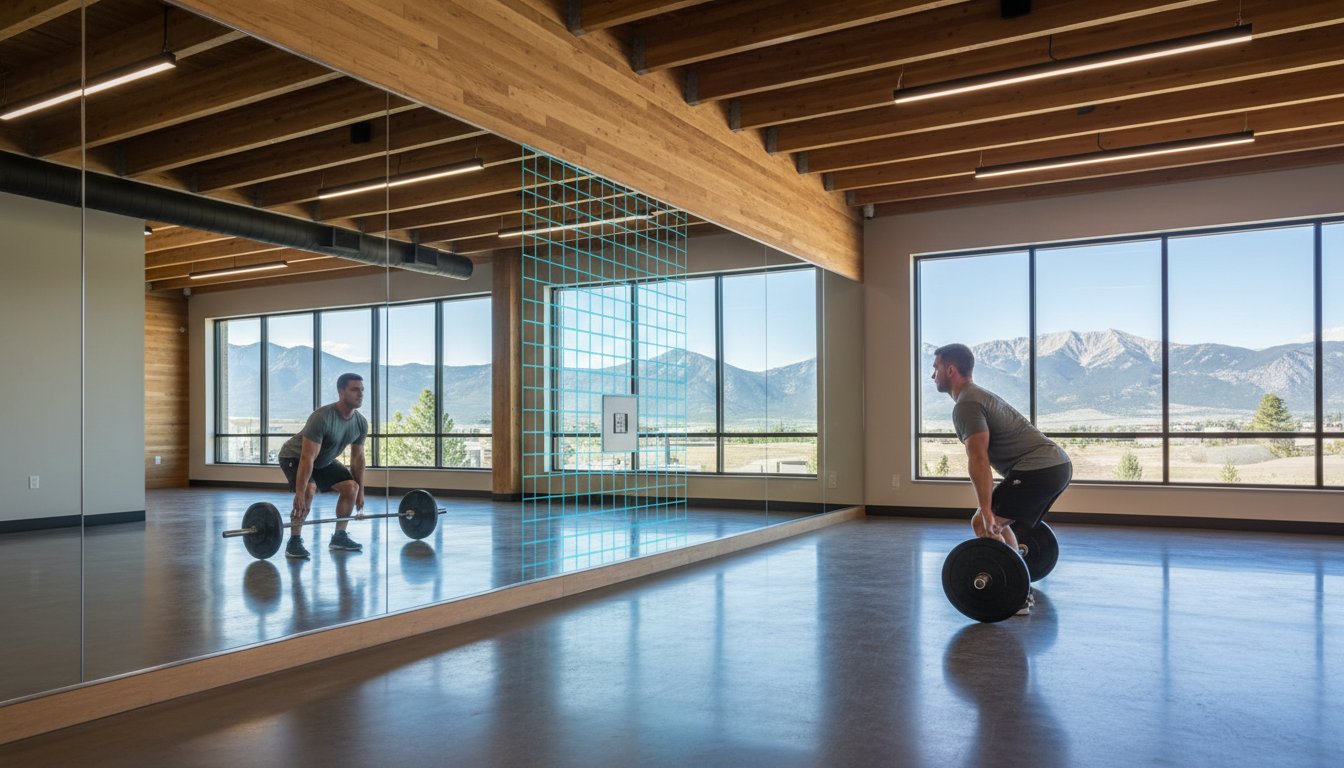
Over 70% of gym members now prioritize strength training as their primary reason for joining a facility, which transforms the humble wall mirror from a simple accessory into a vital architectural tool for performance. When you invest in a mirror installation for commercial gym environments, you aren’t just hanging glass; you’re defining the spatial boundaries and safety standards of a high-performance zone. We recognize that the fear of glass shattering in high-traffic areas or the frustration of distorted reflections can undermine even the most sophisticated fitness center designs.
Precision is the hallmark of a truly professional space. You deserve a result where every panel aligns perfectly around electrical outlets and HVAC vents without compromise. This guide details how bespoke engineering and 3D laser measurements elevate Utah fitness facilities through meticulous craftsmanship. We’ll explore the technical shift toward 3/8-inch or 1/2-inch thickness for superior durability, the nuances of safety compliance, and the project management steps required to achieve a seamless, wall-to-wall aesthetic. Discover how technical mastery turns a complex installation into a lasting statement of quality and member protection.
Key Takeaways
- Master the technical requirements of high-performance glass, including the necessity of specialized mirror mastic and specific thickness standards for long-term structural integrity.
- Understand how 3D laser measuring eliminates the margin for error, ensuring a flawless mirror installation for commercial gym environments with complex architectural layouts.
- Evaluate the long-term value of bespoke, seamless wall-to-wall mirrors compared to standard retail kits that often compromise both safety and visual continuity.
- Explore the strategic impact of precision-aligned reflections on athlete biomechanics and the overall spatial perception within modern boutique and large-scale fitness studios.
- Learn how leveraging decades of custom glass expertise in Utah guarantees a zero-error fabrication process that respects the sophisticated architectural vision of your facility.
The Strategic Role of Mirror Systems in Commercial Fitness Environments
A sophisticated fitness facility requires more than just equipment; it demands an environment that fosters precision and safety. In this context, a mirror installation for commercial gym use acts as a vital architectural element rather than a mere decorative afterthought. These systems provide the immediate biomechanical feedback necessary for athletes to monitor their form and prevent injury during high-intensity training. While the history and types of mirrors shows how these surfaces have evolved from simple polished metals to advanced silvered glass, the modern commercial standard requires a level of engineering that standard residential products cannot match.
Standard residential mirrors often fail under the rigors of a commercial setting. They’re typically too thin, which leads to significant flexing that distorts the reflection. Even worse, they lack the structural backing and safety glazing required to withstand the vibrations and occasional impacts common in a high-traffic weight room. Our approach to custom glass Utah projects emphasizes a marriage between durability and luxury. We utilize thicker, high-grade glass that remains perfectly flat, ensuring that the visual experience matches the premium nature of the facility while meeting strict safety codes.
Visual Expansiveness in Utah Commercial Architecture
Utah’s unique architectural landscape, from the expansive vistas of Park City to the dense urban pockets of Salt Lake City, requires a tailored approach to light and space. In mountain-view studios, we position mirrors to capture and redistribute natural light, effectively bringing the outdoors inside. In smaller urban gyms, precision-placed glass creates a profound sense of depth that prevents the space from feeling claustrophobic. This balancing act maintains an aesthetic of quiet elegance while fulfilling the high-impact functional needs of a professional training environment.
The Psychology of the Professional Reflection
The quality of a reflection directly influences how a member perceives their progress and your brand. Low-quality mirrors often suffer from a “funhouse effect,” where slight waves in the glass distort the user’s body. This subtle visual failure can lead to dissatisfaction and a perceived lack of professionalism in the facility’s management. By integrating distortion-free glass with modern lighting systems, we eliminate these distractions. A clear, crisp reflection reinforces the athlete’s focus, making the mirror a silent partner in their performance and a cornerstone of member retention.
Engineering the Perfect Reflection: Technical Specs and 3D Precision
Engineering a mirror installation for commercial gym spaces requires a meticulous approach to material selection and spatial analysis. While standard mirrors often rely on thinner substrates, true commercial-grade systems utilize 1/4 inch glass with superior silvering quality to prevent oxidation in humid fitness environments. This thickness provides the necessary rigidity to maintain a flat surface across large spans, ensuring that athletes receive an accurate representation of their form without the visual ripples found in inferior products. The quality of the silvering is equally critical; it must be robust enough to resist the chemical cleaners and ambient moisture typical of a high-performance training facility.
Structural realities often present challenges that traditional tape measurements cannot resolve. Walls are rarely perfectly plumb, and ceiling slopes can vary by fractions of an inch over a long run. We employ 3D laser measuring to capture these environmental irregularities with sub-millimeter precision. This technology allows us to pre-fabricate panels that fit the existing architecture exactly, eliminating the need for unsightly gaps or heavy shimming during the mounting process. This level of accuracy is what separates a standard fit from a truly bespoke architectural installation.
Safety is anchored in strict adherence to federal safety standards for architectural glazing. Category II safety backing is an essential component of this compliance, particularly in high-traffic zones where equipment is constantly in motion. Safety backing is a protective film applied to the rear of the mirror that prevents glass fallout in the event of a catastrophic impact. This engineering detail ensures that even if a heavy weight strikes the surface, the glass remains adhered to the backing rather than shattering into dangerous shards on the training floor.
Glass Selection: Tempered vs. Safety Backed
Choosing between tempered glass vs annealed glass depends on the specific risk profile of the training zone. Tempered mirrors offer higher impact resistance but can sometimes exhibit slight visual distortion due to the heat-treating process. For most professional fitness environments, we recommend high-quality annealed glass equipped with Category II backing to prioritize visual clarity while maintaining strict shatter-resistance. This approach minimizes liability while maximizing the aesthetic experience for your members.
Precision Cutouts for Integrated Facilities
Modern fitness centers are complex hubs of technology and utility. A successful mirror system must seamlessly accommodate integrated components without compromising the structural integrity of the glass. We engineer precise cutouts for:
- Electrical outlets for cardio equipment and member charging stations
- Structural mounts for digital displays or integrated sound systems
- Wall-mounted training rigs, TRX systems, or cable crossover machines
Achieving edge-to-edge alignment across multiple panels requires zero-error fabrication. Each cutout is engineered into the glass before it arrives on site, allowing for a flush, integrated look that appears as part of the building’s core structure. If you are planning a facility upgrade, consulting with a specialist in commercial glass installation early in the design phase ensures these technical details are handled with architectural grace.
Custom Fabrication vs. Standard Mirror Kits: A Comparative Analysis
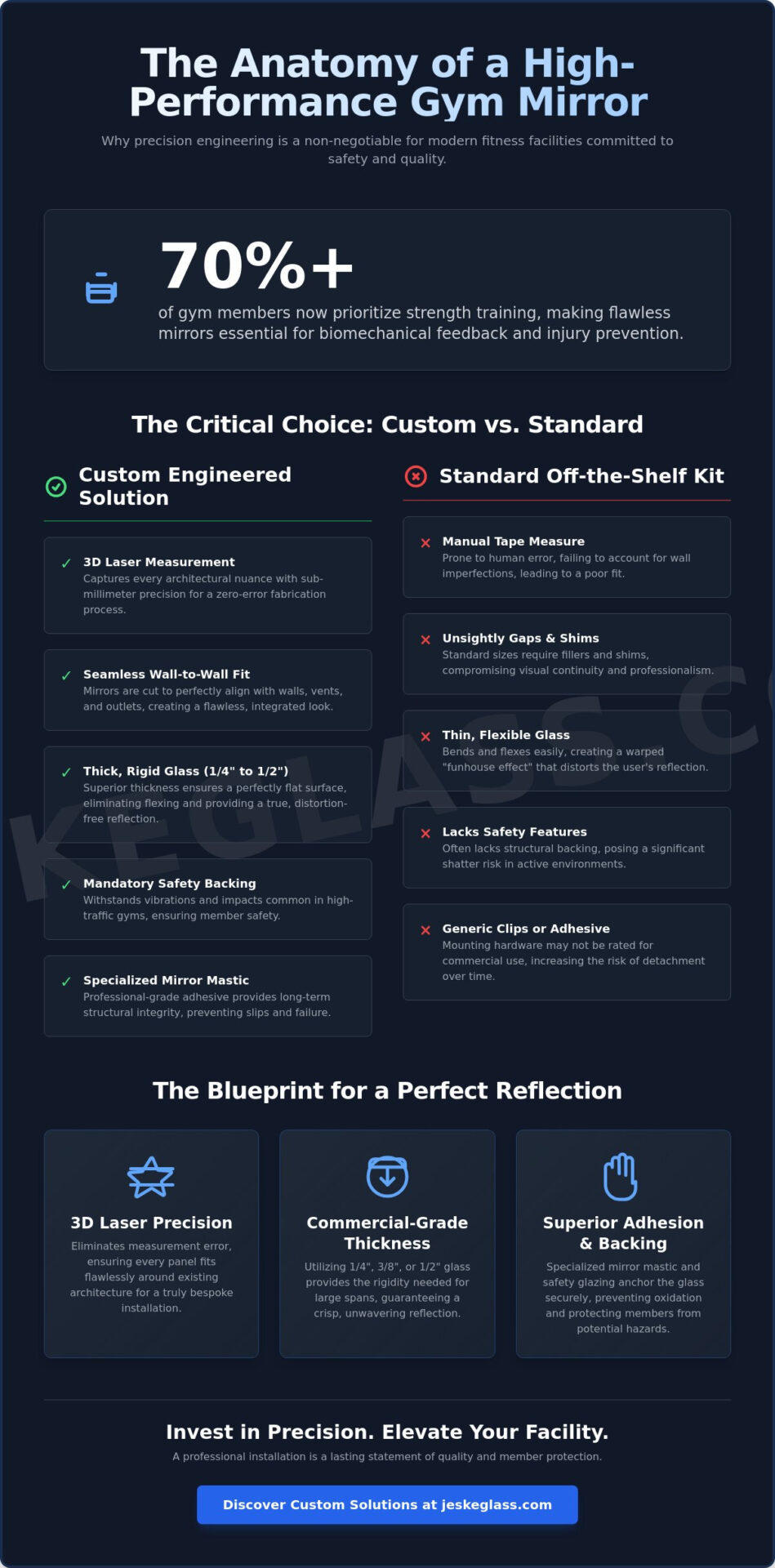
Choosing a professional mirror installation for commercial gym environments is a decision between a temporary amenity and a permanent architectural asset. Retail mirror kits, often marketed as “ready-to-ship” solutions, prioritize convenience over structural longevity. These standardized panels frequently rely on inferior silvering processes that lack the resilience required to withstand the constant humidity and ambient sweat found in a high-performance training facility. Over time, low-grade mirrors often develop “black edge” oxidation, a telltale sign of silvering failure that compromises the facility’s professional aesthetic. In contrast, custom-fabricated glass is engineered with premium silvering and protective sealants, ensuring the reflection remains crisp and the edges pristine for decades.
The psychological impact of mirrors in gyms underscores why visual fidelity is non-negotiable for member retention. When a gym relies on a series of small, disconnected panels, the resulting “paneled” look creates visual breaks that disrupt an athlete’s focus and perception of space. Custom mirror installation for commercial gym settings allows for massive, seamless spans that eliminate these gaps. This creates a continuous, immersive environment that reflects the premium nature of the brand. Beyond aesthetics, these bespoke installations are treated as capital improvements that add tangible value to the commercial property rather than being viewed as a consumable expense.
The Problem with “One Size Fits All” in Utah Gyms
Modern Utah architecture, particularly in the high-ceilinged industrial spaces of Salt Lake City or the expansive mountain-modern studios of Park City, rarely accommodates standard 6×8 panels. These pre-cut kits often leave awkward foot-long gaps at the top or bottom of the wall, which collect dust and break the architectural lines of the room. Custom widths allow us to align glass seams with floor patterns or structural columns, creating a deliberate, designed appearance. Additionally, bespoke systems are engineered to handle the high vibrations of a powerlifting zone, utilizing mechanical fasteners that far exceed the safety of the adhesive-only methods found in DIY kits.
Aesthetic Integration and Hardware Finishes
The final character of a mirror system is defined by its edge work and mounting hardware. While kits typically offer limited options, custom projects allow for a choice between a polished flat edge for a modern, minimalist look or beveled edges for a touch of classic elegance. We carefully select J-molds and Z-clips that complement existing gym hardware, such as chrome racks or matte black cable machines. For facilities seeking a truly high-end finish, concealed mounting systems can be utilized to create a “floating” glass effect, where the mirrors appear to hover against the wall, free from visible brackets or screws.
Planning Your Installation: Site Assessment and Structural Integrity
The success of a mirror installation for commercial gym facilities is determined by the hidden structural environment long before the first glass panel arrives on site. We begin every project with a rigorous evaluation of the wall substrate. Whether the facility utilizes standard drywall, reinforced concrete, or light-gauge metal studs, each material requires a specific anchoring strategy to ensure the glass remains immobile under the stress of a high-energy training floor. Relying on superficial mounting techniques is a significant liability. Instead, we focus on identifying structural studs and load-bearing points that can support the substantial weight of 3/8-inch or 1/2-inch architectural glass without risk of sag or detachment.
The choice of adhesive is equally critical to the long-term safety of the system. We utilize specialized mirror mastic, an engineering-grade bonding agent designed to remain flexible over decades. Unlike standard construction adhesives, true mirror mastic doesn’t become brittle or chemically attack the silvering on the back of the glass. This flexibility allows the mirror to expand and contract slightly as the building settles or as temperatures fluctuate in high-intensity zones like hot yoga or indoor cycling studios. Proper ventilation must be coordinated during this phase; excessive moisture trapped behind a mirror without adequate airflow can lead to premature silvering degradation and edge rot.
Effective project management involves seamless coordination with other trades. When we handle commercial glass installation Provo projects, we work alongside electricians and HVAC contractors to ensure that cutouts for outlets and vents are perfectly positioned before the glass is mounted. This collaborative approach prevents costly field adjustments and ensures that the final aesthetic is as clean as the original architectural rendering. If you’re ready to secure your facility’s future with a precision-engineered solution, explore our full range of commercial glass installation services to see how we manage these complex variables.
The Site Assessment Checklist
Flatness is the primary enemy of a perfect reflection. Even a minor bow in a wall can cause a noticeable distortion in the glass, leading to user disorientation. Our checklist includes a laser-level verification of wall flatness, a review of delivery logistics for multi-story commercial buildings, and an assessment of the wall’s ability to handle heavy mechanical fasteners. We also identify any potential vibration sources from nearby cardio equipment that could affect the stability of the mounting hardware over time.
Installation Methods for High-Traffic Zones
In high-traffic zones, we advocate for a redundant mounting system. This involves combining high-strength adhesive with mechanical support, such as J-molds or Z-clips, to provide a secondary fail-safe. For expansive wall-to-wall designs, we incorporate expansion joints. These small, calculated gaps allow for natural building movement without putting pressure on the glass panels. After the mount is complete, we provide clear guidance on post-installation curing times, typically 24 to 48 hours, to ensure the facility’s downtime is managed with professional efficiency and total safety.
Partnering with Jeske Glass for Utah Commercial Excellence
Securing a premium mirror installation for commercial gym environments requires more than technical proficiency; it demands a partner who understands the intersection of architectural vision and structural performance. With over 70 years of combined experience in Utah’s custom glass industry, Jeske Glass has established a legacy of dignity and precision. We don’t view ourselves as mere suppliers, but as master craftsmen and collaborators who translate complex design requirements into enduring physical assets. Our commitment to 3D laser accuracy and zero-error fabrication ensures that every project, regardless of scale, reflects the highest standards of professional excellence.
Our work spans the diverse architectural landscapes of the Intermountain West, from the sophisticated mountain modern aesthetics of Park City’s luxury resorts to the high-density urban fitness centers in Salt Lake City. Each environment presents unique challenges, from managing the light-reflective properties of high-altitude studios to maximizing the footprint of narrow metropolitan gyms. By choosing a local specialist, you gain the stability of a partner who is deeply rooted in the Utah Valley and Salt Lake County communities, possessing a portfolio that demonstrates a mastery of the region’s specific commercial glass demands.
Local Expertise in Park City and Salt Lake County
Navigating local building codes and safety regulations is a critical component of any commercial fitness project. We maintain a profound understanding of Utah’s specific architectural requirements, ensuring that every mirror installation for commercial gym use meets or exceeds regional safety mandates. Our portfolio includes successful installations in premier facilities across the Utah Valley, where we’ve solved complex engineering hurdles with grace. Our white-glove delivery and installation process ensures that every architectural glass component is transported with extreme care and mounted with surgical precision by our in-house master installers.
Requesting Your Bespoke Consultation
Initiating a project with us begins with a thorough site walkthrough to evaluate your facility’s unique structural needs. To prepare for this initial consultation, it’s helpful to have your floor plans and lighting specifications available, though our 3D scanning technology will ultimately capture the precise dimensions of your space. The timeline from the initial 3D scan to the final glass placement is managed with professional transparency, ensuring your facility remains on schedule. We invite you to elevate your facility with a Jeske Glass custom mirror system and experience the difference that decades of specialized expertise can make in your built environment.
Architectural Precision for the Modern Fitness Landscape
A high-performance training facility is defined by the quality of its structural details and the safety of its members. We’ve explored the critical importance of technical glass specifications, the necessity of Category II safety backing, and the transformative power of 3D laser precision. Choosing a bespoke mirror installation for commercial gym environments ensures that your space remains free from visual distortion while upholding the highest standards of architectural integrity. By prioritizing custom fabrication over standardized kits, you invest in a capital improvement that enhances both the aesthetic value and the functional longevity of your facility.
With over 70 years of local Utah glass expertise, Jeske Glass remains dedicated to the pursuit of perfection in every project. We specialize in high-end commercial and residential glass, utilizing advanced 3D laser measuring to guarantee a perfect fit that respects the unique contours of your building. We invite you to Request a Free Commercial Mirror Estimate and begin the process of refining your facility with a partner who understands the weight of professional craftsmanship. It’s time to create an environment where every reflection inspires confidence and excellence.
Frequently Asked Questions
What is the best glass thickness for commercial gym mirrors?
Commercial-grade mirrors require a minimum thickness of 1/4 inch to ensure structural rigidity and minimize visual flexing across large wall spans. For high-impact environments or extra-large panels, specifying 3/8-inch or 1/2-inch glass provides superior durability and a flatter reflection. This increased mass helps the glass resist the vibrations common in weightlifting zones, which maintains a premium aesthetic and prevents the wobbling effect found in thinner residential glass.
How do I prevent my gym mirrors from distorting the reflection?
Distortion is usually the result of thin glass or uneven wall substrates that force the mirror to bend during the mounting process. Utilizing 1/4-inch or thicker glass and verifying wall flatness with 3D laser technology before mounting prevents these visual ripples. Professional installers use specialized mirror mastic and mechanical fasteners to ensure the glass remains perfectly flat against the architectural surface, providing an accurate reflection for biomechanical feedback.
Is safety backing required for mirrors in public fitness centers?
Category II safety backing is a standard requirement for any mirror installation for commercial gym facilities to comply with modern safety protocols. This adhesive film remains bonded to the rear of the glass, which prevents dangerous shards from falling if the mirror sustains a heavy impact from a weight or piece of equipment. It’s a critical liability protection measure that ensures member safety in high-traffic training areas and prevents catastrophic glass fallout.
Can mirrors be installed over irregular or curved walls?
Mirrors can be adapted to irregular or curved surfaces through specialized fabrication and mounting techniques. While large flat panels are the industry standard, custom-cut segments or faceted installations allow glass to follow the unique contours of modern Utah architecture. This process requires precise site assessments and custom engineering to ensure each panel aligns seamlessly with the building’s structural irregularities without compromising the integrity of the reflection.
How does 3D laser measuring improve the mirror installation process?
3D laser measuring captures the precise dimensions of a space with sub-millimeter accuracy, identifying out-of-plumb walls that traditional tape measures often miss. This data allows for zero-error fabrication of glass panels and complex cutouts for electrical outlets or wall-mounted equipment. The result is a faster installation with a perfect, edge-to-edge fit that requires no on-site adjustments, ensuring the final result matches the original architectural vision exactly.
What is the difference between residential and commercial gym mirrors?
Commercial mirrors are engineered for extreme durability, utilizing thicker glass and higher-quality silvering that resists the humidity and ambient sweat of active environments. Unlike residential products, a mirror installation for commercial gym use includes Category II safety backing and robust mechanical mounting systems like J-molds or Z-clips. These features prevent the oxidation and structural failures often seen when retail-grade mirrors are placed in professional fitness settings.
How long does a typical commercial mirror installation take?
The on-site installation phase typically spans one to three business days, depending on the square footage and the complexity of integrated cutouts. This timeline follows a dedicated fabrication period where the glass is custom-cut and treated with safety backing in a controlled environment. Once the mounting is complete, a curing period of 24 to 48 hours is usually recommended before the mirrors are subjected to the high vibrations of a fully operational weight room.
How do I clean and maintain large-format mirrors in a high-sweat environment?
Large-format mirrors should be cleaned with a non-ammonia, pH-neutral glass cleaner and a soft microfiber cloth to protect the delicate silvering. It’s important to apply the cleaner directly to the cloth rather than spraying the glass, as liquid seeping behind the edges can cause permanent oxidation known as “black edge.” Regular maintenance with the correct materials ensures the reflection remains crisp and free from the corrosive effects of cleaning chemicals and salt-heavy moisture.