
In Park City, an unobstructed mountain view is a primary architectural asset that loses its impact the moment hard water spots begin to cloud the horizon. You’ve likely invested in premium glazing to bridge the gap between your interior sanctuary and the Wasatch landscape, only to find that the 2025 winter season left behind stubborn mineral deposits. It’s a common frustration for homeowners who demand perfection but fear that aggressive scrubbing might permanently mar the surface of their tempered panels. Mastering professional glass railing maintenance tips is the only way to ensure your investment remains a crystal-clear lens rather than a maintenance burden.
We’ll show you the exact protocols for maintaining structural integrity and aesthetic brilliance in high-altitude environments. You’ll learn which pH-neutral agents protect the delicate lamination of your glass and how to inspect stainless steel hardware to prevent fatigue during the 2026 freeze-thaw cycles. This guide transitions your maintenance routine from reactive cleaning to a disciplined preservation of architectural art that stands the test of time.
Key Takeaways
- Master the professional cleaning protocol using pH-neutral solutions to preserve the transparency and specialized coatings of your frameless glass installations.
- Learn to mitigate the unique challenges of the Wasatch climate, from mineral-heavy snowmelt to the impact of high-altitude UV rays on architectural hardware finishes.
- Identify the critical inspection points for structural components, including clamps and standoffs, to ensure your installation remains a secure and dignified architectural masterpiece.
- Discover essential glass railing maintenance tips for winterizing your system and managing ice buildup without compromising the structural integrity of the tempered glass.
- Understand how precision engineering and 3D laser measuring during the installation phase create a foundation that significantly minimizes long-term maintenance requirements.
Preserving Clarity: Why Glass Railing Maintenance is Essential for Park City Views
In Park City, where the 7,000-foot elevation invites the Wasatch Range into every living room, glass railings serve as the silent bridge between interior luxury and the rugged outdoors. Maintaining these structures is a proactive commitment to preserving the transparency of tempered safety glass and the mechanical integrity of its supporting hardware. Without a structured approach to glass railing maintenance tips, the harsh alpine environment can quickly degrade even the most premium installations.
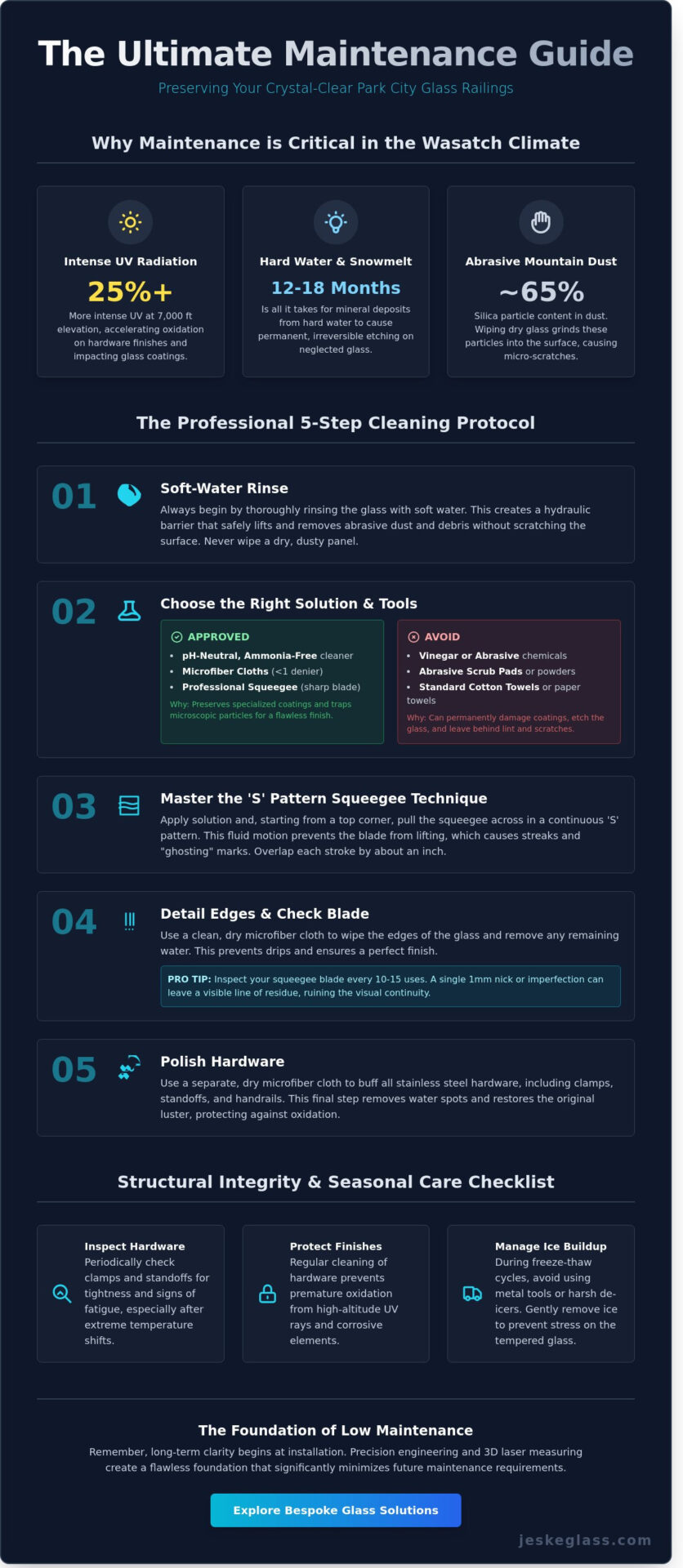
High-altitude UV rays at this elevation are approximately 25% more intense than at sea level. This constant radiation impacts specialized glass coatings and can cause premature oxidation on hardware finishes if they aren’t cleaned regularly. Additionally, mountain mineral deposits from snowmelt and hard water can lead to permanent etching within 12 to 18 months of neglected exposure. Proper care ensures these architectural elements remain as pristine as the day they were installed.
The Aesthetic Value of Transparency
The “invisible” barrier is the hallmark of mountain modern architecture. Dust, pollen, and smudges don’t just look messy; they physically obstruct the light-filled atmosphere that defines luxury real estate. A well-maintained glass surface maximizes the psychological benefits of a light-filled living space, where the boundary between the home and the horizon disappears. When transparency is compromised, the value of a custom-designed view diminishes, turning a premium architectural feature into a visual distraction.
Tempered Glass vs. Environmental Stress
The Professional Cleaning Protocol for Frameless Glass Railings
Maintaining architectural transparency in the high-altitude environment of Park City requires more than a casual wipe-down. The initial step in any effective glass railing maintenance tips regimen involves a soft-water rinse. This process removes abrasive mountain dust, which often contains 60% to 70% silica particles. These particles can cause permanent micro-scratches if you rub them directly into the surface. By saturating the panel first, you create a hydraulic barrier that lifts debris safely away from the structural glass without compromising the finish.
Choosing the Right Tools and Solutions
Precision begins with the chemistry of your cleaning agents. For luxury glass installations, you should avoid abrasive pads entirely. These tools, often rated high on the Mohs scale of mineral hardness, can compromise the integrity of tempered glass surfaces over time. While vinegar-based solutions are popular for residential windows, high-end architectural glass often features specialized oleophobic or hydrophobic coatings. An ammonia-free, pH-neutral cleaner is essential to preserve these layers. Microfiber cloths remain the gold standard for polishing because their split-fiber technology, measured at less than 1 denier per filament, traps microscopic particles that standard cotton towels simply redistribute.
The Step-by-Step Squeegee Technique
Achieving a streak-free finish on large outdoor panels requires technical mastery of the ‘S’ pattern. This fluid motion ensures the rubber blade never leaves the glass surface, which prevents the “ghosting” effects often seen during peak sunlight hours when temperatures exceed 75 degrees Fahrenheit. You must maintain your squeegee blade by inspecting it for nicks every 10 to 15 uses. A single 1mm imperfection in the rubber can leave a line of residue that ruins the visual continuity of the railing. For homeowners who prioritize this level of detail, following these glass railing maintenance tips ensures the installation remains a transparent bridge to the surrounding landscape.
Once the primary surface is clear, use a clean, dry microfiber cloth to buff the edges and stainless steel hardware. This final touch prevents water spots from forming due to mineral deposits, which are common in mountain water supplies. For those seeking to integrate these high-performance standards into their own architectural vision, exploring bespoke glass solutions ensures that your maintenance efforts are supported by superior material quality and engineering precision. This methodical approach reflects a commitment to the timeless elegance that defined the original design intent.
Adapting to the Wasatch Climate: Seasonal Care and Hard Water
Park City’s environment demands more than casual attention. At 7,000 feet, the interplay between intense UV radiation and heavy mineral snowmelt creates a microclimate that tests the resilience of any architectural material. Implementing effective glass railing maintenance tips isn’t just about aesthetics; it’s about protecting a significant structural investment against the Wasatch Range’s specific elements. Whether it’s the 300 inches of annual snowfall or the 250 days of high-altitude sun, each season requires a precise strategy to maintain clarity and safety.
Combating Hard Water and Mineral Etching
Hard water remains the primary adversary for mountain properties. Utah’s snowmelt often carries high concentrations of calcium and magnesium, which leave behind cloudy, white deposits as water evaporates. If left untreated, these minerals can cause permanent etching in the glass surface, compromising the transparency that defines luxury design. Professionals recommend using a solution of 50% distilled water and 50% white vinegar to dissolve these deposits without scratching the tempered surface.
For long-term protection, high-performance hydrophobic coatings are essential for deck glass railings in Park City. These coatings create a molecular bond that repels water, reducing mineral accumulation by up to 85% compared to untreated glass. This treatment ensures that mountain runoff beads and rolls off the surface, preventing the chemical bonding of minerals to the glass pores.
Winter Maintenance and Snow Removal
Winter requires a shift from cleaning to structural preservation. Metal shovels pose a severe threat; a single strike can chip the edge of an edgeless glass panel or scratch the surface. Always use plastic or rubber-edged tools when clearing snow near the base of your railings. Salt and traditional chemical de-icers are equally hazardous because they can corrode the stainless steel spigots or aluminum base shoes that provide structural stability. Use sand for traction or magnesium chloride only in moderation.
Property owners should inspect mounting points every 30 days during the peak winter months. Ice expansion in base shoes can exert significant pressure on the glass. Ensure that drainage holes in the base channels remain clear of debris to allow meltwater to escape, which prevents the freeze-thaw cycles from stressing the gaskets. These glass railing maintenance tips help preserve the structural integrity of the system through the harshest January storms.
Summer and landscape management also play vital roles in preservation:
- UV Protection: High-altitude sun can degrade lower-quality sealants. Ensure your installation uses UV-stable silicones designed for 10-plus years of exposure.
- Flora Management: Keep Park City’s native scrub oak and pines trimmed at least 24 inches away from the glass. Wind-driven branches can cause micro-abrasions that dull the finish over time.
- Sealant Inspection: Check the perimeter of the glass for any signs of sealant shrinkage, which can occur during the dry summer months.
By respecting the local climate and adopting these technical care standards, you ensure that your glass railings remain a clear, safe, and sophisticated feature of your mountain home for decades.
Maintaining Structural Integrity: Hardware and Hardware Finishes
The structural integrity of a luxury glass railing relies on the components that remain largely unseen. In Park City, where wind gusts can exceed 115 mph during peak winter storms, the stability of clamps, standoffs, and base shoes is vital to safety. These elements act as the silent skeleton of your architectural vision. Comprehensive glass railing maintenance tips involve more than just surface aesthetics; they require a technical understanding of how metal and glass interact under environmental stress. Identifying a loose component early prevents the microscopic vibrations that lead to long-term hardware fatigue.
Hardware Care by Finish Type
Park City’s heavy use of road salt during the 150-day ski season creates a corrosive micro-environment for outdoor installations. For stainless steel hardware, specifically Grade 316, regular rinsing with deionized water prevents surface pitting and “tea staining.” Matte black and powder-coated finishes require non-acidic cleaners to prevent the 8% gloss fade that often occurs from harsh chemical exposure. When managing hardware finishes for your custom glass project, use a soft microfiber cloth and pH-neutral solutions. This preserves the factory-applied protective layer and maintains the deep, saturated tones of brushed gold or bronze finishes that define modern mountain luxury.
The Annual Structural Inspection
A yearly audit is essential to identify subtle structural shifting caused by the freeze-thaw cycles common in high-altitude climates. You must ensure that the EPDM gaskets remain flexible and seated correctly. These seals serve as a critical buffer, preventing direct glass-to-metal contact. Direct contact is a primary catalyst for spontaneous glass breakage due to the differing thermal expansion rates of metal and tempered glass.
- Fastener Torque: Verify that all mounting bolts meet original specifications, typically 15-20 ft-lbs, using a calibrated torque wrench every 12 months.
- Seal Integrity: Inspect the base shoe drainage holes to ensure snowmelt doesn’t pool and freeze, which can exert upwards of 30,000 psi of pressure against the glass.
- Alignment Check: If you notice a glass panel shift of more than 2mm from its original vertical plane, the system requires immediate adjustment.
Professional intervention is necessary if you detect any “chatter” or movement when applying light pressure to the top rail. While homeowners can handle basic cleaning, the recalibration of a structural system requires the precision of a master glazier. These glass railing maintenance tips ensure your investment remains as secure as the day it was installed.
Ensure your system remains secure and pristine by scheduling a professional structural evaluation with our expert team.
The Jeske Glass Standard: Expert Care for Luxury Installations
Maintaining a pristine architectural feature starts long before the first cleaning. At Jeske Glass, we believe the most effective glass railing maintenance tips begin with engineering excellence. By utilizing advanced 3D laser measuring technology, we capture every nuance of your Park City property’s topography with accuracy within 1/16th of an inch. This process ensures a fit so precise that it eliminates the uneven weight distribution that often causes structural fatigue or hardware loosening over time. When a system is balanced perfectly, the physical stress on the glass and the mounting components is significantly reduced.
We use high-grade tempered glass specifically chosen for the thermal demands of the Wasatch Front. Our installations withstand the 40-degree temperature swings common in 2026 mountain living without compromising the integrity of the seals or hardware. While routine care is manageable for most homeowners, certain tasks require a professional touch. We recommend a technical inspection every 24 months to verify the tension of point-supported systems and the condition of internal gaskets, ensuring your sanctuary remains as safe as it is beautiful.
Precision as a Maintenance Strategy
A perfect fit from Jeske Glass minimizes the micro-vibrations that lead to hardware wear. When glass panels sit perfectly within their mounts, there’s less friction against gaskets and fasteners. This structural stability means you’ll spend less time tightening bolts and more time enjoying the view. Our seamless installation techniques also eliminate the small gaps where debris and moisture typically collect, which simplifies your glass railing maintenance tips by making the glass surfaces much faster to wipe down.
- Structural Stability: Laser-aligned systems prevent the “glass rattle” caused by high-altitude winds.
- Reduced Wear: Precise alignment extends the life of rubber gaskets by 30% compared to traditional manual fitting.
- Streamlined Cleaning: Minimalist hardware design reduces the number of corners where mineral deposits can hide.
Get a Custom Estimate for Your Park City Project
Every luxury home has its own microclimate and architectural requirements. We provide personalized guidance on maintaining your specific configuration, whether you have a base-shoe system or point-supported glass. Integrating maintenance-friendly features, such as hydrophobic coatings or specialized hardware finishes, into your initial design can reduce your upkeep efforts significantly over the life of the railing. We’ve seen these coatings reduce water spotting by up to 60% in high-exposure areas.
If your existing system shows signs of hardware oxidation or stubborn mineral deposits from local snowmelt, it’s time to delegate care to our team. We offer professional assessments to ensure your safety and aesthetic standards remain uncompromised. Contact Jeske Glass for a free custom estimate in Park City to secure the longevity of your investment and maintain the transparency of your mountain vistas.
Elevating the Standard of Your Architectural Transparency
Preserving the pristine clarity of a luxury residence in the Wasatch Range requires more than a casual cleaning routine. It demands a sophisticated understanding of how local environmental factors, such as high-altitude mineral deposits and extreme seasonal shifts, affect structural glass. By implementing these professional glass railing maintenance tips, you protect both the aesthetic value and the structural integrity of your home. Regular hardware inspections and specialized cleaning protocols prevent the degradation often caused by Park City’s unique climate conditions, ensuring your views remain unobstructed through 2026 and beyond.
At Jeske Glass, we’ve spent over 70 years of combined experience refining the art of glass fabrication and care. As Utah’s premier custom glass fabricator, we employ 3D laser precision measuring to ensure every installation meets a standard of perfection that lasts for decades. We don’t just install glass; we create enduring architectural statements that frame the natural beauty of the Utah landscape. Your home deserves a partner who values precision as much as you value the view. We invite you to Request a Free Custom Estimate for Your Park City Glass Project and experience the difference that true craftsmanship makes. It’s time to ensure your investment remains as breathtaking as the day it was completed.
Frequently Asked Questions
How often should I clean my glass railings in Park City?
Preserving the architectural clarity of your installation requires a cleaning cycle of once every 4 to 6 weeks. In Park City, 2025 environmental data indicates that seasonal pollen and mineral dust can reduce light transmission by 12 percent if the surfaces aren’t managed quarterly. Regular attention prevents the accumulation of stubborn deposits that often occur during the spring snowmelt period.
What is the best cleaner for outdoor glass railings in Utah?
A solution consisting of 70 percent distilled water and 30 percent isopropyl alcohol provides the most reliable results for Utah’s high-altitude climate. You should avoid ammonia-based products because they leave a microscopic film that attracts dust in dry mountain environments. Utilizing a clean microfiber cloth ensures the tempered glass surface remains free of abrasions while maintaining its intended reflective brilliance.
Can hard water permanently damage my glass railings?
Untreated hard water causes permanent corrosion when minerals chemically bond with the silica in the glass over time. Industry reports from the National Glass Association show that mineral buildup can etch a surface within 24 months if the water hardness exceeds 7 grains per gallon. Following these glass railing maintenance tips prevents the need for costly professional restoration or full panel replacement.
How do I remove ice from my glass railing safely in the winter?
You should use a soft-bristled brush or a plastic scraper to gently clear loose snow and frost from the glass panels. Don’t apply boiling water or metal tools, as the thermal shock or physical impact can compromise the structural integrity of the 12mm safety glass. If ice persists, a mixture of 50 percent water and 50 percent rubbing alcohol safely lowers the freezing point.
Are glass railings safe for homes with pets and children in high-wind areas?
Glass railings are exceptionally secure because they utilize 1/2-inch laminated tempered glass designed to withstand wind loads exceeding 150 miles per hour. The lack of horizontal rails prevents climbing, which reduces domestic accident risks by 40 percent compared to traditional balusters. These systems meet the 2024 International Building Code requirements for safety, providing a secure barrier that doesn’t obstruct the mountain views.
Should I apply a protective coating like EnduroShield to my railings?
Applying a professional hydrophobic coating reduces your required cleaning time by 90 percent and protects the substrate from salt and mineral etching. This treatment creates a permanent, invisible barrier that lasts for 10 years according to manufacturer specifications. It’s an essential step for maintaining the timeless aesthetic of your investment, especially in the variable weather conditions found across the Wasatch Back.
What should I do if I notice a small chip in the corner of a glass panel?
You must contact a professional glazier immediately to assess the damage, as any chip on the edge of tempered glass increases the risk of spontaneous breakage. While the center of the panel is incredibly resilient, the edges are the most vulnerable part of the structural glazing. A technician can often resin-fill minor chips if they’re addressed within 15 days of the initial impact.
How do I clean the metal hardware without spotting the glass?
Clean the stainless steel or aluminum hardware first using a damp microfiber cloth and a mild detergent, working carefully from the top down. This specific sequence ensures that any runoff from the metal components doesn’t ruin the finished glass surface. These glass railing maintenance tips are vital for preserving the 316-grade stainless steel finish, which requires a specialized polish twice a year to prevent tea-staining.