
What if your most significant hurdle to a modern workspace isn’t the budget, but the perception that a renovation is merely an aesthetic luxury? In Park City, where the “mountain modern” aesthetic can feel like a fleeting trend, it’s natural to worry about the long-term value of structural changes. You likely recognize that a more transparent, light-filled environment would boost morale, yet the fear of business disruption often stalls progress before the first glass partition is even ordered. Getting buy-in for an office remodel requires shifting the narrative from a vanity project to a strategic asset that maximizes light and professional transparency.
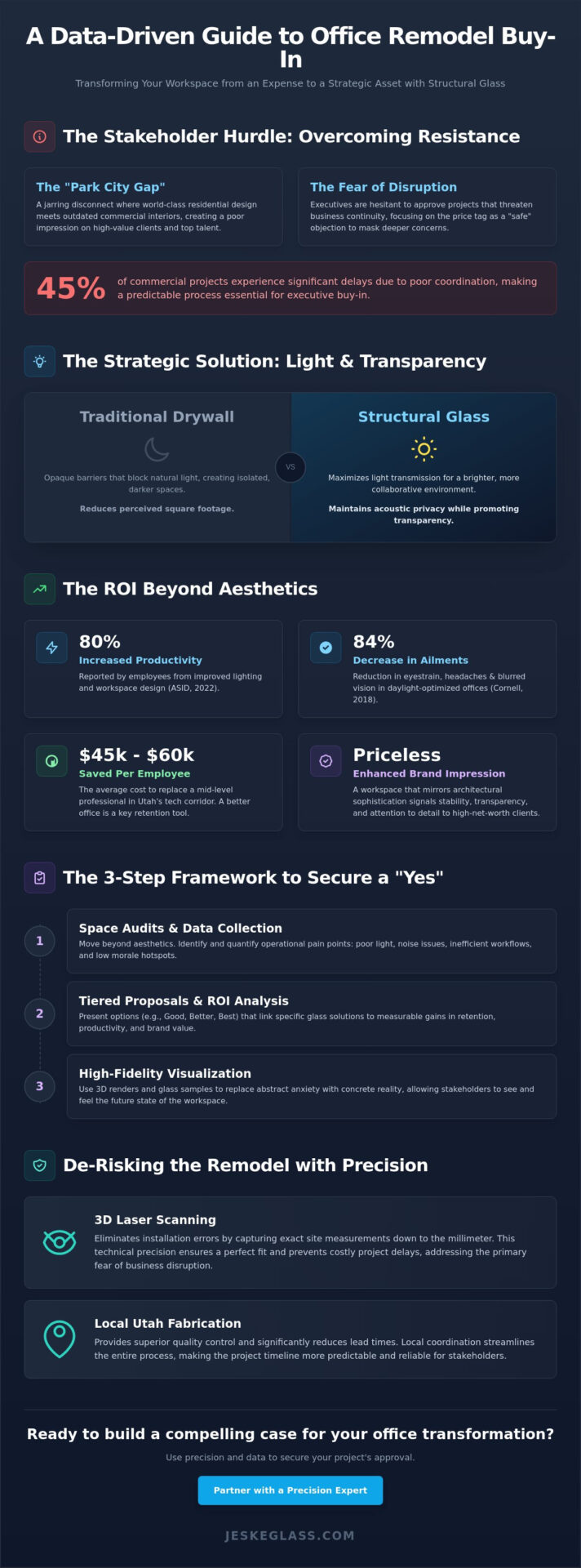
This guide provides the framework to transform a vague vision into a data-driven proposal that secures executive approval. According to a 2022 study by the American Society of Interior Designers, 80% of employees reported that improved lighting and workspace design directly increased their productivity. You’ll learn how precision planning and structural glass can improve employee retention and provide a clear roadmap for your next stakeholder presentation. We’ll examine ways to de-risk the project through technical excellence, ensuring your Park City workspace remains both timeless and functional.
Key Takeaways
- Understand how aligning financial and cultural goals bridges the gap between outdated commercial interiors and the premium architectural standards expected in Park City.
- Master the strategy of getting buy-in for an office remodel by linking transparent glass partitions to measurable gains in employee retention.
- Explore why structural glass is the essential element for modernizing workspaces, offering superior light transmission compared to traditional drywall.
- Implement a precise three-step presentation framework that uses space audits and tiered proposals to secure a definitive executive commitment.
- Learn how 3D laser scanning and local Utah fabrication provide the technical precision needed to eliminate installation errors and project delays.
Understanding the Stakes: Why Office Remodel Buy-In Fails
Securing executive approval for a workspace transformation is rarely about the color of the walls or the texture of the carpet. True buy-in is the precise alignment of financial objectives, cultural identity, and operational efficiency. Many proposals stall because they’re presented as aesthetic upgrades rather than strategic investments. When you’re getting buy-in for an office remodel, you must prove that the project mitigates specific business risks while enhancing the company’s most valuable asset: its people. In a professional environment, “it looks better” is the weakest argument you can bring to the boardroom. Executives don’t buy beauty; they buy performance and longevity.
Park City presents a unique architectural paradox often called the “Park City Gap.” While local residential projects showcase world-class glass engineering and sophisticated “mountain modern” elegance, many commercial spaces remain trapped in the design language of the late 1990s. This disconnect creates a jarring experience for high-value clients who expect a certain level of prestige. Beyond aesthetics, the primary fear for Utah business owners is the “unknown” of construction. A 2023 industry report indicated that 45% of commercial projects experience significant delays due to poor coordination, making leaders hesitant to greenlight any project that threatens business continuity.
The Psychology of Stakeholder Resistance
Resistance to change is often rooted in cost-aversion rather than a lack of vision. To move forward, you must shift the internal mindset from spending to value-creation. A deep dive into understanding change management reveals that most resistance is “silent.” Stakeholders might not voiced their concerns about noise or workflow breaks directly; instead, they’ll focus on the price tag as a safer target. Providing visual proof early in the process, such as high-fidelity renders or structural glass samples, helps bridge this psychological gap by replacing abstract anxiety with concrete reality.
The Local Market Context
In the Utah tech and service sectors, where annual employee turnover can reach 20%, the office environment is a critical recruitment tool. A “standard” office has become a liability in Park City’s competitive talent market. The rise of “Mountain Modern” design isn’t a passing trend; it’s a baseline expectation for transparency and light. Utilizing structural glass to create open vistas signals a culture of trust and safety. When the physical space reflects the brand’s commitment to innovation and transparency, the office becomes a powerful driver of retention and professional pride.
Building the Business Case: ROI Beyond the Surface
A successful proposal for a workspace transformation transcends aesthetics by addressing the financial friction of high turnover. In the Utah tech corridor, replacing a mid-level professional costs approximately $45,000 to $60,000 based on 2023 industry averages. When you’re getting buy-in for an office remodel, these figures provide the necessary weight to your argument. Structural glass partitions don’t just look modern; they solve the fundamental conflict between the need for acoustic privacy and the desire for communal light. By replacing opaque barriers with transparent glass, you effectively increase the perceived square footage of a lease, making even smaller footprints feel expansive and premium.
The “Brand Impression” ROI is equally significant for Park City firms hosting high-net-worth clients. A workspace that mirrors the architectural sophistication of a luxury residence signals stability and attention to detail. This isn’t about vanity; it’s about aligning the physical environment with the high-value services you provide. Integrating custom glass solutions into your headquarters creates a lasting visual narrative of transparency and professional excellence that resonates long after a meeting concludes.
Employee Retention and Recruitment
The competition for talent in the Silicon Slopes region has made the “Instagram-able” office a functional requirement rather than a perk. For Gen Z and Millennial hires, the workspace is a reflection of company values. Collaborative zones defined by glass partitions offer the open-office energy employees crave without the chaotic noise levels of traditional open plans. A 2018 Cornell University study found that workers in daylight-optimized offices reported an 84% decrease in eyestrain and headaches. This direct link between structural design and physical well-being is a powerful lever for securing executive approval.
Energy Efficiency and Long-Term Savings
Modern glass installations play a critical role in thermal regulation within Utah’s volatile climate. High-performance glazing helps maintain consistent internal temperatures, reducing the strain on HVAC systems during Park City’s harsh winters and bright summers. Maximizing daylight penetration also lowers operational overhead by decreasing the reliance on artificial lighting throughout the workday. Businesses in Summit County may also explore tax incentives for sustainable tenant improvements, further de-risking the initial capital expenditure and improving the long-term internal rate of return.
The Visual Power of Glass: A Tool for Modernization
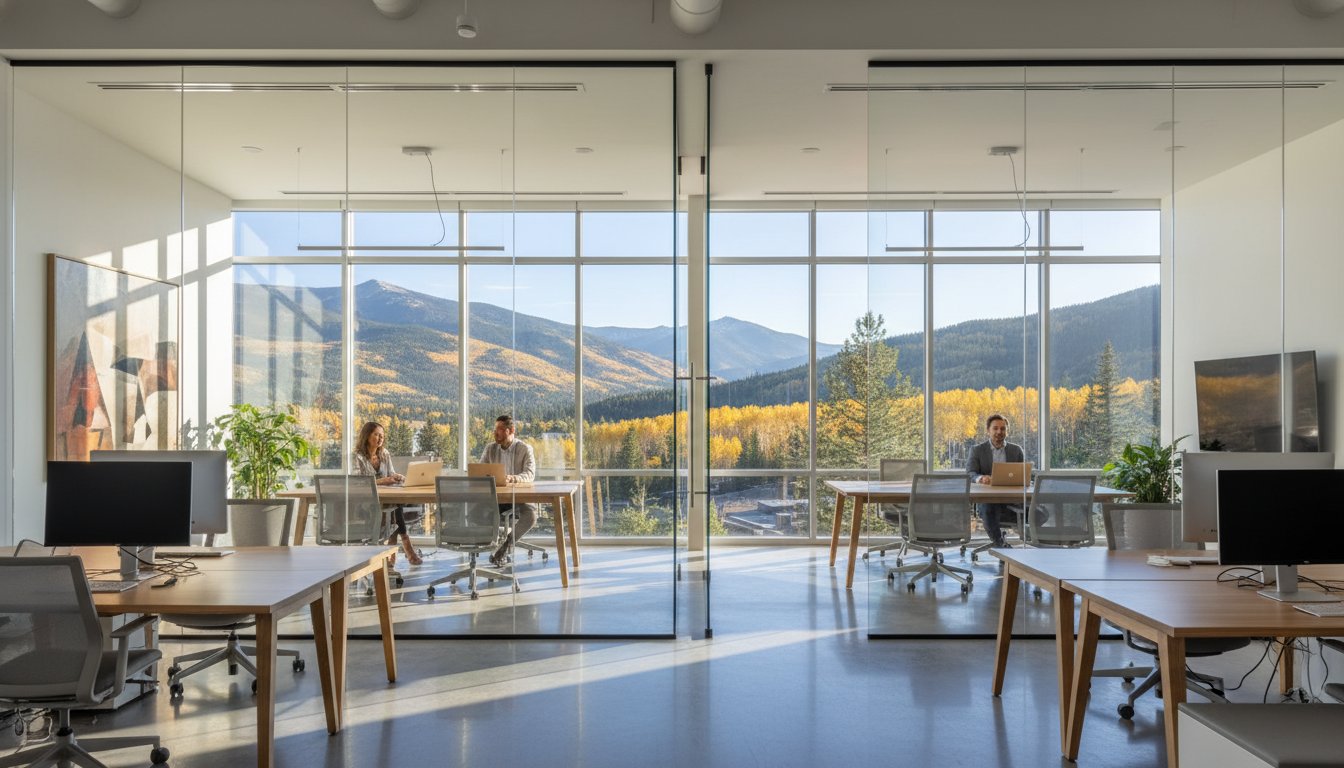
Glass is the definitive hero element in modern architectural design, offering a level of sophistication that traditional materials cannot match. While drywall partitions create rigid, light-starved corridors, structural glass introduces a sense of boundless space and professional clarity. When you’re getting buy-in for an office remodel, the immediate visual impact of glass serves as your most persuasive asset. It transforms a cramped floor plan into a premium environment that reflects the caliber of Park City business operations. By choosing transparency over opacity, you’re not just changing a layout; you’re elevating the entire brand experience for both employees and visiting stakeholders.
First impressions are established at the threshold of your headquarters. Integrating custom glass railings within a multi-level lobby or mezzanine creates an expansive atmosphere that drywall simply cannot replicate. These elements provide essential structural safety while maintaining a visual weightlessness that is central to the “Mountain Modern” aesthetic. Beyond the lobby, the primary concern of the modern office is acoustic distraction. Modern acoustic glass solutions address this by providing sound insulation ratings (STC) typically ranging from 35 to 45, ensuring that executive discussions remain confidential without retreating behind dark, heavy walls.
Transparency as a Corporate Value
Transparency is more than an architectural choice; it’s a statement of corporate culture. Glass-walled conference rooms signal a commitment to honesty and inclusion, allowing natural light to permeate the deepest parts of the floor plate. For areas requiring visual discretion, etched or frosted glass provides privacy without sacrificing the open feel. This approach has seen significant success in high-growth regions, as evidenced by recent commercial glass installation in Provo tech hubs, where 3D precision ensures a seamless fit within complex, high-performance architectural layouts.
Durability Meets Aesthetics
Glass is a remarkably sustainable long-term investment compared to traditional partitions. Unlike painted drywall, which requires repainting every 3 to 5 years and is prone to unsightly scuffs, tempered glass is incredibly durable and retains its clarity for decades. A simple maintenance routine keeps the surface pristine, debunking the myth that glass is difficult to keep clean. In the context of Park City’s specific design standards, glass remains a timeless material that doesn’t suffer from the rapid obsolescence of trendy wallpaper or textured finishes. It’s a permanent solution that grows with the company, offering the flexibility to reconfigure spaces as the business evolves.
The Step-by-Step Pitch: Securing the “Yes”
Securing executive approval requires a shift from abstract vision to a structured, low-risk execution plan. When you’re getting buy-in for an office remodel, your proposal must demonstrate that you’ve accounted for every operational variable. This begins with a comprehensive audit of the current environment, identifying specific friction points that hinder daily performance. By presenting a tiered proposal, ranging from essential structural glass upgrades to a comprehensive “dream” workspace, you provide stakeholders with a sense of control over the capital allocation. This strategy moves the conversation away from a simple “yes or no” and toward a discussion about which level of investment best serves the firm’s future.
Gathering Data and Employee Feedback
Data is the language of the C-suite. Conduct internal surveys to quantify the impact of the current layout; for instance, if 65% of your staff reports that acoustic distractions impede their deep work, you have a measurable problem that glass partitions can solve. Drafting a “Statement of Need” that aligns with the CEO’s 2026 strategic goals ensures the project is viewed as a catalyst for growth rather than a sunk cost. Collecting success stories from other Park City businesses that have successfully modernized their interiors adds a layer of social proof that is difficult to ignore.
- Audit the Space: Document lighting levels and traffic patterns to identify underutilized zones.
- Tiered Proposals: Offer three distinct paths to allow for budgetary flexibility.
- Phased Execution: Present a timeline that utilizes weekend or after-hours installation to ensure zero business downtime.
- Precision Guarantee: Leverage advanced technology to eliminate the risk of costly onsite adjustments.
The Presentation Deck
Your visual presentation should be as refined as the proposed design. High-fidelity “Before & After” comparisons of local Utah projects help stakeholders visualize the transformation of their own space. A critical component of this deck is the “Risk Mitigation” slide. Explain how partnering with a specialist who utilizes 3D laser measuring technology ensures that every structural glass element fits perfectly the first time. This level of technical foresight removes the anxiety of project delays and budget overruns. To begin refining your vision with technical experts, you can schedule a professional consultation to secure the data needed for a flawless presentation.
De-Risking the Remodel with Jeske Glass Precision
The final obstacle in getting buy-in for an office remodel is often the fear of technical failure. Decision-makers frequently worry about the “hidden costs” that arise when custom elements don’t align with existing structures. Jeske Glass eliminates this uncertainty through rigorous engineering standards. By utilizing 3D laser scanning technology, we capture the exact dimensions of your space to the millimeter. This precision ensures that every piece of tempered glass or structural hardware arrives ready for a perfect installation, removing the need for onsite modifications that typically derail construction schedules and inflate labor costs.
Our local presence in the Utah Valley and Park City markets provides a distinct logistical advantage that out-of-state suppliers cannot match. Jeske Glass utilizes local fabrication to maintain strict quality control and offer significantly faster lead times. Shipping structural glass across state lines carries a 12% higher risk of breakage or transit delays according to 2023 logistics data. By sourcing locally, you minimize these variables and ensure your project remains on track, providing a level of stability that is essential for executive approval.
3D Laser Measuring: The Secret to Buy-In
Traditional tape measurements often lead to small errors that compound into large financial losses. When you present a proposal to your executive team, you can confidently state that the technical risk has been managed through digital twin mapping. This level of accuracy is vital for managing a tight office remodel budget, as it prevents the 15% to 20% cost overruns often associated with manual measuring errors. Providing stakeholders with this technological assurance transforms a high-stakes project into a predictable, manageable upgrade that respects the company’s capital.
Your Park City Commercial Partner
With over 70 years of combined experience, our team understands the specific architectural demands of the “Mountain Modern” aesthetic that defines the region. We don’t just provide materials; we act as a single-source partner for everything from expansive glass partitions to intricate custom railings. This holistic approach simplifies your vendor management and ensures visual consistency across the entire workspace. It’s about more than just glass; it’s about a commitment to architectural integrity and professional reliability.
The most effective way to finalize your internal presentation is with a concrete, professional assessment. A free estimate provides the specific data points needed to validate your ROI projections and timeline. It’s the final piece of the puzzle for your proposal. To move your project from a concept to a confirmed reality, schedule your free custom glass consultation today.
Transforming Your Workspace into a Strategic Asset
A successful transformation requires more than a vision; it demands a meticulous bridge between architectural elegance and corporate strategy. By shifting the focus from simple aesthetics to measurable returns in productivity and retention, getting buy-in for an office remodel becomes a logical progression for any forward-thinking leadership team. You’ve seen how structural glass serves as the hero element, solving acoustic challenges while bathing the interior in the natural light that defines the Park City lifestyle. Utilizing advanced 3D laser precision technology ensures your proposal is backed by technical certainty, effectively eliminating the “unknowns” that often stall executive approval.
With over 70 years of combined experience, our team specializes in the specific Mountain Modern aesthetic that elevates local headquarters to international standards. We don’t just supply glass; we partner with you to create a legacy of transparency and professional pride. The data and strategies outlined here provide the foundation for a presentation that commands respect and results. Elevate your Park City office with a free custom glass estimate from Jeske Glass. Your future workspace isn’t just a vague idea; it’s a precision-engineered reality waiting to be realized.
Frequently Asked Questions
How much does a commercial office remodel cost in Park City?
Commercial fit-out costs in Utah typically range between $100 and $250 per square foot depending on the complexity of structural changes and material selections, according to 2023 regional market reports. Park City’s unique logistical challenges and the high demand for premium “Mountain Modern” finishes often place local projects at the higher end of this spectrum. Accurate budgeting requires a detailed site audit to account for specific mechanical and structural requirements.
How do I justify the cost of glass partitions over traditional walls?
Justifying glass involves analyzing lifecycle value rather than just the initial capital expenditure. While drywall is less expensive upfront, it requires recurring maintenance and repainting every 3 to 5 years, whereas tempered glass remains pristine for decades. Furthermore, the 84% reduction in eyestrain from natural light reported by Cornell University researchers directly impacts the bottom line through enhanced employee focus and productivity.
Will an office remodel disrupt my business operations?
Strategic planning virtually eliminates operational downtime through phased installation schedules and off-site fabrication. By performing the most intensive structural work during evening hours or over weekends, the impact on your team’s daily workflow is minimized. This meticulous approach to project management is a critical component when getting buy-in for an office remodel from an executive team focused on maintaining revenue continuity.
What is Mountain Modern design, and why is it popular in Utah?
Mountain Modern design is an architectural style that harmonizes rustic, natural materials with clean industrial lines and expansive glass surfaces. It’s the dominant aesthetic for Utah businesses because it reflects the rugged beauty of the surrounding landscape while maintaining a sophisticated, high-tech corporate identity. This style prioritizes transparency and light, which aligns perfectly with modern professional values of openness and collaboration.
How long does a typical office glass installation take?
The onsite installation phase for custom structural glass typically spans 3 to 7 business days once the fabrication process is complete. Because we utilize 3D laser scanning to map the environment before production, the time spent in your office is significantly reduced compared to traditional construction methods. This precision ensures that each panel fits perfectly the first time, preventing the delays common with manual measurements.
Do I need a permit for an office remodel in Summit County?
Most commercial renovations in Summit County require a building permit if they involve structural changes, electrical updates, or plumbing modifications. According to the Summit County Building Department guidelines, even non-structural interior glass partitions must undergo a plan review to ensure compliance with fire safety and ADA standards. Partnering with an experienced specialist ensures that all technical specifications meet these rigorous local codes from the outset.
How can I make my office remodel more sustainable?
Sustainability is achieved by maximizing daylight harvesting and selecting durable, recyclable materials like structural glass. Glass partitions allow natural light to penetrate up to 40 feet into a building’s core, which significantly reduces the energy consumption required for artificial lighting throughout the workday. This design choice supports LEED certification goals and resonates with the environmentally conscious culture prevalent in the Park City business community.
Why is 3D laser measuring important for commercial glass projects?
3D laser measuring is essential because it eliminates the 15% to 20% risk of cost overruns associated with manual measuring errors. This technology creates a perfect digital twin of your office, allowing glass to be fabricated with millimeter precision for a seamless fit against uneven floors or walls. This level of technical foresight is a powerful tool for getting buy-in for an office remodel by proving that financial and operational risks are being managed with modern technology.