
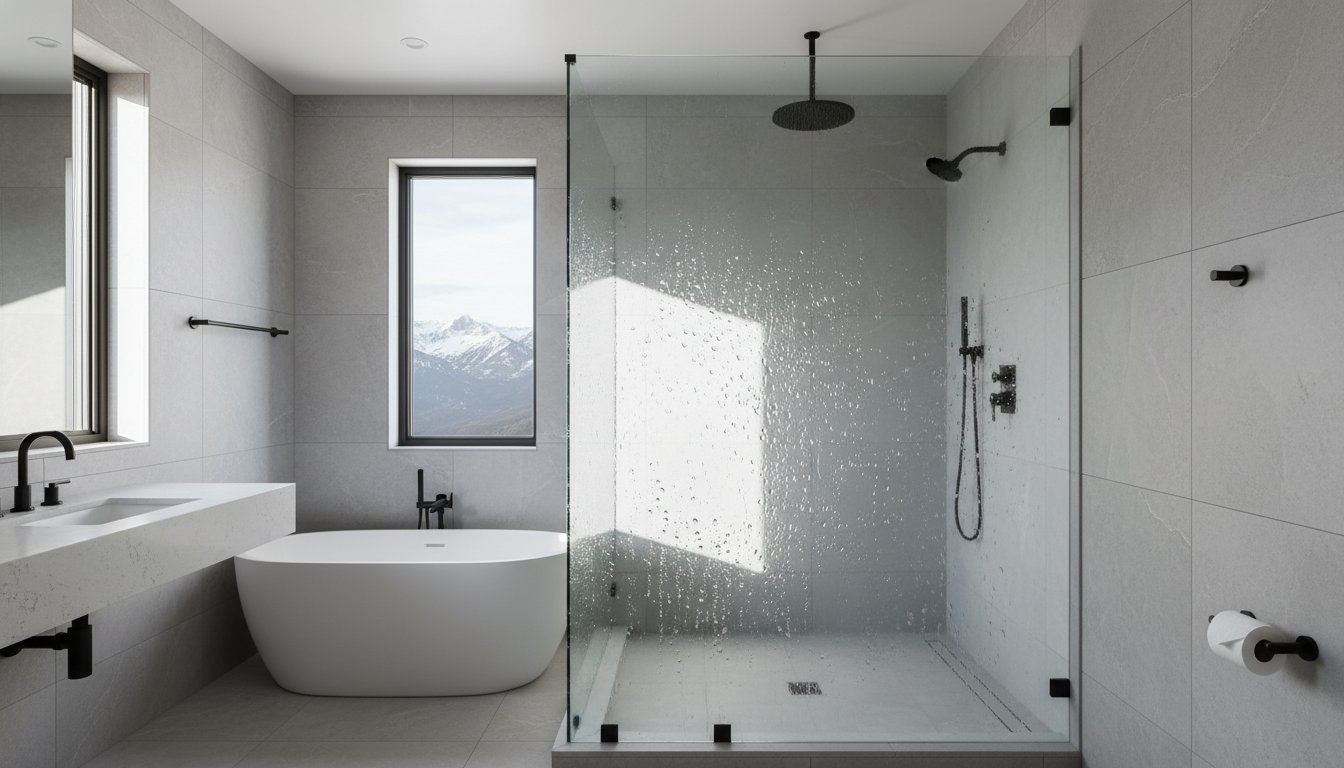
What if the very element designed to cleanse your body is silently eroding the architectural center of your bathroom? In Park City, where mineral concentrations in the water supply often exceed 300 parts per million, the battle against calcification is a daily reality. You’ve likely spent hours scrubbing at stubborn white spots, fearing that your efforts might scratch the surface of your custom installation. It’s disheartening to see the transparency of premium glass obscured by a persistent, milky haze that ruins the room’s aesthetic. To protect your investment, you must learn how to prevent hard water stains on shower glass before the minerals bond permanently with the silica.
We believe that your home’s design should remain pristine without requiring constant, arduous labor. This 2026 guide provides professional-grade strategies and local insights to keep your luxury frameless glass crystal clear against Utah’s challenging environment. You’ll discover a “set and forget” prevention routine that utilizes advanced hydrophobic coatings and specialized maintenance protocols used by master craftsmen. We’ll examine the technical innovations that reduce cleaning time and ensure your bathroom remains a sanctuary of light and clarity for the next decade.
Key Takeaways
- Understand how Park City’s unique mineral concentrations in local aquifers accelerate glass degradation and why immediate intervention is vital for maintaining long-term clarity.
- Master the “Squeegee Rule” and professional techniques to prevent hard water stains on shower glass by eliminating 99% of surface moisture in under thirty seconds.
- Discover why high-end architectural glass requires professional descalers over common household “hacks” that risk etching or damaging the structural integrity of your investment.
- Explore the science of hydrophobic coatings and how these innovative, non-stick barriers transform maintenance-heavy surfaces into effortless, self-cleaning glass.
- Learn how 3D laser measuring and custom hardware selection ensure tighter tolerances, significantly reducing water leakage and mineral corrosion in luxury installations.
Understanding the Challenge: Why Park City Water Stains Glass So Quickly
Hard water stains aren’t just unsightly marks; they represent a chemical challenge to the transparency and architectural integrity of your bathroom. These deposits occur when water with high mineral content evaporates, leaving behind solid crystalline structures. In the high-altitude environment of Park City, this process happens with remarkable speed, often catching homeowners off guard. To effectively prevent hard water stains on shower glass, you must first understand the unique geological and climatic factors at play in the Wasatch Back.
The “Utah Factor” is a reality for every resident in Summit County. Local aquifers are heavily saturated with calcium and magnesium, minerals that are picked up as snowmelt filters through limestone and dolomite layers. When these minerals settle on a surface, they don’t just sit there. They form a bond. This is particularly problematic for frameless glass installations. While these structures are prized for their minimalist aesthetic and light-transmitting properties, their expansive, clear surfaces provide no visual distraction. Every mineral spot becomes a focal point that detracts from the room’s design.
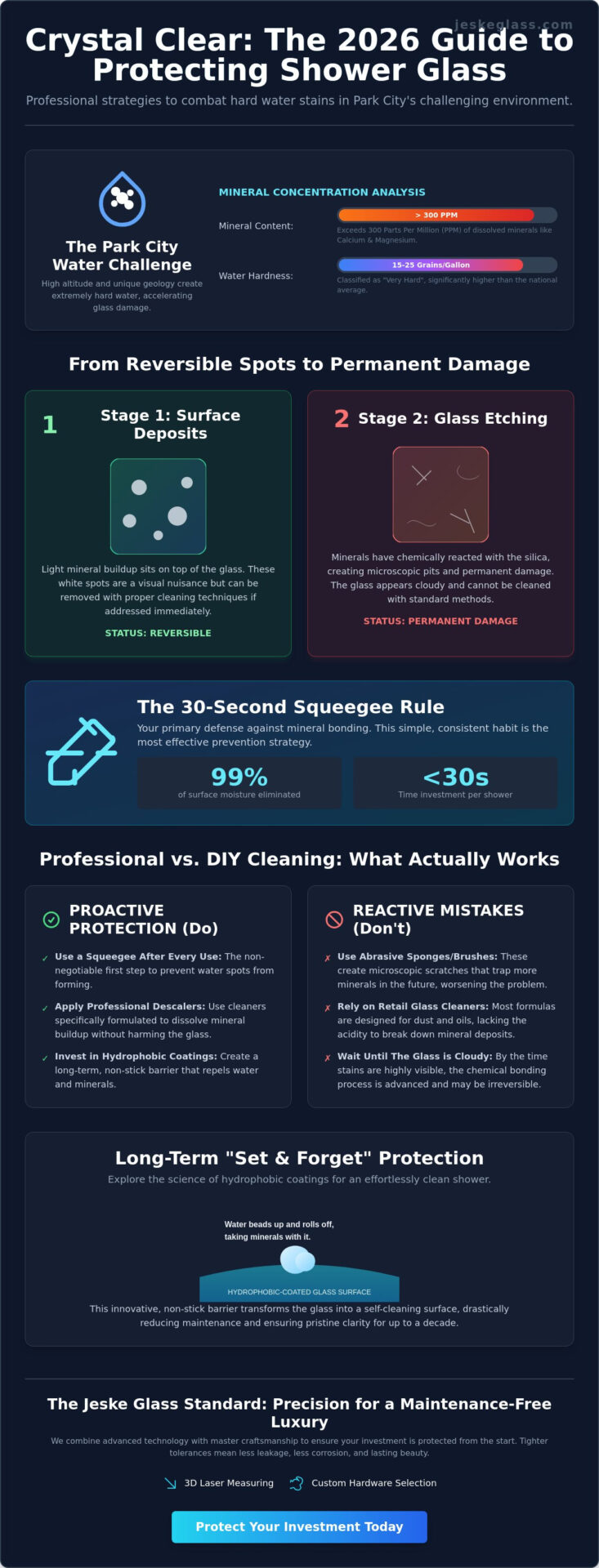
It’s vital to distinguish between surface spots and permanent damage. Stage 1 consists of light mineral buildup that sits on top of the glass. If these deposits aren’t managed, they progress to stage 2: glass etching. At this point, the minerals have chemically reacted with the silica in the glass, creating microscopic pits. You can’t simply wipe away stage 2 etching; it’s a structural change to the material that often requires professional restoration or complete replacement.
The Mineral Profile of Park City Water
Water in Park City and the surrounding Snyderville Basin often tests between 15 and 25 grains per gallon. This is significantly higher than the national average, placing it firmly in the “very hard” category. The local climate further complicates the issue. Low humidity levels in the mountains cause water droplets to evaporate almost instantly after a shower. This leaves behind a concentrated mineral residue that quickly reacts with the fatty acids found in soaps, creating a resilient, cloudy film that bonds to the tempered surface.
Why “Standard” Cleaning Often Fails
Many homeowners rely on retail glass cleaners, but these formulas are generally designed to remove oils and dust, not dissolved rock. They lack the acidity required to break down calcium carbonate. In an attempt to restore clarity, some resort to abrasive sponges or stiff brushes. This is a critical error. Tempered glass is durable but susceptible to microscopic scratching. These scratches create a rougher surface area, which actually makes it easier for minerals to anchor themselves in the future. To prevent hard water stains on shower glass, the strategy must shift from reactive scrubbing to proactive surface protection. Waiting until the glass looks cloudy means the chemical bonding process is already well underway.
The Science of Prevention: Daily Habits to Keep Your Frameless Glass Pristine
Maintaining the structural integrity and transparency of frameless glass requires a proactive approach rather than a reactive one. In high-altitude environments like Park City, where mineral density often exceeds 180 parts per million, the “Squeegee Rule” serves as the primary defense. Spending 30 seconds after each shower prevents the chemical bonding of minerals to the glass surface. This brief investment of time eliminates the need for aggressive scrubbing that can, over time, compromise the surface finish of the material. Consistency is the hallmark of professional glass care, ensuring that the aesthetic clarity of your bathroom remains uncompromised by environmental factors.
Mastering the Squeegee Technique
The choice of equipment is as vital as the frequency of use. We recommend a high-quality silicone-blade squeegee because it offers the flexibility needed to maintain constant contact without the risk of scratching the glass, a common issue with metal-framed alternatives. To achieve a professional result, start from the uppermost corner and use overlapping vertical strokes to pull moisture toward the drain. The overlap method involves positioning the blade so it covers 2 inches of the previously dried section to ensure no water trails remain between passes. This systematic approach removes 99% of surface water before minerals can precipitate out of the liquid.
While the squeegee handles the expansive surfaces, a high-density microfiber towel is essential for finishing the edges and hardware. Moisture often lingers around hinges and handles, leading to calcification that can impede mechanical function. A quick wipe with a clean microfiber cloth ensures these architectural details remain as pristine as the glass itself. For homeowners who value exclusive glass design, these habits protect the long-term aesthetic of the installation and maintain the value of the property.
The Importance of Post-Shower Ventilation
Ventilation is a critical, often overlooked component of glass care. High humidity levels keep minerals in a semi-liquid, sticky state, allowing them to adhere more effectively to the glass pores. Effective moisture management requires more than just a functional fan; it requires a strategy. Setting a timer on the bathroom fan ensures at least 20 minutes of continuous airflow after the shower has ended. This duration is necessary to drop the relative humidity below 50%, which is the threshold where moisture begins to evaporate from surfaces rapidly.
Leaving the shower door open further promotes this drying process, preventing the stagnant, damp environment that encourages mineral buildup. By controlling the microclimate of the bathroom, you effectively prevent hard water stains on shower glass before they have the physical opportunity to form. This engineering-based approach to maintenance ensures that the transparency and safety of your shower enclosure are preserved for years to come.
Professional vs. DIY Solutions: What Actually Works for High-End Glass?
Maintaining the structural transparency of a luxury shower requires more than casual effort. In Park City, where municipal water reports often show hardness levels exceeding 15 grains per gallon, the battle against calcification is constant. While social media suggests various “hacks,” architectural glass demands a more disciplined, engineering-based approach to preserve its pristine state. Choosing the wrong cleaning agent doesn’t just fail to remove minerals; it can permanently compromise the glass surface or the surrounding hardware.
The Vinegar and Dish Soap Myth
Acetic acid, the primary component in white vinegar, effectively dissolves light mineral deposits by breaking the ionic bonds of calcium carbonate. However, its efficacy drops significantly against the heavy scale often found in Summit County homes. A common mistake involves applying high-concentration vinegar to fixtures. Acetic acid can cause irreversible etching on delicate hardware finishes, particularly oil-rubbed bronze or matte black PVD coatings. For routine upkeep that won’t compromise custom glass Utah installations, a solution of one part distilled water to one part 5% white vinegar, enriched with three drops of clear, pH-neutral dish soap, provides a safe baseline. This mixture helps prevent hard water stains on shower glass without the caustic risks of industrial chemicals.
Homeowners should avoid using dryer sheets or melamine foam sponges, often marketed as magic erasers. These materials rely on micro-abrasion. While they might remove a stain, they can also create microscopic scratches that trap more minerals over time. Bar Keepers Friend is a staple for restoration because its oxalic acid is highly effective, yet it must be used with caution. On high-clarity edgeless glass, the abrasive particles in powder formulas can dull the surface luster. It’s better to opt for the liquid version and limit its use to monthly deep cleans rather than daily maintenance.
Professional Grade Descalers
Professional fabricators prioritize pH-neutral descalers that leverage chelation technology rather than raw acidity. These formulas surround mineral ions, making them water-soluble without attacking the glass silica or any applied hydrophobic coatings. Industry leaders often recommend specialized polymers that bond to the surface, creating a temporary barrier that minerals can’t grip. Before applying any new product, test a three-inch section at the bottom corner of the panel. This ensures the chemical profile doesn’t react with the specific tempering process or hardware gaskets. Using these refined tools is the most reliable way to prevent hard water stains on shower glass while maintaining the architectural integrity of a high-end bathroom.
- Natural Balance: Use diluted acids for weekly maintenance to avoid chemical buildup.
- Chemical Precision: Reserve professional descalers for quarterly deep cleaning to reset the glass surface.
- Hardware Protection: Always rinse hardware with fresh water immediately after cleaning to prevent corrosion.
Long-Term Protection: Hydrophobic Coatings and Water Softening Systems
Achieving a pristine aesthetic in a luxury bathroom requires more than just reactive cleaning. It demands a proactive approach to the material science of glass. To effectively prevent hard water stains on shower glass, homeowners in Park City are increasingly turning to a dual-layered strategy: altering the surface tension of the glass and neutralizing the mineral content of the water supply. This combination ensures that the transparency of the installation remains uncompromised by the harsh mineral profile of mountain water.
The Power of Diamon-Fusion and Similar Barriers
Under a microscope, even the highest quality tempered glass reveals a surface filled with microscopic peaks and valleys. These pores trap mineral deposits, leading to the chemical bonding known as stage II corrosion. Professional hydrophobic coatings like Diamon-Fusion utilize nanotechnology to fill these irregularities. This creates an ultra-thin, covalent bond that makes the glass “hydrophobic,” meaning it repels water. Instead of spreading and drying, water beads up and rolls off, taking soap scum and minerals with it.
- Lifespan: While aftermarket sprays might last a few weeks, factory-applied professional coatings often carry a 10-year to lifetime warranty on residential installations.
- Efficiency: Verified industry data indicates that treated glass surfaces reduce cleaning time by up to 90 percent, as the “non-stick” surface prevents debris from anchoring.
- Factory vs. Aftermarket: Factory coatings are applied in controlled environments using vapor deposition, making them far more durable than topical sprays found in hardware stores.
Investing in a Whole-Home Water Softener
While coatings protect the glass surface, water softeners address the environmental root cause. Park City’s water is notoriously rich in calcium and magnesium. An ion-exchange water softening system replaces these hard minerals with sodium or potassium ions before the water reaches your fixtures. This isn’t just about plumbing longevity; it’s essential for maintaining the clarity of frameless glass showers in Park City. Without abrasive minerals present in the water, the risk of permanent etching is virtually eliminated.
The synergy between soft water and treated glass creates a nearly maintenance-free environment. When you combine a softened water supply with a hydrophobic barrier, the few residual droplets that remain contain no minerals to leave behind. This dual-system approach preserves the architectural transparency and structural integrity of your bathroom for decades. If you’re planning a renovation or a new build, it’s wise to consult with the Jeske Glass team to ensure your glass specifications include these advanced protective measures from the start.
The Jeske Glass Standard: Custom Solutions for Maintenance-Free Luxury
Achieving a pristine bathroom environment in Park City requires more than just high-quality materials; it demands an architectural approach to water management. At Jeske Glass, we view every shower enclosure as a precision-engineered structure where glass and hardware work in tandem to repel the heavy mineral content typical of local water supplies. Our methodology centers on the principle that the best way to prevent hard water stains on shower glass is to eliminate the opportunities for water to dwell on the surface. By combining master-level craftsmanship with 2026-grade fabrication technology, we deliver installations that maintain their transparency for decades rather than months.
Precision Fabrication and Water Management
The foundation of a maintenance-free shower lies in the initial measurements. We utilize advanced 3D laser scanning technology to capture the unique contours of your space with tolerances as tight as 1/16th of an inch. This level of precision ensures that glass panels align perfectly with out-of-plumb walls, which is a common challenge in custom Park City builds. When the fit is this exact, we minimize the reliance on thick silicone beads that often act as “water traps” where mold and minerals accumulate.
- Natural Drainage: Our technicians calculate the precise pitch of the curb and the angle of the glass to ensure every drop gravitates toward the drain.
- High-Performance Seals: We use low-profile, UV-resistant seals that create a watertight barrier without compromising the minimalist aesthetic of frameless designs.
- Structural Integrity: Proper alignment reduces vibration and stress on the glass, maintaining the integrity of protective coatings over time.
Starting Your Custom Project with Maintenance in Mind
Designing a shower that stays clean starts with selecting the right substrate. We recommend 10mm or 12mm low-iron tempered glass for its superior clarity and structural weight. To effectively prevent hard water stains on shower glass, we integrate factory-applied ion-beam coatings during the design phase. These aren’t temporary sprays; they’re permanent seals that fuse with the glass at a molecular level, creating a hydrophobic surface that resists 90% of mineral buildup compared to untreated glass.
Hardware selection is equally critical for long-term luxury. We curate hardware finished with PVD (Physical Vapor Deposition) coatings. This vacuum-sealing process makes the handles and hinges virtually impervious to the corrosive effects of calcium and magnesium. When you partner with us, you aren’t just buying a partition; you’re investing in a sophisticated water-shedding system designed specifically for the Utah climate. Our commitment to durability means your mountain retreat remains a place of rejuvenation, not a source of chores.
Ready to elevate your bathroom with engineering that defies the elements? Schedule your free estimate for a custom frameless shower and experience the Jeske Glass difference in precision and clarity.
Securing the Longevity of Your Architectural Glass
Investing in high-end frameless glass transforms a bathroom into a sanctuary, but the mineral-heavy profile of Park City requires a sophisticated approach to maintenance. You’ve seen how a combination of disciplined daily habits and advanced hydrophobic coatings can preserve that essential transparency. By integrating professional-grade treatments with local expertise, you’ll ensure your investment remains a centerpiece of architectural beauty rather than a maintenance burden.
At Jeske Glass, we bring over 70 years of combined experience to every installation. We utilize precision 3D laser measuring to guarantee a perfect fit that minimizes mineral buildup at the glass junctions. Our team understands the specific environmental factors of the Wasatch Back, allowing us to provide the most effective strategies to prevent hard water stains on shower glass for the long term. We don’t just install panels; we create enduring structural elements that define the modern aesthetic.
Request a Free Estimate for Your Custom Glass Project
Your home deserves the clarity and precision that only a local master craftsman can provide.
Frequently Asked Questions
Is vinegar safe to use on all types of shower glass hardware?
No, vinegar isn’t safe for every finish. While it’s effective on glass, the 5% acidity in standard white vinegar can corrode unlacquered brass, oil-rubbed bronze, and certain matte black fixtures. You should use a pH-neutral cleaner on these specific metallic elements to protect their aesthetic integrity and prevent pitting.
How often should I apply a DIY hydrophobic spray to my shower doors?
You should reapply DIY hydrophobic treatments every 21 to 30 days to maintain optimal water repellency. In a household where three or more people use the shower daily, the protective barrier wears down faster. Regular application is a proven method to prevent hard water stains on shower glass by ensuring water beads and rolls off the surface.
Can hard water stains actually etch the glass permanently?
Yes, mineral deposits can cause irreversible chemical etching if they remain on the surface for longer than six months. The calcium and magnesium ions in Park City water react with the silica in the glass, creating microscopic pits that look cloudy. Once this structural damage occurs, professional polishing or total glass replacement is usually necessary to restore transparency.
Do water softeners completely eliminate the need for a squeegee?
No, a water softener doesn’t replace the need for a squeegee. While softeners remove 99% of calcium and magnesium, the water still contains sodium and soap surfactants that leave visible spots when they dry. Using a squeegee removes 95% of surface moisture immediately, which preserves the pristine look of your glass installation between deep cleanings.
What is the best squeegee for a frameless glass shower?
A 12-inch all-silicone squeegee with a weighted handle is the superior choice for frameless enclosures. Silicone-wrapped tools don’t have metal edges that could scratch the glass or damage your stone flooring if dropped. A high-quality blade ensures a streak-free finish and maintains the architectural clarity of the space with a single pass.
How do I remove heavy calcium buildup that has been sitting for months?
Use a specialized restoration paste containing cerium oxide or a 50/50 solution of vinegar and water left to dwell for 15 minutes. For deposits that have calcified for over 90 days, a plastic scraper or a non-abrasive nylon pad helps lift the layers safely. This rigorous process is often required to prevent hard water stains on shower glass from becoming a permanent structural defect.
Are there specific glass types that resist hard water better than others?
Yes, factory-sealed glass options like Diamond-Fusion or EnduroShield offer 90% better resistance than standard tempered glass. These treatments fill the microscopic pores of the glass during manufacturing, creating a smoother surface that minerals can’t grip. Choosing these high-performance materials significantly reduces maintenance time and ensures the glass remains luminous for years.
Does Jeske Glass offer pre-treated glass for new installations in Park City?
Jeske Glass provides premium pre-treated glass options for all custom residential projects to ensure long-term durability and aesthetic perfection. These permanent coatings are applied in a controlled environment, creating a covalent bond that protects the surface for a minimum of 10 years. This professional approach ensures your shower remains a centerpiece of light and transparency without the burden of constant scrubbing.