
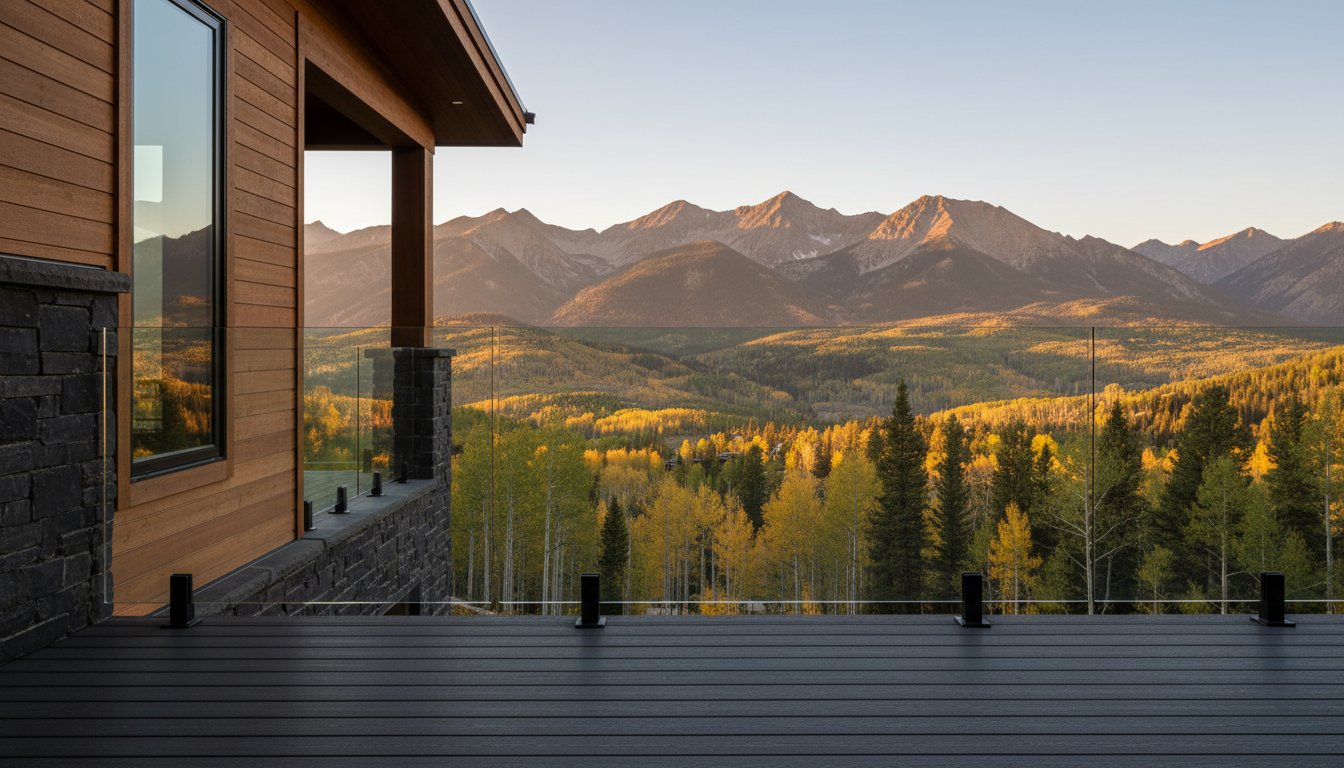
An architectural masterpiece in the Wasatch Range is only as profound as the landscape it invites inside. You likely invested in your property for the sweeping vistas of Deer Valley or the rugged silhouettes of the Canyons; however, traditional wood or iron balustrades often act as visual cages. We believe that your home’s value is tied to its environment, and any obstruction to that view is a compromise you shouldn’t have to make. Choosing high-performance glass balcony railings Park City designers recommend ensures you maintain a 360-degree connection to the outdoors without sacrificing the structural permanence required for alpine living.
This 2026 guide reveals how advanced structural glazing preserves your horizon while exceeding the rigorous 2024 International Building Code standards for high-altitude wind loads. You’ll discover how low-iron glass and specialized lamination withstand Utah’s 100-inch annual snowfall cycles without clouding or structural fatigue. We’ll examine the technical precision needed for strict HOA compliance and the engineering behind seamless, Mountain Modern aesthetics. From point-supported systems to recessed base shoes, we provide the clarity you need to elevate your mountain retreat into a sanctuary of light and safety.
Key Takeaways
- Understand how the “Mountain Modern” aesthetic leverages transparency to enhance both the psychological well-being of residents and the market value of Park City estates.
- Gain insight into the rigorous engineering necessary for alpine climates, focusing on International Building Code compliance and high-altitude wind load calculations.
- Compare the structural advantages of various systems to determine which glass balcony railings Park City solution best preserves your specific architectural panorama.
- Simplify the planning phase by learning to navigate specific Park City HOA restrictions regarding reflectivity, hardware finishes, and residential height requirements.
- Discover how 3D laser precision and master-level craftsmanship transform structural glass into a seamless, high-performance element of your home’s exterior.
The Essential Role of Glass Railings in Park City Architecture
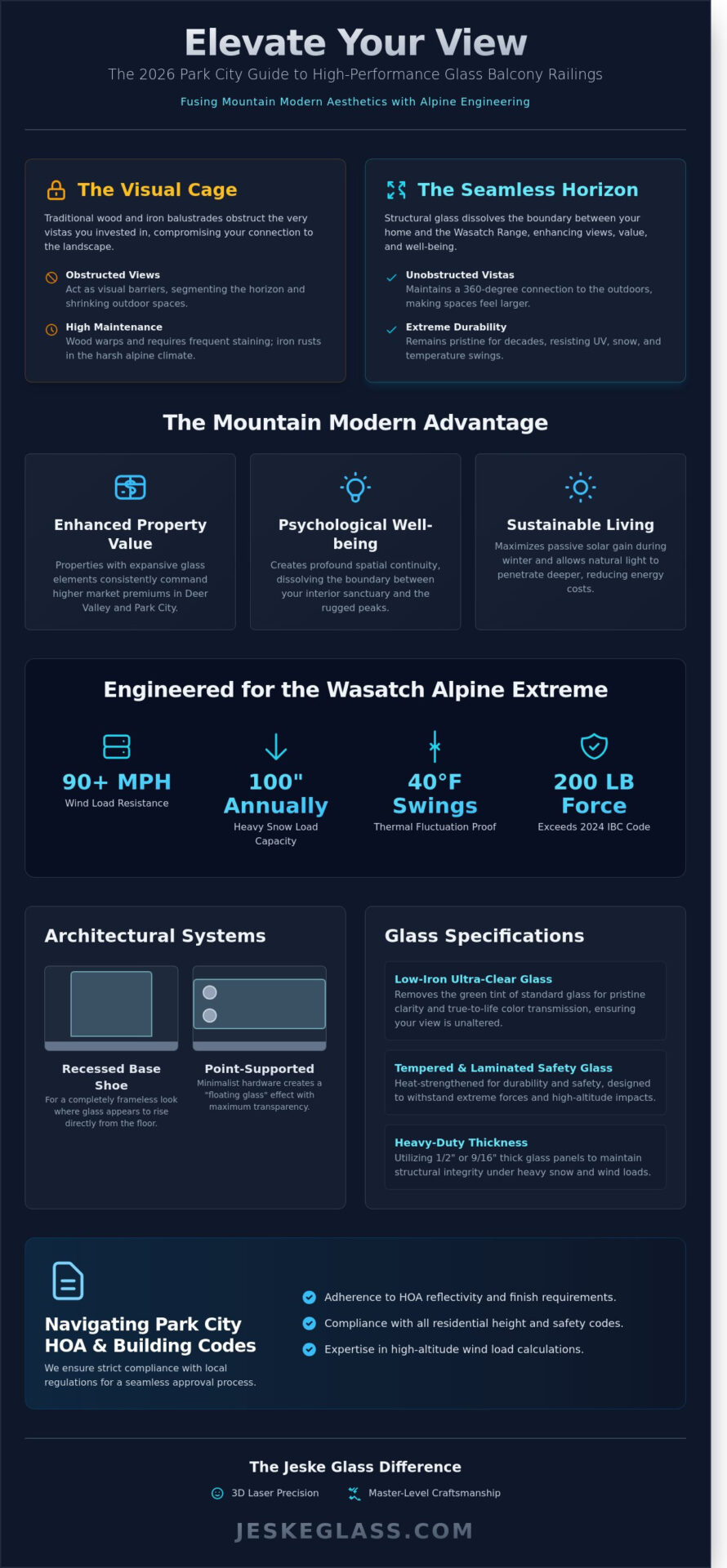
Mountain Modern architecture defines the current evolution of luxury estates in Northern Utah. This design philosophy seeks a precise balance between raw, organic textures and clean, industrial lines. Glass serves as the structural cornerstone of this movement. By installing glass balcony railings Park City homeowners effectively dissolve the boundary between their interior sanctuary and the rugged peaks of the Wasatch Range. The psychological impact of an unobstructed view is profound. It creates a sense of spatial continuity that traditional materials simply cannot replicate.
Beyond the aesthetic experience, the financial implications are measurable. In competitive real estate enclaves like Deer Valley, properties featuring expansive glass elements consistently command higher market premiums. These installations secure the one asset that cannot be manufactured: the view. Sustainability also plays a vital role in this architectural choice. High-altitude homes benefit from over 300 days of sunshine annually. Glass balustrades allow this natural light to penetrate deeper into the floor plan, reducing the need for artificial lighting and maximizing passive solar gain during the winter months.
Preserving the Park City Landscape
Visual transparency is the primary design priority for slopeside estates where the landscape is the main attraction. Traditional wood or wrought iron balustrades act as visual barriers, segmenting the horizon and shrinking the perceived size of an outdoor living space. Architects working in The Colony and Promontory increasingly specify frameless glass solutions to maintain a quiet exterior profile. These systems allow the architectural form to recede, letting the natural environment take center stage. Unlike bulky timber railings that require frequent staining to combat the elements, glass provides a permanent, clear lens through which to view the changing seasons. It’s a choice that respects the land while elevating the home’s silhouette.
Durability in the Utah Alpine Climate
Park City’s high-altitude environment presents unique engineering challenges. Intense UV radiation and temperature fluctuations that can span 40 degrees in a single day quickly degrade organic materials. Wood warps and iron eventually rusts, but tempered safety glass remains structurally stable and visually pristine for decades. This material’s thermal resistance ensures it won’t crack under the pressure of heavy snow loads or rapid freezes common in Summit County. When paired with marine-grade stainless steel or high-spec hardware, glass balcony railings Park City offer a low-maintenance solution that thrives in the Utah alpine climate. This longevity ensures that the home’s aesthetic integrity remains uncompromised by the passage of time or the harshness of the mountain elements.
Engineering for the Wasatch: Safety and Structural Integrity
The architectural landscape of Summit County presents unique challenges that transcend mere aesthetics. When installing glass balcony railings Park City homeowners must prioritize structural resilience against the extreme variables of the Wasatch Range. The International Building Code (IBC) mandates that every railing system survives a 200-pound concentrated load applied to the top rail in any direction. In high-altitude environments, these requirements are just the baseline for safety.
Wind loads at elevations exceeding 7,000 feet often reach speeds of 90 mph during winter storms. These gusts turn expansive glass panels into aerodynamic surfaces that exert immense pressure on mounting hardware. Our engineering process accounts for these lateral forces, ensuring that every mounting bracket and base shoe is anchored directly into the building’s primary structure. Snow load is equally critical. In Park City, heavy snow can accumulate against glass surfaces, creating sustained pressure that would compromise inferior materials. We utilize heavy-duty 1/2-inch or 9/16-inch glass to maintain integrity under these seasonal stresses.
Tempered vs. Laminated Glass for Balconies
The distinction between tempered glass vs annealed glass represents the difference between safety and liability. For residential balconies, Jeske Glass utilizes fully tempered, heat-soaked glass or SentryGlas (SGP) ionoplast interlayers. These materials provide five times the strength of standard glass. If a panel fails, it breaks into small, blunt fragments rather than dangerous shards, adhering to the highest impact resistance standards for mountain modern homes. Explore our portfolio of precision-engineered glass solutions to see how we balance safety with transparency.
Precision Through 3D Laser Measuring
Mountain architecture often features complex, multi-level geometries that render traditional tape measurements obsolete. We employ 3D laser scanning to capture the exact contours of your deck or terrace with 1/16th-inch accuracy. This digital twin allows us to design glass balcony railings Park City architects can trust for a seamless fit. Precision isn’t just about beauty; it’s about ensuring that the structural load is distributed evenly across the hardware, preventing long-term fatigue in the mounting points. This meticulous approach eliminates human error and guarantees that the final installation remains stable for decades.
Comparing Glass Railing Systems: Which is Right for Your View?
Selecting the ideal glass balcony railings Park City residents prefer involves balancing structural engineering with the visual purity of the Wasatch Range. The architectural intent of a mountain modern home dictates whether the glass should appear to grow directly from the floor or float weightlessly against the fascia. Each system offers distinct technical advantages designed to withstand the 300 to 400 inches of annual snowfall typical of the Summit County climate.
The Frameless Aesthetic: Base Shoe Installations
Base shoe systems represent the pinnacle of transparency, utilizing a heavy-duty aluminum U-channel to secure the glass at the base. This method provides the most invisible profile, as the hardware can be recessed into the floor for a truly “bottomless” appearance. For properties featuring natural stone or reclaimed timber, Jeske Glass recommends cladding the base shoe in finishes like architectural bronze or matte black to harmonize with the organic textures of the exterior.
Engineered drainage is a critical technical requirement for base shoes in high-altitude environments. Without precision-cut drainage blocks or scuppers, melting snow can trap water within the channel, leading to ice expansion and potential structural stress. Modern 2026 designs incorporate internal tilt-lock technology, allowing for precise vertical alignment of the glass panels even if the sub-floor has settled slightly over time.
Standoff and Point-Supported Designs
Standoff systems create a sophisticated, floating effect by mounting the glass to the side of the balcony fascia using stainless steel pins. This architectural choice is particularly effective for maximizing usable deck space, as the glass sits entirely outside the floor perimeter. The 2-inch diameter circular pins offer an industrial elegance that complements the steel beams often found in Park City luxury builds.
From a maintenance perspective, standoffs are highly functional. The 1 to 2-inch gap between the glass and the balcony edge allows debris and snow melt to pass through easily, preventing the buildup of grime at the base of the panels. Satin nickel and brushed stainless finishes remain the standard for durability, resisting the corrosive effects of road salt and extreme UV exposure at 7,000 feet of elevation.
Versatile Alternatives: Spigots and Framed Systems
Talon or spigot systems utilize small, heavy-duty clamps that act as mini-posts, gripping the glass from the bottom. These are exceptionally versatile for retrofitting onto existing timber decks or concrete patios where a full base shoe isn’t feasible. While they introduce more visible hardware, their minimalist footprint preserves the panoramic view.
Framed systems, utilizing structural posts, are chosen when the design language requires a clear boundary or when specific safety protocols for steep, multi-level slopes are a priority. These systems often incorporate a slim top rail, providing a sense of physical security and a tactile element for the user while maintaining the core benefits of glass balcony railings Park City homeowners demand for their vistas.
Design and Planning: Navigating Park City HOA and Building Codes
Engineering a glass railing system in a mountain environment requires a meticulous balance between structural integrity and architectural transparency. In Utah, residential building codes mandate that balcony guards must stand at least 42 inches high. This height ensures safety without obstructing the expansive views of the Wasatch Range. Additionally, the spacing between components must prevent a 4-inch sphere from passing through, a technical requirement that often leads designers toward solid glass panels rather than traditional balusters. When planning glass balcony railings Park City homeowners must prioritize tempered-laminated glass to withstand high-velocity wind loads and significant snow accumulation common at elevations exceeding 7,000 feet.
Local Homeowners Associations (HOAs) in neighborhoods like Promontory or Deer Valley often impose additional layers of aesthetic scrutiny. These organizations frequently restrict the Light Reflectance Value (LRV) of glass to minimize glare for neighbors. Hardware finishes are equally regulated; polished chrome is rarely permitted, while matte black, oil-rubbed bronze, or dark architectural silver are favored for their ability to blend into the natural landscape. Coordinating with a general contractor during the early framing stages is vital. This ensures the deck substructure is reinforced to support the concentrated weight of heavy glass panels, which can exceed 10 pounds per square foot depending on thickness.
Compliance and Permitting in Summit County
The permit process in Summit County involves rigorous plan reviews to ensure fall protection doesn’t compromise structural safety. Requirements for custom glass railings in Salt Lake City & Park City differ primarily in their environmental load calculations. While Salt Lake projects focus heavily on seismic stability, Park City installations must account for extreme thermal expansion and contraction caused by 40-degree diurnal temperature swings. We manage these technical nuances through precision engineering, ensuring every panel meets the 2026 safety standards for high-altitude luxury builds.
Long-Term Maintenance in Alpine Conditions
Maintaining the pristine clarity of glass balcony railings Park City requires a strategy tailored to the alpine climate. High-altitude sunlight accelerates the buildup of mineral deposits and pine pollen, which can etch the surface if left unaddressed. We recommend a semi-annual professional inspection of all 316-grade stainless steel or anodized aluminum hardware. These components face exposure to de-icing salts and moisture, making regular lubrication of mechanical fasteners essential. While DIY cleaning with ionized water is effective for weekly upkeep, professional hydrophobic coatings can reduce maintenance frequency by 50 percent, preserving the glass’s transparency against the harsh Utah elements.
Realize your architectural vision with a partner who understands the technical demands of mountain modern design. Consult with Jeske Glass for your Park City project today.
The Jeske Glass Difference: Precision in Park City
High-end glass isn’t just about the material; it’s about the hands that shape it. At Jeske Glass, we bring over 70 years of combined expertise to every project in Summit County. We’ve built our reputation by treating every pane as a structural masterpiece. Our portfolio spans the most exclusive residential enclaves and commercial developments in the region. We don’t just install; we curate. From the initial site visit to the final hardware polishing, our white-glove service ensures your glass balcony railings Park City installation meets the highest standards of luxury and safety.
Our commitment to excellence is anchored in our technical approach. We utilize 3D laser precision for every Park City installation, a standard that separates us from general contractors. This technology allows us to:
- Capture site dimensions with sub-millimeter accuracy.
- Account for natural settling in mountain structures.
- Ensure perfectly aligned glass-to-glass joints.
- Minimize lead times by eliminating manual measuring errors.
Bespoke Fabrication for Unique Architecture
Park City’s “Mountain Modern” homes often feature radical angles and sweeping curves that standard kits can’t accommodate. This is why custom glass Utah solutions require a local partner who understands structural demands at altitudes exceeding 7,000 feet. We use 3D scans to map your balcony’s perimeter, ensuring every panel fits the unique geometry of your home. Whether your design calls for radius glass or specific hardware finishes like matte black, brushed champagne, or satin nickel to match existing architectural details, our fabrication process is entirely bespoke.
Start Your Park City Project with a Professional Consultation
Precision begins long before the glass is tempered. We provide a comprehensive, free estimate that accounts for the specific engineering needs of your site. To prepare for our 3D laser measurement team, we recommend ensuring that all structural mounting surfaces are finished and clear of construction debris. This allows our technicians to map the site with absolute certainty.
You can contact Jeske Glass for your custom Park City railing estimate to see how our technical expertise transforms architectural vision into reality. Investing in premium glass balcony railings Park City demands a partner who values perfection as much as you do. We focus on transparency, both in our glass and our business practices, to deliver a result that stands as a testament to Utah craftsmanship.
Defining Your Mountain Modern Legacy in the Wasatch Range
The integration of transparency and structural resilience defines the next era of Utah architecture. Selecting the right glass balcony railings Park City homeowners require involves balancing strict HOA regulations with the rugged engineering demands of high-altitude environments. Jeske Glass utilizes 3D laser measuring technology to ensure 100% precision in every installation, eliminating the margin for error that traditional methods often overlook. Our team brings over 70 years of combined glass craftsmanship to every project, focusing specifically on the Mountain Modern aesthetic that characterizes the region’s most prestigious estates. We don’t just install barriers; we create invisible structural elements that preserve your connection to the landscape while meeting the highest safety standards. Your vision deserves a partner who understands the nuance of light, the strength of tempered glass, and the specific building codes of Summit County. By prioritizing both engineering excellence and aesthetic purity, you ensure your property remains a timeless benchmark of luxury for years to come. Take the first step toward a clearer perspective on your mountain views.
Request Your Free Custom Glass Railing Estimate Today
Frequently Asked Questions
Are glass balcony railings safe for homes with children and pets in Park City?
Glass balcony railings Park City residents choose are exceptionally safe because they lack the ladder effect found in horizontal cable or wood systems. We use tempered laminated glass that meets ANSI Z97.1 standards to ensure maximum impact resistance. Even under extreme force, the internal interlayer holds the glass fragments together. This design prevents climbing and protects both children and pets from accidental falls.
How do glass railings hold up against heavy snow and ice in the Utah mountains?
Structural glass systems are engineered to exceed the 100-pound-per-square-foot snow load requirements mandated by Summit County building codes. We utilize 316-grade stainless steel components that resist corrosion from salt and moisture during the spring thaw. The smooth surface of the glass prevents ice damming and allows snow to slide off easily. It ensures your mountain views remain unobstructed throughout the harshest winter months.
Do I need a special permit for glass railings in Park City?
A building permit is mandatory for any railing installation where the deck height exceeds 30 inches above the finished grade. The Park City Building Department enforces the 2021 International Residential Code to ensure every installation meets specific structural integrity markers. We provide the necessary engineering calculations and glass specifications required for the approval process. This ensures your project complies with all local safety regulations and high-altitude requirements.
How much do glass balcony railings typically cost in the Park City area?
The investment for glass balcony railings Park City homeowners select depends on the linear footage and the complexity of the mounting hardware. Factors like glass thickness, which usually ranges from 10mm to 15mm, and the choice between base shoes or point-supported pins dictate the final price. Since every mountain property has unique structural requirements, we provide detailed quotes after evaluating the site’s specific engineering needs and wind load factors.
Can glass railings be installed on existing wood decks or only on concrete?
What is the difference between frameless and semi-frameless glass railings?
Frameless systems utilize 1/2-inch thick structural glass held by a concealed base channel or side-mounted pins to provide a completely unobstructed view. Semi-frameless designs use vertical aluminum or steel posts to support thinner glass panels at regular intervals. Frameless options offer 100 percent transparency for a minimalist aesthetic, while semi-frameless systems provide a more traditional architectural rhythm. Both styles utilize tempered glass for maximum durability and safety.
How often do I need to clean glass railings in a high-altitude environment?
Most high-altitude properties require a thorough cleaning twice per year to maintain the glass’s clarity against mineral buildup from snowmelt. Applying a hydrophobic coating can reduce maintenance time by 90 percent by repelling water and environmental pollutants. You’ll find that a simple solution of deionized water and mild soap is sufficient for these sessions. This routine preserves the professional aesthetic and light-transmitting properties of the installation for decades.