
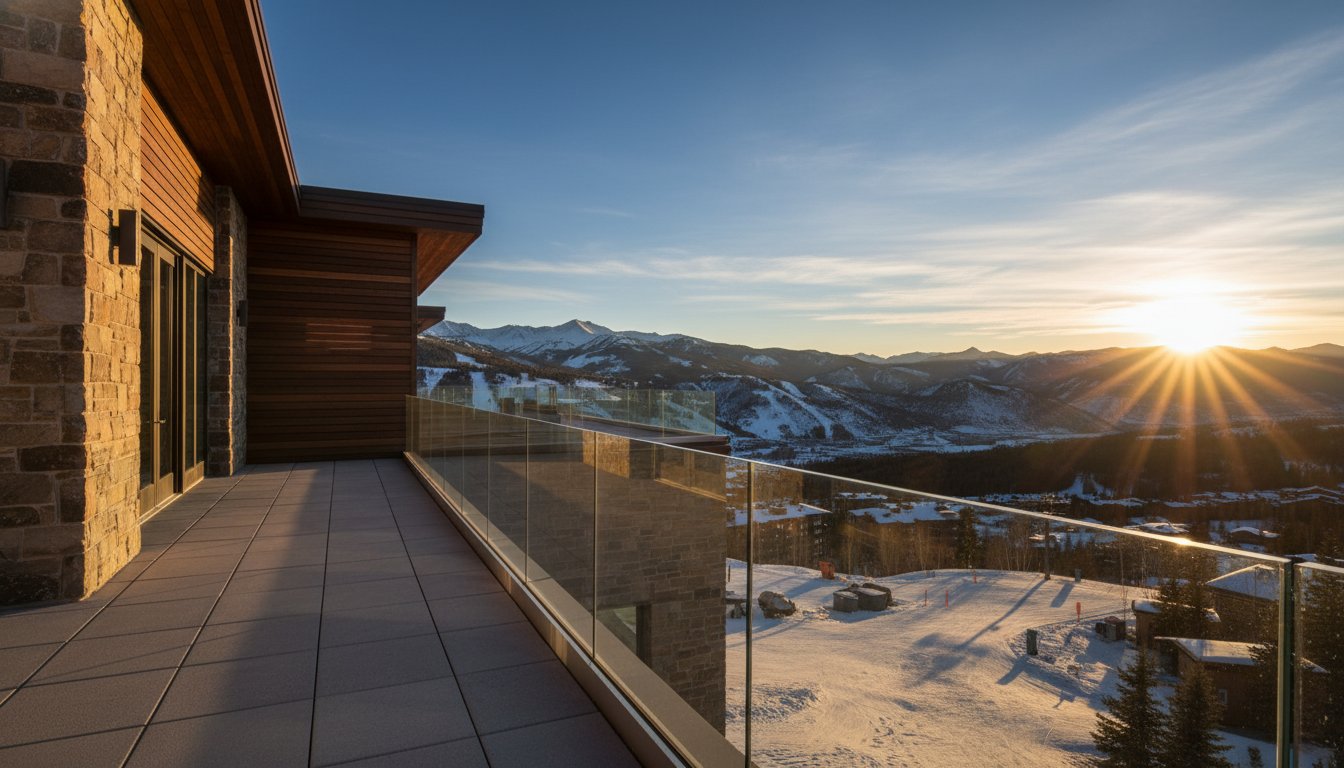
In the high-altitude environment of the Wasatch Range, an invisible barrier often bears more structural responsibility than the solid masonry of a standard build. You’ve likely stood on a terrace in Deer Valley and realized that a property’s prestige is inextricably linked to the clarity of its surroundings. It’s a difficult tension to manage; the reality of 100 mph wind gusts and heavy alpine snow loads requires a level of structural integrity that traditional systems often fail to reach. When selecting a commercial glass railing Park City architects and developers must look beyond simple aesthetics to find a solution where rigorous engineering meets absolute transparency.
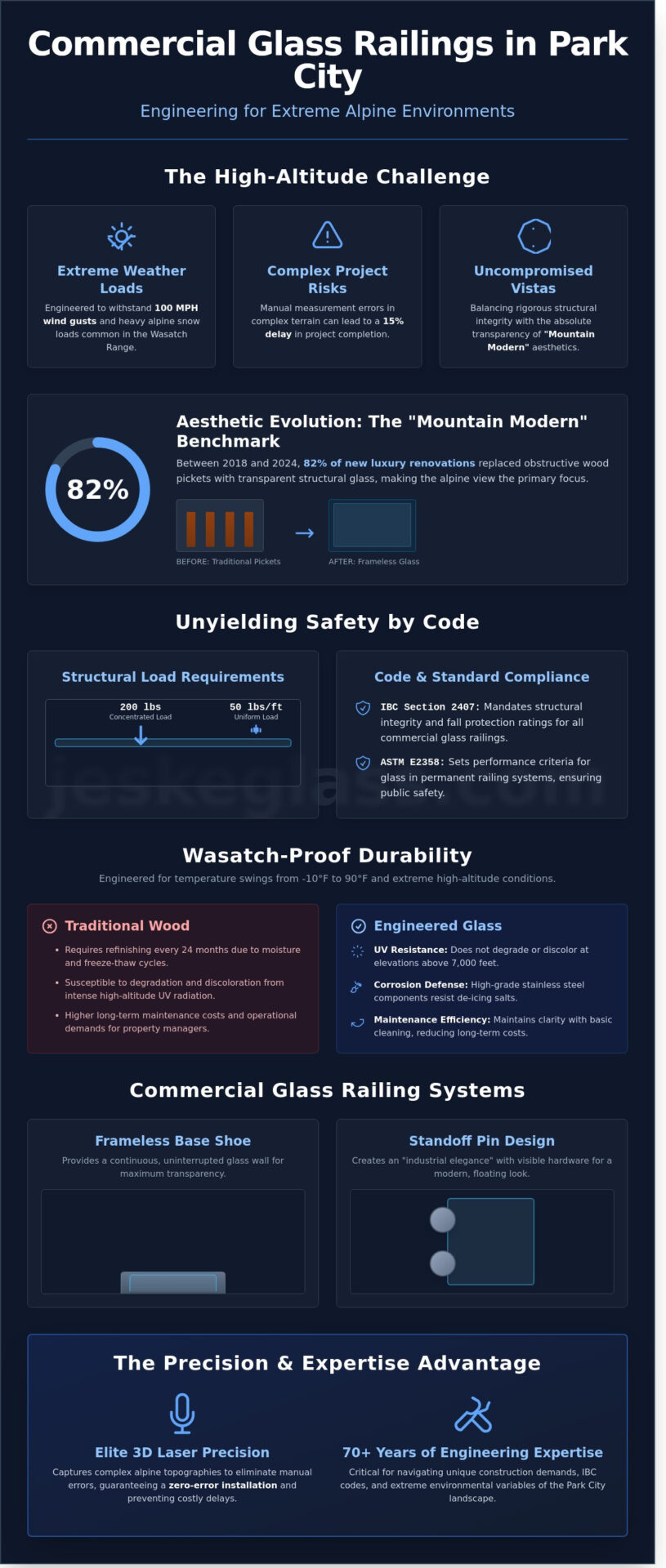
We understand the professional weight of ensuring safety without compromising the architectural vision. Industry studies show that manual measurement errors in complex mountain environments can lead to a 15% delay in project completion, a risk that sophisticated developers cannot afford. This article explores how 3D laser precision and specialized alpine engineering eliminate these variables to provide a zero-error installation. You’ll learn how to navigate local 2024 building codes and discover the technical innovations that keep Park City’s luxury landscapes both secure and visually boundless.
Key Takeaways
- Understand the “Mountain Modern” aesthetic and how high-transparency glass elevates the guest experience in luxury resort environments.
- Gain insights into calculating specific snow load pressures and IBC code compliance required for a safe commercial glass railing Park City installation.
- Compare the structural advantages and visual impact of frameless base shoe systems against the industrial elegance of standoff pin designs.
- Explore how elite 3D laser precision technology captures complex alpine topographies to ensure a zero-error installation for large-scale projects.
- Learn why partnering with a specialist possessing over 70 years of engineering expertise is critical for navigating the unique construction demands of the Park City landscape.
The Aesthetic and Functional Role of Glass in Park City Commercial Spaces
The architectural identity of Summit County has undergone a profound transformation. The heavy, rustic timber aesthetics of the 1990s have yielded to “Mountain Modern” design, a philosophy that prioritizes light, transparency, and a seamless connection with the Wasatch Range. In this context, a commercial glass railing Park City installation serves as more than a safety barrier; it acts as a critical lens through which guests experience the landscape. High-end hospitality venues in Canyons Village and retail spaces along Main Street now utilize glass to eliminate the visual “noise” created by traditional balustrades.
Transparency has a documented psychological impact on guest satisfaction. When a resort patio or restaurant balcony removes opaque obstructions, the perceived value of the real estate increases. Traditional wood pickets or heavy iron railings often fail to meet the luxury standards expected in Park City because they fragment the panoramic views that justify premium room rates and dining prices. Glass systems provide a sense of expansive freedom while maintaining a secure, controlled environment. This balance is essential for commercial envelopes where thermal performance must coexist with large, clear apertures.
Maximizing Park City Vistas
Frameless glass systems are now the benchmark for high-altitude commercial properties. By utilizing base shoe channels or point-supported standoffs, architects preserve the visual integrity of the horizon. These systems integrate harmoniously with natural materials like local limestone and reclaimed cedar, creating a sophisticated contrast between organic textures and industrial precision. A notable shift occurred between 2018 and 2024, where approximately 82% of new luxury renovations in the area replaced 4-inch wood pickets with structural glass. This transition allows the architecture to recede, making the alpine environment the primary focal point for the observer.
Durability in the Wasatch Climate
The environmental demands of Park City are rigorous. Commercial railings must withstand temperature swings that can fluctuate from -10°F in January to 90°F in July. Traditional wood systems often require refinishing every 24 months due to moisture absorption and freeze-thaw cycles. In contrast, engineered glass systems offer superior longevity. The structural integrity of these installations frequently relies on Laminated glass, which remains stable and safe even under extreme mechanical stress or impact.
- UV Resistance: At elevations above 7,000 feet, UV radiation is significantly more intense. Glass does not degrade or discolor like synthetic composites or treated lumber.
- Corrosion Defense: High-grade stainless steel components paired with glass resist the corrosive effects of de-icing salts used extensively on commercial walkways.
- Maintenance Efficiency: While wood requires staining and metal requires painting, glass maintains its clarity with basic cleaning, reducing long-term operational costs for property managers.
The choice of glass represents a commitment to both engineering excellence and timeless design. It’s a material that respects the power of the Utah landscape while providing the safety and durability required for high-traffic commercial applications.
Engineering for Alpine Safety: Code Compliance and Load Requirements
The International Building Code (IBC) Section 2407 dictates the structural integrity of every commercial glass railing Park City developers install. These systems aren’t merely decorative accents; they function as critical life-safety components. In high-traffic mountain resorts and public plazas, “fall protection” ratings are non-negotiable. Engineers must calculate for a concentrated load of 200 pounds applied at the top rail or a uniform linear load of 50 pounds per foot. To ensure these systems withstand the rigors of a public environment, we adhere strictly to ASTM E2358, the standard that establishes performance criteria for glass in permanent railing systems.
Park City’s geography introduces environmental variables that standard builds rarely encounter. Snow loads for outdoor balconies in Summit County can exceed 100 pounds per square foot (psf) at higher elevations. Lateral wind pressure is equally critical. On exposed mountain-side structures, wind gusts can exceed 105 miles per hour. This requires thicker glass panels and reinforced base shoe systems to prevent structural fatigue or catastrophic failure during extreme weather events. Precision engineering ensures the transparency of the glass never compromises the safety of the occupants.
Laminated vs. Tempered Glass for Commercial Use
Safety in alpine architecture relies on sophisticated material science. While tempered glass offers significant strength, laminated glass is often mandated for commercial railings at high elevations. It utilizes an ionoplast interlayer, such as SentryGlas, which is 100 times stiffer and five times tougher than traditional PVB materials. If a panel breaks, the interlayer keeps the glass fragments bonded together, maintaining the barrier’s structural integrity until it can be replaced. For a deeper technical analysis of these materials, you can read our guide on tempered glass vs annealed glass.
Local Park City Building Permits
Navigating the requirements of the Park City Planning Department requires an understanding of both safety and accessibility. Commercial guardrails must maintain a minimum height of 42 inches to satisfy standard safety codes. For projects involving glass ramps or accessible walkways, ADA compliance is a primary focus. This includes specific requirements for handrail diameters and continuous gripping surfaces on any ramp with a slope greater than 1:20. Every commercial glass railing Park City project we undertake is designed to meet these 2024 standards while preserving the architectural vision. If you’re designing a complex mountain-side development, partnering with our technical team during the drafting phase can ensure your permits are approved without costly revisions.
Commercial Glass Railing Systems: Comparing Design Options
Selecting the right structural hardware for a commercial glass railing Park City project requires balancing aesthetic transparency with the rigorous demands of alpine weather. Every architectural vision dictates a specific mounting method to ensure long-term stability and safety. We approach these choices with the precision of a master craftsman, ensuring the hardware complements the glass rather than distracting from it.
- Base Shoe Systems: These represent the gold standard for achieving a truly frameless appearance. The glass panels sit within a structural aluminum channel, creating a clean, uninterrupted line where the glass meets the floor.
- Standoff Pin Systems: These provide a modern industrial aesthetic. They’re particularly effective for concrete stairs where the glass is side-mounted using heavy-duty stainless steel pins, creating a floating effect.
- Post and Clamp Systems: This option offers the highest level of versatility. It’s the preferred choice for complex architectural layouts with frequent turns or varying elevations that require incremental adjustments.
- Talon and Spigot Systems: These are ideal for luxury spa areas and pool surrounds. The minimal hardware footprint allows for maximum light flow while maintaining the structural integrity required for wet, high-moisture environments.
Frameless Base Shoe Engineering
In high-end Park City developments, the base shoe system is often the preferred engineering choice for its uncompromising minimalism. These systems utilize structural aluminum profiles designed to support heavy 1/2 inch or 3/4 inch tempered laminated glass panels. To match the specific interior palette, we offer cladding options in brushed stainless steel, blackened bronze, or custom powder coats that resist the corrosive effects of moisture. Outdoor installations require specific engineering for drainage. We integrate precision drainage gaps every 12 inches to prevent water and ice from pooling within the shoe, which can lead to structural degradation during the freeze-thaw cycles common in Summit County.
Staircase and Balustrade Integration
Designing for high-traffic commercial staircases involves more than just visual appeal; it requires a deep understanding of safety codes and human ergonomics. We often implement top caps or side-mounted handrails that provide a secure grip without obstructing the mountain views. Architects often reference the evolving standards for custom glass railings Salt Lake City to understand how regional design trends are shifting toward minimalist, high-performance hardware. Our team ensures that every commercial glass railing Park City installation meets the 200-pound concentrated load requirement mandated by the International Building Code (IBC). This technical rigor ensures the balustrade remains a permanent, safe fixture of the building’s infrastructure for decades.
The Jeske Advantage: 3D Laser Precision for Zero-Error Installation
Traditional tape measurements often fail to meet the rigorous demands of high-end commercial glass railing Park City projects. In an alpine environment where concrete settles and steel beams flex under temperature shifts, a discrepancy as small as 3 millimeters at the base can lead to a visible misalignment at the top of a 42-inch railing. Jeske Glass eliminates these variables by utilizing 3D laser scanning technology. This system captures millions of data points to create a digital twin of the site topography, ensuring every bracket and glass pane accounts for the unique slopes and architectural nuances of the building.
This digital-first approach facilitates seamless coordination with General Contractors. By capturing the exact “as-built” conditions, we pre-fabricate components with absolute certainty. This methodology reduces on-site installation time by approximately 40% compared to traditional field-fitting methods. Our commitment to a perfect fit guarantee means that once the glass arrives in Park City, it integrates with the structure without the need for corrective grinding or messy field modifications. We don’t rely on guesswork; we rely on millimetric data.
Digital Templating and Fabrication
The transition from a raw site scan to a finished product involves converting LiDAR data into detailed CAD drawings. These files guide our CNC machinery to cut glass with a tolerance of less than 1/16th of an inch. This level of precision is visible in the uniform gaps between panels and the perfect alignment of handrails. You’ll find this dedication to engineering excellence at our custom glass Utah facility, where advanced fabrication meets architectural artistry.
Professional Installation Logistics
Executing a commercial glass railing Park City installation requires managing heavy, oversized panels in challenging terrain. Transporting tempered and laminated glass up steep, winding mountain roads demands specialized racks and climate-controlled logistics to prevent thermal stress. On-site, our teams follow rigorous safety protocols for working at heights, utilizing suction-cup lifters and advanced rigging systems. The process concludes with a meticulous hardware polish and glass cleaning, ensuring the installation is ready for its grand opening the moment our team departs the site.
Ready to elevate your project with millimetric precision? Partner with Jeske Glass for your next commercial installation.
Selecting a Partner for Your Park City Commercial Glass Project
Choosing a glazing partner for high-altitude commercial projects requires a focus on technical endurance and proven performance. A firm’s portfolio isn’t just a gallery of past work; it’s a record of how their installations handle the structural stresses of the Wasatch Range. When a company offers over 70 years of experience, they provide more than just labor. They offer a deep understanding of how glass behaves under extreme thermal shifts and heavy snow loads. This level of expertise ensures that every commercial glass railing Park City developers commission will maintain its safety rating and aesthetic clarity for decades.
Local knowledge remains a non-negotiable asset in the Park City market. Building codes here are specialized, focusing on wind resistance and seismic stability that differ significantly from valley floor requirements. A partner who understands these nuances can navigate the permitting process and structural inspections without the delays that often plague outside contractors. For commercial property managers, this reliability extends into long-term support, often in conjunction with firms like JBM Custom Contracting that provide a comprehensive range of professional property maintenance services for both homes and businesses. We prioritize the following maintenance and support pillars:
- Quarterly hardware inspections to ensure fastener tension remains optimal after freeze-thaw cycles.
- Proactive glass clarity assessments to identify any environmental etching before it requires replacement.
- Rapid-response repair protocols for high-traffic hospitality zones where downtime affects revenue.
- Comprehensive documentation of all structural glass components for insurance and compliance audits.
Bespoke Solutions for Hospitality and Retail
In the hospitality and retail sectors, first impressions are defined by the seamless operation of every glass element, from railings to entryways. While our focus remains on the unique demands of the Wasatch Range, property owners looking for expert glass door solutions in other regions like Metro Atlanta can learn more about Liberty Door Repair to maintain the safety and functionality of their commercial frontages.
Getting Started with Your Free Custom Estimate
The transition from architectural vision to physical installation begins with a detailed consultation. We analyze your specific blueprints to identify potential engineering hurdles before they become costly field changes. Our team is currently accepting RFPs for upcoming 2026 commercial developments, offering streamlined bidding processes that respect the tight timelines of the Utah construction season. From the initial plan review to the final walkthrough, we operate as a dedicated partner in your project’s success. Your commercial glass railing Park City project deserves a collaborator who values precision as much as you do. Reach out today to secure an expert partnership that prioritizes safety, aesthetics, and long-term value.
Elevating Your Vision with Alpine Precision
Designing for the Wasatch Range requires a meticulous marriage of structural resilience and architectural transparency. Your selection of a commercial glass railing Park City system shouldn’t just satisfy local building codes; it must elevate the entire spatial experience. At Jeske Glass, we bring 70+ years of combined glass expertise to every project, ensuring that aesthetic beauty never compromises safety. Our team specializes in Park City engineering requirements, accounting for specific high-altitude snow loads and wind pressures that standard systems often overlook. We utilize 3D laser measurement precision to guarantee a zero-error installation, providing a seamless fit that reflects the quality of your investment. We view ourselves as creative partners who transform bold architectural concepts into timeless realities. Your project deserves a level of craftsmanship that mirrors the majesty of its surroundings. Let’s build a structure that stands as a testament to engineering excellence and sophisticated design.
Request a Free Commercial Estimate for Your Park City Project
Frequently Asked Questions about Commercial Glass Railing in Park City
Do commercial glass railings in Park City require a top rail?
The International Building Code (IBC) 2021 Section 2407 requires a top rail unless you utilize tempered-laminated glass specifically approved by local building officials. Most commercial glass railing Park City installations incorporate a low-profile top rail to provide structural redundancy and an added sense of security for guests. This design choice ensures the system remains compliant with the rigid safety standards required for high-occupancy alpine environments.
Can glass railings withstand the heavy snow loads in Park City?
Engineered glass systems are built to manage ground snow loads that often exceed 100 pounds per square foot in Summit County. We use structural base shoes and heavy-duty anchors that transfer these vertical and lateral loads directly into the building’s primary frame. These systems undergo rigorous testing to ensure they maintain their integrity during the 400 plus inches of annual snowfall typical for the Wasatch Mountains.
What is the standard height for a commercial glass guardrail in Utah?
Commercial guardrails must reach a minimum height of 42 inches measured from the finished floor surface to the top of the rail. This requirement follows the Utah State Construction Code and ensures the safety of patrons in public resort spaces. In specific high-elevation mezzanine levels, architects often specify taller panels to increase wind protection while maintaining the transparency of the alpine views.
How long does the installation of a commercial glass railing system take?
A standard installation of 100 linear feet typically requires 5 to 8 working days for a specialized crew to complete on-site. This timeframe follows a 3 to 4 week lead time for the precision fabrication of custom tempered-laminated panels. We maintain a methodical pace to ensure every panel aligns perfectly; the final aesthetic depends on the careful, millimeter-accurate setting of the base hardware.
Is laminated glass required for all commercial glass railings?
Yes, the IBC mandates the use of laminated glass for all railing applications to prevent falling fragments if a breakage occurs. This safety standard became a strict requirement in the 2015 code cycle and remains the industry benchmark for commercial properties. By bonding two layers of tempered glass with a high-strength interlayer, we ensure the barrier remains functional and safe even under extreme impact or thermal stress.
How do I clean and maintain commercial glass in a high-traffic resort?
Routine maintenance involves cleaning the panels every 90 days using a mild, non-abrasive solution and deionized water. For high-traffic areas, applying a professional-grade hydrophobic coating can reduce cleaning labor by 50% by repelling water, salts, and oils. We suggest an annual professional inspection of all mechanical fasteners and gaskets to ensure the structural commercial glass railing Park City system remains secure against the freeze-thaw cycles.
Does Jeske Glass offer 3D laser measuring for all commercial projects?
We utilize 3D laser scanning technology on 100% of our commercial contracts to capture a digital twin of the site before fabrication begins. This process allows us to identify structural variances within 1/16th of an inch, which is critical for the complex geometries found in modern alpine architecture. Our commitment to this technology eliminates costly on-site adjustments and ensures that every custom-cut glass panel fits the architectural vision with absolute precision.