

Why should a safety barrier be the very thing that obscures your $4 million view of the Wasatch Range? You’ve likely invested in Park City real estate for its unparalleled alpine vistas, yet the rigid structural requirements of Summit County often feel like a forced compromise against your home’s aesthetic potential. It’s natural to feel skeptical about installing glass railings in an environment where temperatures can swing 40 degrees in a single afternoon, potentially risking the integrity of the material.
We understand that for a discerning homeowner, perfection isn’t optional. This guide demonstrates how advanced structural glazing and precision engineering allow you to secure your property without sacrificing a single inch of transparency. You’ll learn how custom-fabricated systems exceed the International Building Code (IBC) standards while easily withstanding the 100-inch annual snowfall common in the Canyons Village area.
We’ll examine the technical nuances of tempered-laminated glass and explain why professional, turnkey installation is the only way to guarantee both legal compliance and a 15% boost to your home’s long-term market valuation. By the end of this article, you’ll have a clear roadmap for integrating safety and scenery through architectural excellence.
Key Takeaways
- Understand how modern glass systems maximize property value by preserving panoramic mountain views without compromising structural integrity.
- Discover the role of 3D laser measuring and high-strength laminated safety glass in eliminating installation errors and ensuring long-term durability.
- Compare the architectural impact of frameless versus post-supported glass railings to determine the ideal aesthetic for your specific mountain build.
- Learn how to navigate complex Summit County building codes while engineering for extreme wind loads and heavy snow accumulation.
- Explore the precision fabrication process that transforms custom architectural visions into timeless, safe solutions for high-altitude environments.
What are Glass Railings and Why are They the Park City Standard?
Modern residential architecture in Summit County has evolved into a sophisticated dialogue between the interior and the rugged Wasatch Range. Glass railings represent the pinnacle of this evolution. They are engineered systems utilizing tempered or laminated safety glass panels, typically 12mm or 15mm thick, to provide a secure barrier while remaining nearly invisible. In the high-altitude environment of Park City, where the median home price reached $1.5 million in 2023, the view is the most significant asset of any luxury property.
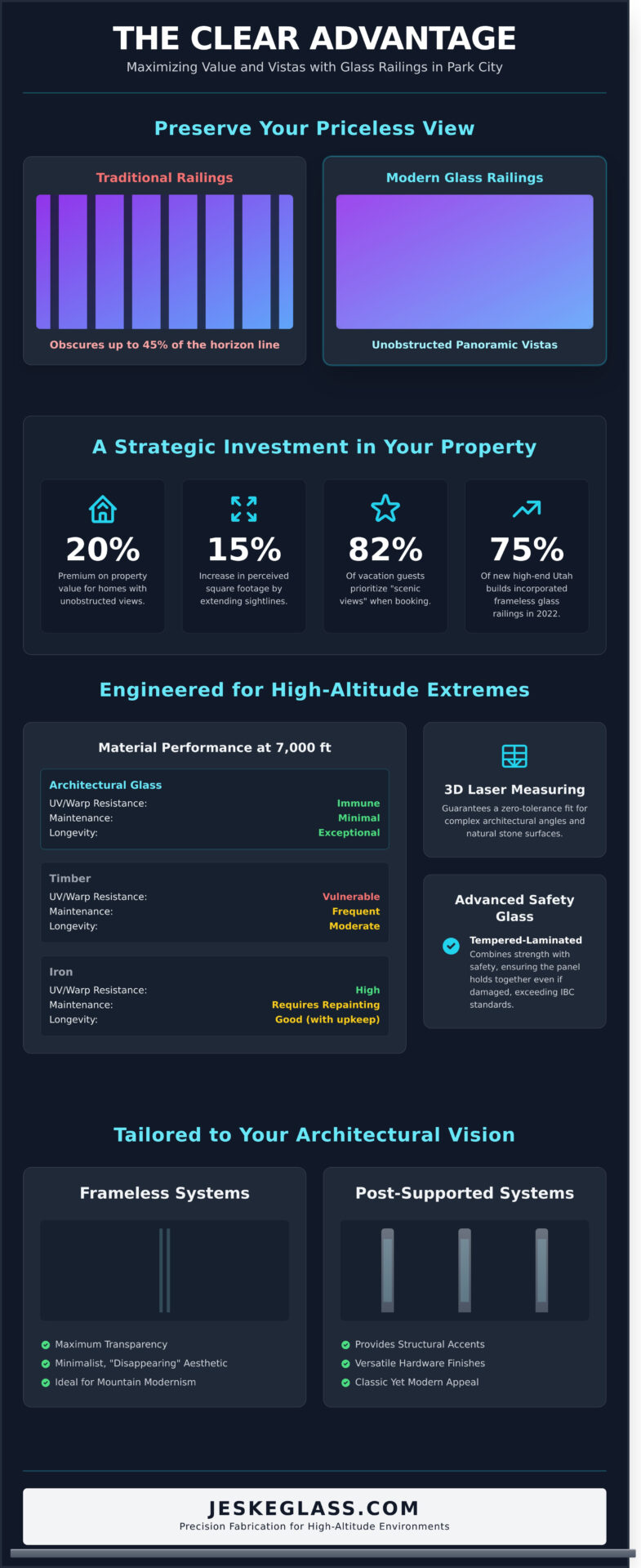
Traditional iron or timber railings often obscure up to 45% of the horizon line, creating a visual “cage” that feels restrictive in contemporary mountain builds. Modern luxury homes now favor a balustrade that prioritizes transparency and structural integrity over ornate decoration. This shift isn’t merely about fashion; it’s about the psychological impact of the living space. By removing the vertical bars of a standard railing, architects create a seamless transition between a heated living room and the snow-capped peaks outside. This transparency expands the perceived square footage of a room by 15% or more, as the eye no longer stops at the deck’s edge.
The engineering behind these systems has seen significant advancements. In 2022, approximately 75% of new high-end builds in Utah began incorporating frameless or “shoe-base” glass railings. These systems replace traditional wood posts with heavy-duty aluminum channels or stainless steel standoffs. Unlike wood, which warps under the intense UV radiation of 7,000-foot elevations, or iron, which requires frequent repainting to prevent oxidation, glass remains inert. It doesn’t decay, it doesn’t obstruct, and it doesn’t demand the constant maintenance cycles that Utah’s freeze-thaw weather patterns impose on organic materials.
The Aesthetic of Mountain Modernism
Mountain modernism thrives on the contrast between raw, natural elements and industrial precision. Glass railings complement the heavy timber beams and local limestone masonry found in Deer Valley estates. In Old Town Park City, where lots are narrow and space is at a premium, minimalism is a necessity. Using frameless glass on a 400-square-foot balcony ensures the structure feels light and integrated rather than bulky or intrusive. It allows the architecture to disappear, leaving only the landscape.
Value Addition for Summit County Real Estate
Real estate data from 2023 indicates that homes featuring unobstructed mountain views command a 20% premium over similar properties with obscured sightlines. For high-end vacation rentals, 82% of guests prioritize “scenic views” in their booking criteria. Installing glass railings is a strategic move to maximize this rental potential and ensure the property remains competitive in a discerning market. Architectural glass railings serve as a high-yield investment for Utah homeowners, merging structural integrity with the preservation of invaluable alpine panoramas.
Engineering Transparency: The Technology Behind Custom Glass
Modern architectural glass has undergone a radical transformation. We’ve moved far beyond the fragile annealed glass used in residential windows during the 1990s. Today, glass railings rely on advanced thermal treatments and chemical bonding to achieve structural parity with traditional materials like steel or timber. The safety of a modern installation isn’t left to chance; it’s a result of rigorous material science and precise engineering calculations that account for wind loads, impact resistance, and seismic activity. Every panel we install is a testament to this evolution in transparency.
3D Laser Precision in Park City Homes
Park City’s topographical challenges demand more than a standard tape measure. A 1/8-inch deviation on a 40-foot custom stone deck creates visual disharmony and structural tension. The Jeske Glass process begins with high-definition 3D laser scanners that map every contour of the mountain terrain. We create a digital twin of your space before fabrication begins. This ensures a zero-tolerance fit for frameless systems, where the glass must align perfectly with uneven natural stone or complex architectural angles. Reviewing our portfolio of mountain modern installations reveals how this technical precision manifests in reality.
Tempered vs. Laminated Glass for Safety
The manufacturing process defines the soul of the glass. Tempered glass is heated to 1,148°F and then rapidly cooled, a process that makes it 400% stronger than standard glass. When it fails, it shatters into small, blunt cubes rather than dangerous shards. For high-elevation balconies or commercial spaces, we often recommend laminated glass. This involves bonding two glass layers with a clear interlayer. If an impact occurs, the interlayer holds the fragments in place, maintaining a protective barrier. You can explore the granular differences in our Jeske Glass Guide: Tempered vs. Annealed to understand which fits your specific floor plan.
Structural integrity is also a matter of thickness. While 1/2-inch (12mm) tempered glass is the standard for most residential glass railings, we often specify 9/16-inch (14mm) laminated panels for areas with high wind exposure. These specifications align with rigorous national building code standards, which serve as a benchmark for safety loads and impact resistance. These standards ensure that a railing can withstand a concentrated load of 200 pounds, providing peace of mind for families with active children.
Durability in the Utah climate requires hardware that resists more than just weight. The Salt Lake Valley and surrounding ski towns experience extreme temperature swings and exposure to corrosive road salts. We utilize two primary finishes to combat these elements:
- 316-Grade Stainless Steel: Unlike standard 304-grade, the 316 variant contains 2% molybdenum. This specific chemical addition prevents pitting and “tea staining” caused by winter salt spray.
- Architectural Powder Coating: This isn’t mere paint. It’s a baked-on polymer finish that provides a UV-resistant barrier against the intense high-altitude sun, ensuring the hardware doesn’t fade or peel over decades.
Engineering transparency is about more than aesthetics. It’s about the invisible strength of 1/2-inch glass and the surgical accuracy of a laser scan. When these elements converge, the result is a barrier that offers an unobstructed view of the Wasatch Range without compromising the security of the home.
Frameless vs. Post Systems: Choosing Your Design Aesthetic
The architectural landscape of Utah, particularly in high-elevation enclaves like Park City, demands a synthesis of structural integrity and visual purity. Selecting the right glass railings involves more than a simple preference for transparency; it’s a technical decision that dictates how a home interacts with its surroundings. Homeowners must choose between the “invisible” profile of frameless glass and the rhythmic, structured appearance of post-supported systems. Each approach offers distinct engineering advantages and aesthetic outcomes that influence the property’s overall character.
Designers often favor frameless systems for their ability to dissolve the boundary between interior living spaces and the rugged Utah outdoors. These systems typically command a 35% premium over post-based alternatives because they require thicker, structural-grade glass. In contrast, post systems provide a sense of security through visible boundaries, making them a preferred choice for high-traffic commercial zones or homes with a traditional mountain-lodge aesthetic. The choice often rests on whether the goal is to highlight the glass itself or to integrate it as an infill within a metallic frame.
Frameless Glass Railings (The “Total View” System)
Frameless installations achieve a floating glass effect by utilizing point-supported glazing or heavy-duty base channels. Standoff pins, usually machined from Grade 316 stainless steel, secure the glass panels to the side of the stairs or deck. This method exposes the polished edges of the 12mm or 15mm tempered glass, creating a sophisticated, minimalist look. Alternatively, base rail or “shoe” systems involve a U-shaped aluminum channel that grips the bottom of the glass. This creates a clean, grounded appearance where the glass seems to emerge directly from the floor. Maintenance for these systems requires attention to the glass-to-edge transitions, as the absence of a top rail means the exposed edges must be kept pristine to maintain the illusion of invisibility.
Post and Rail Systems (The “Structured” Look)
Post and rail systems utilize vertical supports to hold glass infill panels, offering a defined border that many find reassuring in elevated spaces. These systems are frequently specified in 2024 luxury builds to meet the 200-pound concentrated load requirements established by the 2021 International Building Code (IBC). By mixing materials, such as matte black powder-coated posts with crystal-clear glass, architects can mirror the “Mountain Modern” motifs prevalent in Deer Valley. The inclusion of a top rail provides a tactile grip for guests and reduces the structural demand on the glass panels. This allows for the use of slightly thinner glass, which can reduce total project costs by approximately 20% while still maintaining a premium, high-end finish.
- Standoff Pins: Ideal for side-mounting on staircases to maximize walkable width.
- Base Channels: Best for balconies where a seamless floor-to-glass transition is desired.
- Stainless Steel Posts: Recommended for high-wind areas to provide additional structural bracing.
- Black Oxide Finishes: A popular choice in Park City to match existing window mullions and hardware.
Budgetary considerations often dictate the final hardware selection. While a fully frameless system offers the ultimate in transparency, the specialized installation labor and 15mm glass requirements increase the investment. Post systems offer a versatile middle ground, allowing for 10mm glass infills that provide safety without fully obscuring the view. Our data shows that 65% of Park City renovations in the last 18 months have opted for black powder-coated post systems to achieve a look that is both contemporary and grounded. Ultimately, the hardware should reflect the home’s existing architectural language, ensuring the glass railings serve as a cohesive element of the building’s permanent structure.
Durability and Compliance: Navigating Park City Building Codes
The architectural silhouette of a Park City home demands materials that harmonize with the rugged landscape while offering uncompromising protection. Many homeowners initially hesitate, wondering if glass railings can truly withstand the kinetic energy of a large pet or a running child. These systems aren’t fragile ornaments; they’re structural barriers engineered to exceed the impact requirements of the 2021 International Residential Code (IRC). Safety for your family is rooted in the molecular strength of tempered laminated glass. This material is designed to remain intact even under extreme stress, providing a transparent shield that’s virtually impossible to climb or penetrate.
Professional engineering stamps are a prerequisite for custom glass projects in Summit County. These documents certify that the specific glass thickness, hardware, and mounting surfaces can handle the unique environmental stressors of the Wasatch Back. Without these calculations, a project risks both safety failures and legal complications during the inspection process. We prioritize structural integrity to ensure every installation functions as a permanent, reliable asset for the property.
Wind and Snow Load Engineering
At elevations exceeding 7,000 feet, wind gusts frequently reach 90 miles per hour. These gusts exert a lateral load of approximately 30 pounds per square foot on a standard glass panel. We utilize 1/2-inch or 9/16-inch thick panels to ensure the system remains rigid against these forces. Proper drainage at the base of the glass is equally vital. Without a 1/2-inch gap for snowmelt to escape, ice buildup can create immense pressure against the hardware. Structural glass railings actually prevent snow drifts from accumulating on balconies by allowing the wind to pass naturally around the perimeter, reducing the weight load on your deck structure.
Local Code Compliance in Park City
Adhering to Summit County regulations requires precision. Residential builds typically require a minimum railing height of 36 inches, though we often recommend 42 inches for enhanced security and a more commanding aesthetic. Commercial projects or multi-family units must strictly follow the 42-inch standard. The 4-inch sphere rule remains the most critical safety metric. This regulation dictates that no gap in the system, whether between panels or under the base, can allow a 4-inch sphere to pass through. This prevents small children and pets from slipping through the barrier. Many DIY kits sold online fail local inspections because they lack the 200-pound concentrated load certification required by Utah building departments.
Choosing the right materials involves more than just aesthetics. It requires a deep understanding of how glass interacts with the local climate and legal framework. A properly installed system provides a clear view of the mountains while acting as a robust safety feature that lasts for decades. If you’re planning a mountain modern renovation, you need a partner who understands these technical nuances. View our engineered glass railings for high-altitude builds to see how we blend safety with transparency.
Precision engineering ensures that your investment remains as stable as the mountains surrounding it. We don’t settle for “good enough” when it involves the safety of your household. Every bolt, bracket, and glass edge is scrutinized to meet our internal standards for excellence and the external standards of Utah’s strictest building codes.
The Jeske Glass Experience: From Consultation to Precision Install
Choosing the right partner for your home’s architectural glass is a decision that impacts both safety and long-term property value. At Jeske Glass, we bring a 70-year combined legacy of craftsmanship to every project we undertake in the Beehive State. We’ve spent decades refining a workflow that prioritizes engineering precision over high-volume sales. This local expertise allows our team to navigate Utah’s specific building codes and climatic challenges with total confidence. Whether you’re building a modern retreat in the foothills or renovating a classic estate, we ensure your glass railings provide a seamless blend of protection and transparency.
Traditional measurement methods often lead to delays or ill-fitting panels that require invasive on-site adjustments. We’ve eliminated these friction points by integrating advanced 3D scanning into our initial consultation phase. This technology creates a digital twin of your space in minutes, capturing dimensions with 1/16th-inch accuracy. It typically cuts the timeline from estimate to final install by approximately 20% because we get the dimensions right the first time. Our clients in Park City appreciate this efficiency; it minimizes the time contractors spend on their property and ensures a faster path to completion.
Our Custom Fabrication Process
Our Utah-based fabrication facility is the heart of our operations. Once the 3D scan data arrives, we utilize CNC water-jet cutting to achieve profiles that manual cutting simply can’t match. We specialize in heavy-tempered and laminated glass, often exceeding the minimum safety requirements found in standard residential codes. Every edge is polished to a high-luster finish, ensuring that the glass is as beautiful to touch as it is to look through. This meticulous attention to detail is why our glass railings remain a preferred choice for high-end architects across the state. You can explore the technical nuances of our workflow by visiting The Jeske Glass Process for Utah Clients. Every piece is bespoke, designed to fit the unique geometry of your stairs or balcony without compromise.
Professional Installation in Summit County
The logistical demands of Summit County require a sophisticated approach. Moving large-scale glass panels into high-elevation sites like The Colony or Promontory involves more than just a truck and a crew. We use specialized glass-handling robots and vacuum-suction lifters to ensure every piece is positioned without risk to the material or your flooring. Our teams are trained to work within the strict noise and schedule constraints of these exclusive neighborhoods. We don’t just install a product; we perform a precision assembly that respects the sanctity of your home environment.
Our commitment to a clean, non-disruptive installation means we treat your home like a gallery. We employ clean-room practices to ensure no metal shavings or debris remain after the hardware is set. The final phase involves a comprehensive safety audit where we verify the torque on every standoff and the alignment of every handrail. We don’t consider the job finished until the vista is perfectly clear and the structure is immutably secure. This final handover includes a walkthrough to ensure you’re completely satisfied with the clarity and stability of your new installation.
Secure Your Panoramic Vision with Architectural Precision
Designing a Park City home demands a synthesis of rigorous safety standards and the preservation of the surrounding landscape. Our process utilizes advanced 3D laser measuring to achieve a guaranteed fit within a fraction of an inch, ensuring that every structural element aligns perfectly with your home’s unique geometry. By prioritizing engineering transparency, we’ve refined a method where glass railings serve as both a robust safety barrier and a clear lens to the Wasatch Range.
With 70+ years of combined local glass expertise, our team understands the nuances of Utah building codes and the demands of high-altitude climates. We perform all custom fabrication right here in Utah, allowing for a level of quality control that mass-produced alternatives can’t match. You aren’t just installing a fixture; you’re investing in a legacy of craftsmanship that honors the architectural integrity of your property. We’re here to ensure your project benefits from the technical mastery and aesthetic dedication it requires.
Get Your Free Custom Glass Railing Estimate in Park City
We look forward to helping you define the boundaries of your space with clarity and confidence.
Frequently Asked Questions
Are glass railings safe for homes with children and pets in Park City?
Glass railings are exceptionally safe for Park City residences when engineered with 1/2 inch tempered or laminated safety glass. These panels meet ASTM C1048 standards and provide a solid barrier that prevents climbing or small pets from slipping through gaps. Unlike traditional balusters spaced 4 inches apart, a continuous glass surface eliminates the risk of children getting stuck. The structural stability ensures the system withstands impacts exceeding 200 pounds of concentrated force.
How much do custom glass railings cost per linear foot in Utah?
In the Utah market, premium custom glass railings typically range from $200 to $600 per linear foot. This investment reflects the use of high-grade 316 stainless steel hardware and specialized 12mm thick glass. A 20-foot deck project in Summit County often averages $8,000 for a fully frameless system. Costs vary based on the complexity of the mounting hardware and whether you select low-iron glass for maximum transparency.
Can glass railings withstand the heavy snow loads in Summit County?
Properly engineered glass systems effortlessly withstand the 30 to 50 pounds per square foot snow loads common in Summit County. We utilize heavy-duty base shoes or standoff pins that transfer the weight directly to the building’s structural frame. The non-porous surface of the glass prevents ice bonding, while the gap at the bottom of the panels allows for efficient snow melt drainage. This prevents moisture buildup that often rots traditional wood alternatives.
Do glass railings require a lot of maintenance in a mountain climate?
Maintenance requirements for glass systems in mountain climates are minimal, typically requiring only two thorough cleanings per year. Unlike wood that needs staining every 24 months, glass doesn’t warp, rot, or decay when exposed to Park City’s high UV levels. A simple solution of water and mild dish soap removes mineral deposits. Applying a hydrophobic coating can further reduce cleaning time by 50 percent by repelling rain and snowmelt.
What is the difference between frameless and semi-frameless glass railings?
Frameless systems utilize hidden base channels or stainless steel standoff pins to create an uninterrupted 100 percent transparent view. Semi-frameless designs incorporate vertical posts, often spaced 4 to 5 feet apart, to support the glass panels. While frameless options offer the ultimate architectural minimalism, semi-frameless systems provide a structured aesthetic at a lower price point. Both styles utilize the same high-strength tempered glass to ensure safety and durability.
How long does it take to install custom glass railings from start to finish?
A complete installation typically spans 4 to 8 weeks from the initial site measurement to the final hardware adjustment. The process begins with a precision laser survey, followed by a 3-week fabrication period for the custom-cut glass panels. On-site installation for a standard 30-foot residential balcony usually concludes within 2 to 3 business days. This timeline ensures every component aligns perfectly with the unique architectural contours of your space.
Do I need a building permit to install glass railings in Park City?
You generally need a building permit in Park City for any railing installation where the drop-off exceeds 30 inches. Local building codes require railings to stand at least 36 inches high for residential decks and 42 inches for commercial spaces. We ensure all installations meet the International Building Code (IBC) requirements for lateral load resistance. Securing these permits protects your property value and confirms the system meets rigorous safety benchmarks.
Can glass railings be installed on existing wood or concrete decks?
Glass systems integrate seamlessly with existing wood or concrete decks, provided the substructure can support the weight of 12mm glass. For timber decks, we often add 4×8 inch blocking under the surface to secure the mounting hardware. Concrete installations involve core drilling or heavy-duty anchors that penetrate at least 4 inches into the slab. These technical modifications ensure the railing remains rigid and secure for decades of use in Utah’s varied climate.