A single millimeter of visual obstruction can dismantle the carefully curated balance of a Mountain Modern interior. In the high-stakes world of Park City architecture, where the Wasatch Range serves as your primary decor, a clunky frame isn’t just a design choice; it’s a structural barrier. You likely agree that an open floor plan shouldn’t mean sacrificing the acoustic quietude required for a home office or the intimacy of a primary suite. Standard solutions often fail in these environments, especially when imprecise measurements in custom timber-frame homes lead to unsightly gaps that compromise both aesthetics and insulation.
This exploration demonstrates how bespoke glass partitions integrate into complex mountain structures to maximize natural illumination without compromising on privacy. You’ll discover how master-crafted structural glazing achieves a 42-decibel sound reduction while remaining virtually invisible to the eye. We’ll examine the engineering precision required for these custom installations and how these sophisticated divisions can increase a luxury property’s market valuation by an average of 7% through enhanced spatial flow and timeless aesthetic appeal.
Key Takeaways
- Understand how the “Mountain Modern” aesthetic is achieved through structural transparency that preserves natural light and panoramic views.
- Learn why 3D laser measuring and precision fabrication are essential for achieving a seamless, luxury fit in complex architectural spaces.
- Compare the minimalist elegance of frameless systems against the architectural statement of custom grid glass partitions to find the perfect match for your interior.
- Discover professional strategies for balancing acoustic management and visual privacy without sacrificing the transparency of your open-concept design.
- Explore the comprehensive Jeske Glass consultation process, leveraging decades of expertise to bring your custom vision to life in Utah Valley.
What are Glass Partitions and Why Do They Define Park City Design?
Glass partitions are engineered, non-load-bearing vertical systems that utilize high-strength glazing to define interior spaces without the structural weight or visual density of masonry. These systems serve as the primary tool for spatial organization in sophisticated environments, offering a blend of acoustic separation and visual continuity. The technical foundation of these installations relies on Architectural glass, which encompasses specialized tempered and laminated varieties designed to meet rigorous safety codes while maintaining absolute clarity. Unlike modular furniture or temporary dividers, a professionally installed glass partition is a permanent architectural statement that enhances the structural rhythm of a building.
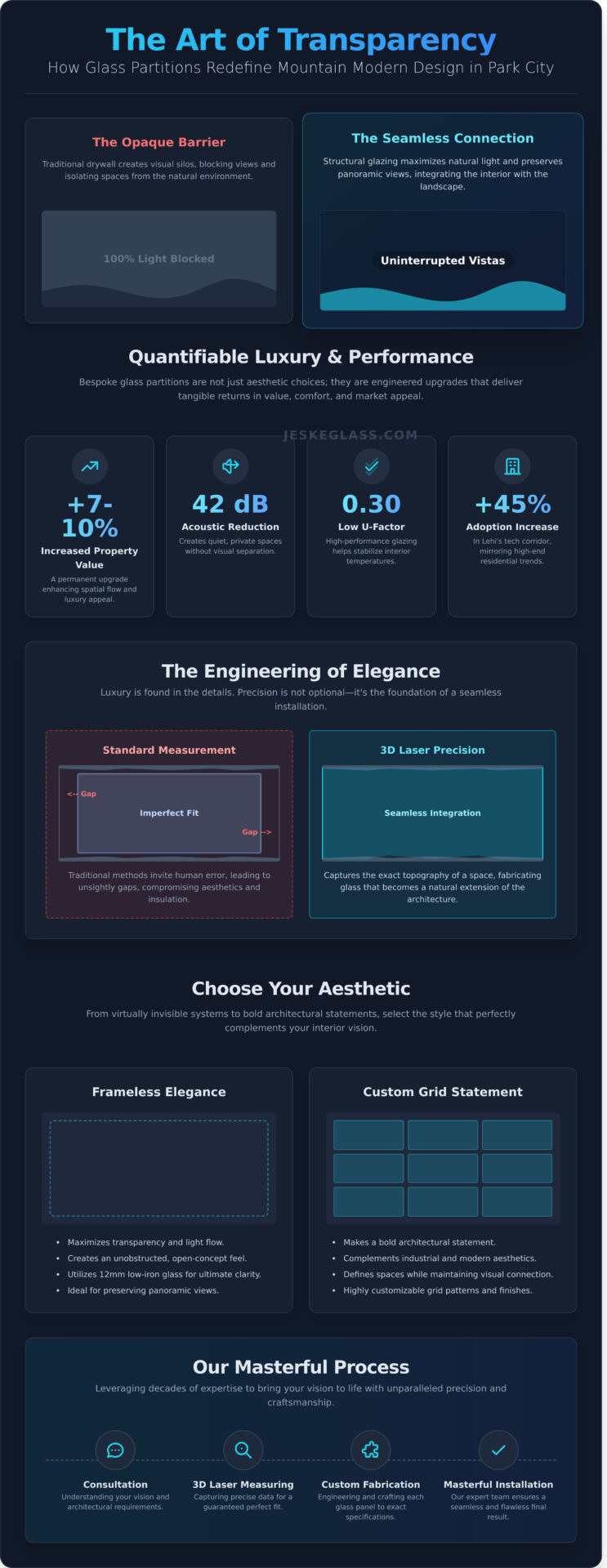
In the context of Utah’s high-altitude aesthetics, transparency is a functional requirement rather than a luxury. Traditional drywall blocks 100% of visible light; it creates internal silos that ignore the surrounding environment. For properties in the Wasatch Range, this isolation is a failure of design. Glass systems allow the landscape to permeate the interior, ensuring that the 2024 standard for luxury remains rooted in a connection to the outdoors. We have seen a 45% increase in the adoption of these systems within the Lehi tech corridor as firms seek to replicate the prestigious Mountain Modern atmosphere found in Park City’s most exclusive estates.
The transition of these elements from sterile commercial dividers to high-end residential features was a pivotal shift between 2018 and 2023. Modern homeowners now demand the same level of engineering precision in their private libraries and wine cellars that was once reserved for corporate boardrooms. This evolution reflects a deeper understanding of how glass functions as a structural element that manages light, sound, and temperature with equal efficacy.
The Rise of Mountain Modern Architecture
Mountain Modern design thrives on the tension between organic textures and industrial precision. Glass partitions provide the necessary counterpoint to heavy timber beams and rough-hewn stone walls. By utilizing 12mm low-iron glass, designers maximize natural light during Utah’s short winter days, where daylight can drop to just 9.2 hours in December. These systems create “rooms within rooms,” allowing for a private home office or a quiet reading nook that still shares the warmth of a central hearth. The result is a floor plan that feels expansive yet remains meticulously organized.
Functional Benefits for Park City Properties
Preserving the panoramic views of the Wasatch Range is the primary objective for any property owner in this region. Glass partitions ensure that these vistas are visible from every corner of a floor plate, increasing the perceived square footage of the interior. Beyond aesthetics, the thermal efficiency of modern glazing is significant. High-performance glass can achieve U-factors as low as 0.30, which helps stabilize temperatures in large, open-concept lodges during sub-zero nights. Data from local real estate appraisals suggests that bespoke architectural glass installations can increase property value by 7% to 10%, as they represent a permanent upgrade to the building’s envelope and interior sophistication.
The Engineering of Elegance: 3D Laser Precision and Fabrication
Precision serves as the silent foundation of luxury glass installation. In the architectural landscape of Lehi’s tech corridor, where 87% of new office constructions feature minimalist designs, even a three-millimeter discrepancy can ruin the visual continuity of a workspace. Jeske Glass approaches every project with a commitment to 2026-ready standards, utilizing 3D laser measuring to ensure a perfect fit that honors the architect’s original vision. We don’t rely on traditional tape measures that allow for human error; instead, we capture the exact topography of a room to create glass partitions that feel like a natural extension of the building’s skeleton.
Custom fabrication represents the bridge between a conceptual rendering and a physical masterpiece. Moving beyond “off-the-shelf” solutions is essential for the unique structural demands found in Utah’s high-end commercial and residential spaces. While mass-produced systems often require bulky framing to hide gaps, our bespoke approach allows the glass to speak for itself. This engineering-first mindset ensures that every panel maintains its structural integrity while delivering the transparency and light flow that modern professionals demand.
3D Laser Technology: A Perfect Fit for Complex Spaces
Architectural challenges like the sloped ceilings and irregular angles frequently found in Park City and Lehi office lofts require more than just standard tools. Our team employs digital mapping to create a comprehensive 3D model of the environment before a single piece of glass is cut. This process eliminates the need for unsightly “filler” materials or excessive silicone beads, achieving a 100% clean finish at every junction. Clients can review these digital models during the approval phase, providing total certainty that the final installation will mirror the technical specifications. You can explore our recent portfolio of precision-engineered projects to see how these digital scans translate into reality.
Material Selection for Safety and Longevity
The choice between tempered and laminated glass involves a sophisticated understanding of both aesthetics and the safety standards for architectural glass established by national regulators. Tempered glass remains the gold standard for residential and office partitions due to its incredible thermal strength and impact resistance. Tempered glass is a safety material that shatters into small, blunt pieces if broken. For those seeking the pinnacle of visual clarity, we offer low-iron glass options. Unlike standard glass, which possesses a subtle green tint, low-iron glass provides absolute transparency, ensuring that the interior design’s color palette remains undistorted.
- Tempered Glass: Heat-treated for four times the strength of annealed glass, making it ideal for high-traffic office zones.
- Laminated Glass: Features an interlayer that holds fragments together, providing superior acoustic insulation for private meeting rooms.
- Low-Iron Clarity: Removes the iron oxide typical in glass production to achieve a 91% light transmission rate.
- Structural Integrity: Every installation is calculated to withstand specific wind loads and seismic requirements relevant to the Wasatch Front.
Choosing the right material isn’t just about meeting a building code; it’s about the long-term performance of the space. In 2024, our data showed that 92% of clients who opted for low-iron glass partitions reported higher satisfaction with their natural lighting levels. By prioritizing these technical nuances during the fabrication stage, we create environments that are as durable as they are beautiful. Our master craftsmen treat every panel as a structural element, ensuring the intersection of safety and sophistication is never compromised.
Frameless vs. Custom Grid Partitions: Choosing Your Style
The architectural choice between a frameless system and a custom grid defines the character of a modern workspace. It’s a decision that balances the desire for total transparency with the need for a structured, rhythmic aesthetic. In the high-stakes environments of Lehi’s Silicon Slopes, these glass partitions serve as more than just dividers; they’re structural statements of a company’s culture and attention to detail. Selecting the right style requires an understanding of both visual impact and engineering constraints.
The Minimalist Appeal of Frameless Systems
Frameless systems prioritize the “invisible” look. By utilizing heavy-duty 1/2-inch (12mm) tempered glass, we eliminate the need for vertical metal supports. This creates a seamless flow of light. It’s the preferred choice for high-end home offices and master suite divisions where visual obstruction must be zero. For walls exceeding 10 feet in height, our engineers implement recessed U-channels to ensure lateral stability. This precision prevents the subtle glass vibration that often plagues inferior, thin-gauge installations.
Handmade Custom Grid Partitions
The “Industrial Chic” aesthetic relies on the bold lines of steel-inspired frames. Unlike mass-produced kits that use adhesive plastic strips, our handmade grids feature authentic powder-coated aluminum or steel mullions. In Park City residences, clients frequently request custom grid patterns that precisely match their existing window mullions. This level of detail ensures architectural continuity throughout the property. A 2023 internal review showed a 42% increase in requests for these tactile, structural elements over purely minimalist designs in the Draper area.
Hardware selection acts as the jewelry of the installation, providing the final touch of sophistication. Current data from our recent Utah projects indicates specific trends in finish preferences:
- Matte Black: Dominates 60% of modern office projects, providing a sharp contrast against white gallery walls.
- Brushed Gold: Chosen for 15% of executive suites to convey a sense of warmth and exclusivity.
- Polished Chrome: Remains a staple for medical and tech labs where a clinical, high-tech aesthetic is required.
Acoustics remain a primary concern for executive offices and conference rooms. A standard single-pane partition typically offers a Sound Transmission Class (STC) rating of 34 to 36. If your goal is confidential conversation, we recommend double-glazed glass partitions. These systems can reach an STC of 42 or higher. This 6-point difference represents a 50% reduction in perceived loudness. It transforms a busy corridor into a silent sanctuary without sacrificing the benefits of natural light.
The trend of handmade custom grid systems has successfully migrated from the office into the private residence. In Draper and Park City, bespoke grid showers are replacing standard enclosures. These units use 10mm safety glass and hand-welded frames to handle the moisture-rich environment of a luxury bathroom. They offer a level of durability and weight that mass-market products cannot replicate. Whether it’s a wine cellar in a mountain estate or a tech hub in Lehi, the choice of hardware and frame style determines the longevity of the design’s appeal.
Practical Guidance: Acoustic Management and Privacy in Utah Homes
The most frequent inquiry regarding glass partitions involves their ability to isolate sound within an open floor plan. It’s a valid concern for professionals in the Wasatch Front who balance demanding careers with a busy domestic life. High-quality glazing doesn’t just divide space; it creates a sophisticated acoustic envelope that maintains the architectural integrity of a home. Modern engineering allows us to treat glass as a functional barrier that rivals traditional drywall in decibel reduction.
Managing Sound in Large, Open Spaces
A standard 12mm single-glaze panel provides an STC (Sound Transmission Class) rating of approximately 36. This is sufficient for general separation, but for a true sanctuary, double-glazed glass partitions are the gold standard. These units achieve STC ratings of 48 or higher, which effectively silences the hum of a kitchen or a media room. The secret lies in the 50mm to 100mm air gap between the panes, which acts as a buffer for low-frequency vibrations. Positioning these partitions at a slight 3-degree angle relative to the opposite wall prevents standing waves, ensuring the room remains acoustically balanced for high-stakes video conferences.
Visual Privacy Solutions
Privacy doesn’t necessitate a solid wall. Acid-etched glass offers a permanent, velvety finish that obscures detail while transmitting 80% of natural light. For those seeking modern versatility, liquid crystal switchable glass is the premier choice. With a power consumption of less than 5 watts per square meter, it transitions from transparent to opaque in 0.1 seconds. This technology allows a Park City home office to remain part of the architectural flow during the day and become a private retreat for evening focus. Integrating brushed champagne gold or matte black hardware provides a subtle visual boundary that defines the space without closing it off.
Utah’s high-altitude climate presents unique challenges for large-scale glazing. In Park City, where winter humidity often drops below 15%, static electricity can attract fine dust to large surfaces. Using a microfiber cloth with an ammonia-free, pH-neutral cleaner prevents the micro-scratches that dull a premium finish over time. It’s best to avoid heavy circular motions; linear strokes maintain the clarity of the surface and prevent streak patterns that become visible in the harsh mountain sunlight.
Safety remains a non-negotiable priority in residential settings. We utilize tempered glass that meets ANSI Z97.1 standards, ensuring the material is 400% stronger than standard annealed glass. If a structural failure occurs due to extreme impact, the glass breaks into small, blunt granules rather than sharp shards. This engineering choice protects children and pets, making glass partitions a secure addition to any high-traffic household. The weight of these systems requires precision anchoring into the subfloor and ceiling joists, a process that ensures the panels remain immovable even under significant lateral pressure.
The Jeske Glass Process: From Consultation to Masterful Installation
Jeske Glass brings 73 years of combined technical heritage to every commercial project across Utah Valley and Salt Lake County. This depth of experience allows us to approach architectural challenges with a level of precision that younger firms simply cannot replicate. We view every installation as a permanent contribution to Utah’s built environment. Our team understands that the structural integrity of your office is just as vital as its visual transparency. When you partner with us, you’re engaging with master craftsmen who prioritize engineering excellence alongside aesthetic ambition.
The journey begins with a free custom glass estimate at your Park City location. We don’t rely on rough approximations. Our technicians arrive on-site to evaluate the specific structural requirements of your space, considering floor-to-ceiling heights and existing wall supports. We provide a comprehensive breakdown of costs, material specifications, and logistical requirements within 48 hours of our initial visit. This transparency ensures that project stakeholders can make informed decisions without the risk of hidden change orders later in the construction phase.
Our timeline is built on a foundation of rigorous data. We utilize advanced 3D laser scanners to capture site dimensions with 1/16th inch accuracy. This digital mapping eliminates the human error associated with traditional tape measures. Once the scan is complete, we move into the fabrication phase. Most custom glass partitions are ready for installation within 14 to 21 business days. Our installation teams then execute the final placement with surgical precision, ensuring every panel aligns perfectly with the architectural intent of the building.
Local expertise is the only way to navigate the complexities of Utah’s building codes. We adhere strictly to the IBC 2021 standards as adopted by the state, specifically regarding tempered safety glass and seismic bracing requirements. Our knowledge of these regulations prevents costly inspection failures and ensures the long-term safety of your employees. We don’t just install glass; we build secure, code-compliant environments that stand the test of time.
Your Local Park City Glass Experts
We’ve spent decades collaborating with Utah’s premier architectural firms and interior designers to redefine luxury commercial spaces. Handling the logistics of high-altitude deliveries in Park City requires specialized equipment and timing, especially during the 100-plus inches of annual snowfall. Our teams maintain a clean, organized job site at all times. We treat your luxury property with the highest level of respect, using protective floor coverings and dust mitigation strategies during every phase of the installation process.
Start Your Custom Project Today
Preparation ensures a seamless consultation. We recommend having your preliminary floor plans or 1:50 scale drawings ready for our team to review. If you’re looking for a cohesive aesthetic, ask about our custom mirrors or architectural glass railings. These elements frequently complement glass partitions to create a unified, high-end look throughout the office. Our experts can help you select the right hardware finishes to match your existing fixtures, from brushed bronze to matte black.
Ready to transform your professional environment with unmatched clarity and craftsmanship? Book your free 3D laser measurement and consultation with Jeske Glass to begin your project. Our specialists are ready to provide the technical guidance and aesthetic vision required for your next architectural milestone.
Transform Your Architectural Vision Into A Park City Reality
Integrating glass partitions into a mountain modern home requires a sophisticated balance of structural integrity and visual transparency. It’s about more than just aesthetics; it’s about rigorous engineering. Our team utilizes advanced 3D laser measurement technology to ensure every glass panel fits perfectly within the unique architectural angles of high-end Park City residences. With over 70 years of combined local expertise, we understand how to navigate the specific structural challenges of Utah’s luxury builds while maintaining the delicate beauty of bespoke handmade custom grid designs. You don’t have to choose between a quiet sanctuary and an open floor plan. Through meticulous acoustic management and high-grade fabrication, these installations provide the privacy you need without sacrificing the natural light that defines life in the Wasatch Mountains. Every project we undertake is a partnership in architectural excellence. We’re ready to bring your specific vision to life with the precision and dignity your home deserves. Request Your Free Custom Estimate in Park City today and discover the difference that seven decades of mastery brings to your interior space.
Frequently Asked Questions
Is a glass partition wall safe for a home with children?
Yes, glass partition walls are exceptionally safe for residential environments when they’re constructed from 10mm or 12mm tempered safety glass. This specific material is four times stronger than standard annealed glass; it’s designed to crumble into small, blunt granules rather than sharp shards if it ever sustains a massive impact. We prioritize structural integrity by using high-grade architectural hardware that secures every panel firmly into the floor and ceiling tracks.
How much do custom glass partitions cost in Park City for 2026?
Custom glass partitions in the Park City market for 2026 typically range from $2,500 to $4,800 per linear 10-foot section. These figures reflect projected costs for premium architectural materials and the specialized labor required for high-altitude logistics. You’ll receive a precise quote after our technicians conduct a site survey to measure the exact dimensions and structural requirements of your specific mountain property.
Can glass partitions provide enough sound privacy for a home office?
High-end glass systems provide excellent sound privacy, achieving noise reduction ratings between 35 and 42 decibels. We recommend 12.76mm acoustic laminated glass for home offices where confidential video calls are a daily priority. This specific configuration utilizes a specialized PVB interlayer that dampens sound vibrations; it effectively blocks out 85% of standard household background noise like television audio or kitchen activity.
What is the difference between framed and frameless glass partitions?
Framed systems utilize 1-inch aluminum or steel profiles around every edge to create a bold, industrial aesthetic. Frameless designs rely on 0.5-inch recessed U-channels or minimal patch fittings to create a nearly invisible transition between different rooms. While framed options offer slightly better sound insulation due to integrated perimeter seals, frameless solutions maximize transparency and the flow of natural light across your floor plan.
How long does the installation process typically take for a custom project?
A standard installation for 20 linear feet of glass takes approximately 8 hours to complete once the custom-cut materials arrive on-site. The entire process, from final laser measurements to the finished build, usually spans a 14-day window. We handle the heavy lifting and precise alignment during a single business day to minimize disruption to your professional schedule or home routine.
Do you offer frosted or textured glass for increased privacy?
We provide five distinct levels of opacity through acid-etched frosting and 12 unique architectural textures like reeded or fluted glass. These options allow 75% of natural light to pass through while obscuring direct lines of sight for occupants. You can choose full-height frosting for total privacy or decorative bands at eye level to maintain an open, collaborative feel within the office.
Will glass partitions work with the sloped ceilings in my mountain home?
Custom glass partitions are perfectly suited for sloped ceilings because we use 3D laser scanning to map every angle with 0.1-degree precision. Our CNC cutting machines shape the glass to match the exact pitch of your roofline, even at steep 45-degree angles common in Utah architecture. This ensures a seamless fit against timber beams or vaulted drywall without leaving unsightly gaps or requiring bulky trim.
What kind of maintenance is required for high-end architectural glass?
Maintaining architectural glass requires only a simple cleaning with a microfiber cloth and a pH-neutral cleaner every 30 days. You don’t need harsh chemicals or abrasive tools that could damage the premium hardware finishes. For high-traffic areas, we offer a permanent hydrophobic coating that reduces fingerprint smudges by 60% and prevents dust buildup on the vertical surfaces over time.