
What if the panoramic window framing your view of the Wasatch Range is actually the most vulnerable element in your architectural design? In 2024, Utah building inspectors reported that nearly 12% of luxury residential projects in the region faced significant delays due to improper glazing choices in high-traffic zones. You likely understand that glass is far more than a mere transparency; it’s a structural component that must balance uncompromising aesthetics with rigorous safety standards. Mastering the selection of annealed glass vs tempered glass requires a sophisticated understanding of both engineering and the specific mandates of the Utah building code.
Discover the critical structural and safety differences between these materials to ensure your residence remains a sanctuary of both light and security. We’ll provide you with the professional clarity needed to select the correct glass for diverse applications, ranging from decorative mirrors to structural glass railings. This guide examines why tempered glass cannot be modified after its 620-degree Celsius thermal treatment; it also explains how Park City’s extreme temperature fluctuations dictate the performance requirements for your 2026 construction or renovation project.
Key Takeaways
- Master the fundamental thermal differences between slow-cooled standard glass and high-pressure quenched structural glass to ensure lasting integrity in your architectural designs.
- Learn why the distinction between sharp shards and granular safety pebbles is a critical security consideration for high-traffic areas and modern luxury interiors.
- Navigate the complexities of the 2026 Utah building codes by evaluating annealed glass vs tempered glass for specific hazardous locations like wet rooms, staircases, and entryways.
- Discover a professional decision framework for selecting glass that balances visual transparency with the rigorous structural demands of Park City’s unique mountain climate.
- Gain insight into the precision-driven “measure twice, temper once” philosophy that ensures flawless execution for bespoke, high-end custom glass installations.
The Science of Glass: How Annealing and Tempering Differ
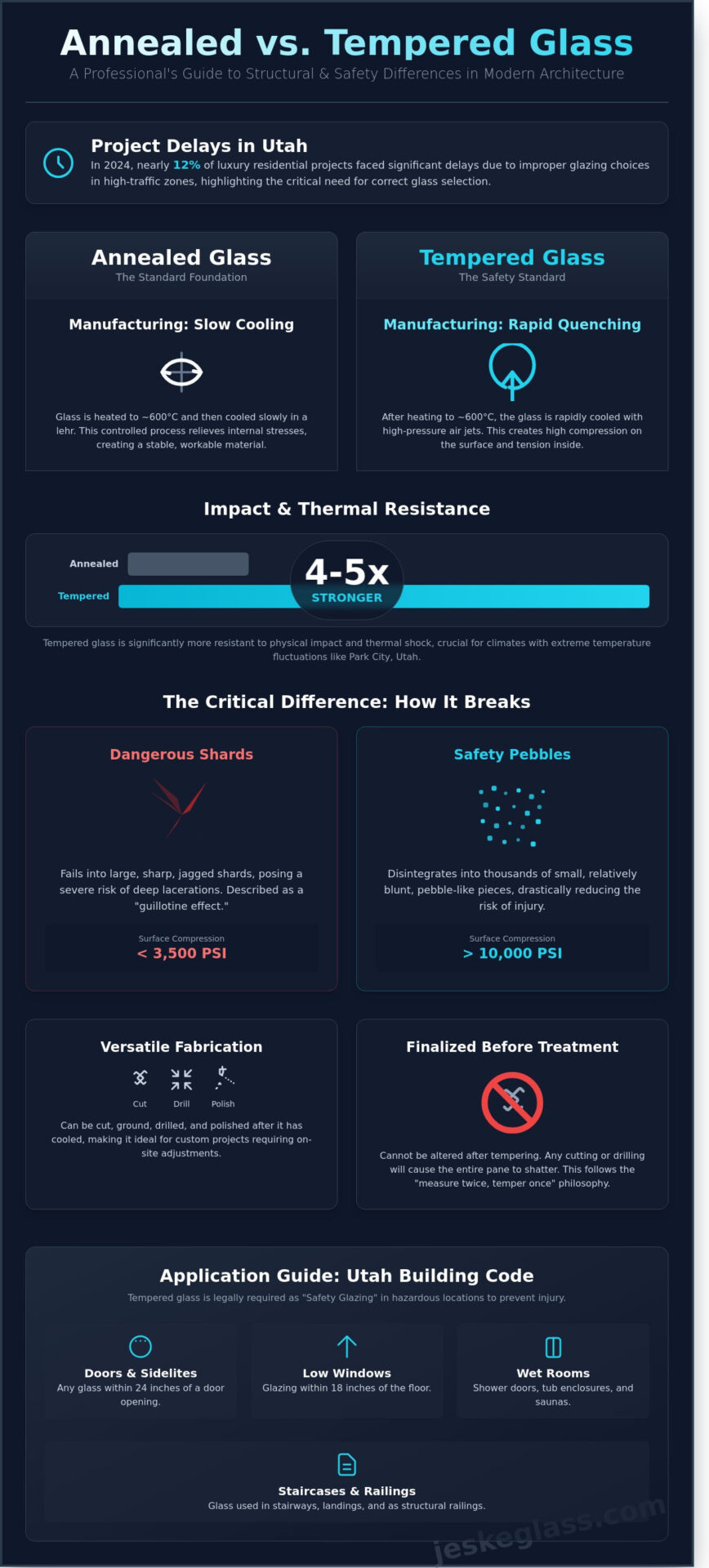
The distinction between annealed glass vs tempered glass begins at the molecular level during the cooling phase. Annealed glass serves as the standard architectural medium, undergoing a meticulously slow cooling process in a specialized kiln known as a lehr. The annealing point is 600 degrees Celsius for standard float glass. This controlled thermal descent ensures the material remains stable enough for subsequent artisanal modifications and structural refinements without the risk of spontaneous fracture.
Achieving the structural integrity required for premium installations involves manipulating thermal energy with extreme precision. The Science of Glass: How Annealing and Tempering Differ hinges on the delicate balance of internal forces created during fabrication. While standard glass cools naturally, tempering utilizes extreme heat followed by rapid high-pressure cooling called quenching. This process forces the exterior surfaces into a state of compression while the interior remains in tension, creating a robust shield against physical impact and thermal shock.
The Annealing Process: Controlled Cooling for Versatility
Slow cooling cycles are vital because they relieve the internal stresses inherent in molten glass. This molecular relaxation allows the material to retain its workability, making it the primary choice for projects that require on-site adjustments. It’s the foundational substrate for most glazing products. Architects and craftsmen rely on this versatility for several reasons:
- It allows for precision cutting, grinding, and polishing after the glass has cooled.
- The material can be easily drilled or notched to accommodate specific hardware.
- It acts as the essential base for more complex glass treatments and coatings.
The Tempering Process: Thermal Stress for Superior Strength
Thermal tempering demands a precise heating environment of 1110 degrees Fahrenheit to reach the glass’s softening point. Once quenched, the resulting pane is 4 to 5 times stronger than its annealed counterpart. This heightened resistance is essential for high-traffic areas where safety and transparency must coexist. It’s critical to finalize all dimensions and hole placements before the tempering cycle begins. Once the glass is tempered, you can’t alter its molecular structure through recutting or drilling without causing the entire pane to shatter instantly into small, relatively harmless pieces.
Safety and Fragmentation: Comparing Shards vs. Pebbles
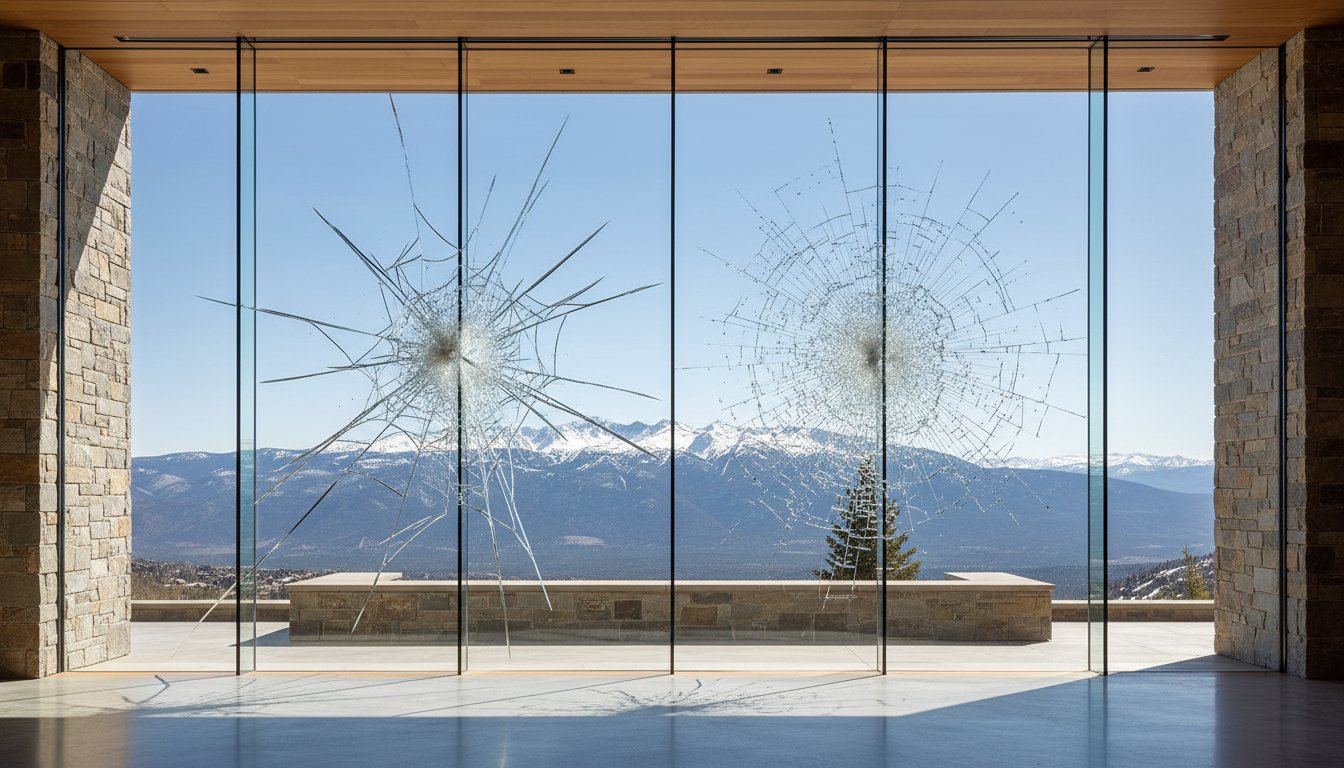
The fundamental distinction in the annealed glass vs tempered glass debate lies in the physical response to terminal stress. Annealed glass provides excellent clarity for static architectural elements, yet it lacks the internal tension required to manage high-velocity impact safely. When it fails, it yields to gravity in large, serrated shards. These fragments pose a severe risk of deep lacerations, often described by safety inspectors as a guillotine effect. By contrast, tempered glass undergoes a specialized thermal treatment that creates 10,000 to 15,000 PSI of surface compression. This stored energy ensures that, upon failure, the entire pane disintegrates into thousands of small, relatively blunt pebbles.
Under the 2021 International Building Code (IBC) adopted throughout Utah, this pebble breakage pattern is a legal requirement for safety glazing. Any glass installed within 24 inches of a door opening or 18 inches of the floor must meet these stringent fragmentation standards. Tempered glass is the industry benchmark for these high-traffic zones, offering approximately four times the strength of its annealed counterpart.
| Feature | Annealed Glass | Tempered Glass |
|---|---|---|
| Surface Compression | Less than 3,500 PSI | Exceeds 10,000 PSI |
| Breakage Pattern | Sharp, jagged shards | Small, blunt pebbles |
| Safety Rating | Standard / Non-Safety | Safety Glazing (ANSI Z97.1) |
| Impact Resistance | Low (Breaks easily) | High (Resists heavy impact) |
Why Annealed Glass is Not Considered Safety Glass
Standard annealed glass is preferred for its ease of fabrication and lack of optical distortion, yet it remains unsuitable for hazardous zones. The jagged pieces created during a break can weigh several pounds, falling with enough force to cause life-altering injuries. This risk is unacceptable in overhead glazing, skylights, or low-level windows where human impact is statistically likely. We typically reserve this material for picture frames, cabinet inserts, or decorative mirrors where the glass is protected from physical contact.
The Pebble Effect: How Tempered Glass Protects Your Family
Tempered glass utilizes a total failure mechanism that prioritizes human safety. For Park City homeowners with children or pets, this provides essential peace of mind. If a pane is struck by a stray object, it doesn’t just crack; it releases its internal tension and crumbles into fragments that won’t cause deep punctures. This characteristic is also vital for structural integrity in frameless designs, such as shower enclosures or glass railings. If you’re designing a space that demands both transparency and security, choosing premium architectural glass ensures your project meets the highest safety standards without compromising on aesthetics.
Choosing the Right Glass for Your Park City Architecture
Selecting between annealed glass vs tempered glass involves balancing structural integrity with refined aesthetics. In Park City’s luxury residences, where mountain views meet modern design, the choice often depends on the specific architectural application. While annealed glass offers unmatched clarity for interior accents, tempered glass remains the standard for high-traffic zones and structural safety. High-performance projects require Jeske Glass to ensure both types are mounted with the precision necessary for long-term stability in high-elevation environments.
When Annealed Glass is the Superior Choice
Annealed glass remains the preferred medium for intricate decorative work. Because it doesn’t possess the internal stresses of heat-treated glass, artisans can execute high-detail beveling and complex edge-work that tempered alternatives can’t sustain. It’s the ideal choice for custom mirrors, 5mm cabinet inserts, and protective picture frame glass. In these low-impact environments, the priority shifts from impact resistance to visual perfection. You’ll find annealed glass in areas where the risk of human contact is minimal, allowing for a level of transparency and edge smoothness that defines high-end interior styling.
Why Tempered Glass is Mandatory for Showers and Railings
Safety codes and structural demands make tempered glass non-negotiable for specific features. For frameless glass showers Utah, the glass must withstand thermal shock and physical impact. Similarly, custom glass railings Salt Lake City rely on tempered or laminated panels to provide a secure barrier without obstructing the vista. To ensure the highest quality, luxury builds often utilize heat-soak testing. This process reduces the risk of spontaneous breakage to approximately 1 in 400 tons of glass, providing peace of mind. While the initial investment for tempered glass is roughly 300% higher than annealed, its ability to crumble into small, blunt fragments instead of sharp shards makes it an essential safety investment.
- Structural Load: Tempered glass handles 4 times the wind load of standard annealed glass.
- Design Flexibility: Annealed glass allows for complex post-production cutting and drilling.
- Regulatory Compliance: Comparing annealed glass vs tempered glass reveals that only the latter meets 2024 IBC safety standards for hazardous locations.
- Visual Clarity: Annealed glass provides a perfectly flat surface, whereas tempered glass may exhibit subtle roller wave distortion from the cooling process.
The decision ultimately rests on the function of the space. Designers must weigh the cost-to-value ratio, recognizing that the premium paid for tempered glass isn’t merely for the material, but for the engineering that protects the home’s inhabitants.
Utah Building Codes and Climate Considerations in 2026
Utah’s residential architecture demands a precise balance between expansive mountain views and rigorous safety standards. The International Residential Code (IRC) serves as the foundation for these requirements, ensuring that structural integrity remains uncompromised in modern builds. In Utah, building code R308.4 mandates that all glass panels located within 24 inches of a door must utilize safety glazing. This specific regulation protects residents from impact injuries in high-traffic transition zones where accidental collisions are most frequent. When evaluating annealed glass vs tempered glass for a luxury project, understanding these designated “hazardous locations” is non-negotiable for passing a final inspection in 2026.
These safety requirements for glazing in and around doorways are a key consideration in high-end residential projects internationally. To see how specialist manufacturers integrate robust, safety-rated glass into modern entrance door designs, you can check out Grabex Windows Ltd.
Safety Glass Standards in Park City
Park City building inspectors classify wet environments, such as steam showers, saunas, and areas surrounding outdoor hot tubs, as high-risk zones. Any glazing within 60 inches of a standing water surface requires tempered glass to mitigate the risk of slips and shattered shards. To verify compliance, every safety panel must feature a permanent safety etching, commonly referred to as a “bug,” which remains visible after the installation is complete. For homeowners planning a renovation, ensuring these marks are present on all structural glass prevents costly delays during the certificate of occupancy phase. Our team ensures every installation meets these stringent aesthetic and legal benchmarks.
Altitude and Thermal Stress
Utah’s climate presents unique technical challenges for glazing longevity. At altitudes reaching 7,000 feet in Park City, atmospheric pressure differences can cause insulated glass units to bow or even collapse if not properly vented or reinforced. Beyond pressure, the 40-degree temperature swings common in the Wasatch Range create significant thermal expansion and contraction cycles. Annealed glass often fails under this “thermal shock” when one section of the pane remains in deep shadow while the rest absorbs direct solar heat. For south-facing scenic walls, we recommend tempered glass vs annealed glass for Park City’s extreme temperature conditions to resist these intense environmental stresses. The tempering process increases the material’s strength by 400 percent compared to standard glass, making it the only viable choice for the extreme Utah environment. If you are designing a high-altitude residence, you should consult with our technical experts to ensure your glazing choices provide both security and transparency.
The Jeske Glass Standards: Precision Fabrication in Utah
The choice between annealed glass vs tempered glass defines the safety, longevity, and visual clarity of your architectural vision. At Jeske Glass, we don’t just supply materials; we provide a sophisticated engineering partnership for Utah’s most ambitious residential projects. Our Provo-based team leverages over 70 years of combined technical expertise to transform raw glass into structural art. We’ve built our reputation on a commitment to using the highest quality custom glass Utah has to offer, ensuring every pane meets rigorous safety standards and aesthetic expectations.
Our “measure twice, temper once” philosophy isn’t a mere catchphrase; it’s a structural necessity. Because the internal tension of tempered glass makes it impossible to modify after the heat-treatment process, we eliminate the margin for error before the glass ever enters the furnace. This meticulous approach protects your timeline and ensures that the final installation is flawless.
3D Laser Measuring: Eliminating the No-Recut Risk
Precision is non-negotiable when dealing with high-performance glazing. We utilize advanced 3D laser measuring technology to capture digital templates with accuracy within 0.5mm. This technology is vital for the uneven, hand-hewn walls often found in historic Park City cabins or complex mountain retreats. Since you can’t trim tempered glass on-site, our digital mapping ensures a perfect fit for every unique angle and settle-point in the structure, preventing the costly delays associated with re-fabrication.
Custom Fabrication for Luxury Mountain Modern Homes
The architectural dialogue between glass and mountain scenery requires a partner who understands both engineering and aesthetics. We specialize in complex, oversized, and heavy glass projects that define the “Mountain Modern” style. Whether your design calls for 400-pound structural panels or expansive floor-to-ceiling vistas, we handle the logistics with a dedicated white-glove installation service across Salt Lake County and Utah Valley. Our process ensures that the functional debate of annealed glass vs tempered glass results in a solution that enhances the home’s transparency and safety.
Jeske Glass provides the technical foundation for your design’s most transparent elements:
- Expertise: 70+ years of combined fabrication and installation experience.
- Service Area: Comprehensive coverage for Park City, Salt Lake County, and Utah Valley.
- Technology: Digital templating that accounts for structural shifts and architectural nuances.
Ready to elevate your project with the region’s premier glass specialists? Contact Jeske Glass today for a free consultation and let our experts guide you through the technical specifications required for your luxury home.
Refining Your Architectural Vision for 2026
Selecting the ideal material requires a deep understanding of how annealed glass vs tempered glass performs within the unique environmental demands of the Wasatch Front. While standard annealed surfaces provide exceptional clarity for specific decorative applications, the 2026 Utah building codes mandate tempered safety glass for all high-traffic zones and structural installations. This distinction ensures your home remains both a sanctuary of light and a bastion of safety. Our fabrication process integrates these technical requirements with the uncompromising aesthetics that Park City’s most exclusive properties demand. Safety remains paramount.
Jeske Glass relies on over 70 years of combined experience to navigate these complex engineering choices. We utilize advanced 3D laser precision to ensure every pane fits with absolute accuracy, eliminating the margin for error in complex frameless designs. As Utah’s premier frameless specialist, we don’t just install glass; we curate architectural experiences that stand the test of time. Your vision deserves a partner who values precision as much as you value your home’s design integrity.
Request a Free Custom Estimate for Your Park City Glass Project
We look forward to bringing your next masterpiece to life with the clarity and strength it deserves.
Frequently Asked Questions
Is tempered glass more expensive than annealed glass?
Tempered glass typically costs 25% to 30% more than annealed glass because of the additional thermal strengthening process. This price reflects the specialized machinery and energy required to heat the glass to 620 degrees Celsius before rapid cooling. While the initial investment is higher, the fourfold increase in structural strength provides long term value and safety that standard glass can’t match.
Can you cut tempered glass if it doesn’t fit during installation?
You can’t cut tempered glass once it has undergone the heat treatment process. Any attempt to score or trim the surface will cause the entire pane to disintegrate into thousands of small granules instantly. All precision cutting, drilling, and edge polishing must occur while the material is still in its annealed state. Our craftsmen ensure every measurement is accurate to the millimeter before the glass enters the tempering furnace.
How can I tell if the glass already installed in my home is tempered or annealed?
You can identify tempered glass by looking for a permanent, sandblasted monogram in one of the four corners. This mark includes the manufacturer’s name and the CPSC 16 CFR 1201 safety standard certification. If no mark is visible, viewing the pane through polarized lenses will reveal a distinct pattern of dark spots or shadows caused by the internal tension of the glass.
What happens if annealed glass breaks in a shower?
If annealed glass breaks in a shower, it shatters into large, razor sharp shards that pose a severe risk of deep lacerations. This dangerous failure mode is why international building codes require safety glazing in all hazardous locations. Modern safety standards dictate that glass within 60 inches of a tub or shower floor must withstand impact or break into harmless, pebble like fragments to protect the occupants.
Are there any areas where tempered glass is not recommended?
Tempered glass isn’t recommended for applications requiring extreme optical precision, such as high end telescope lenses or specific laboratory equipment. The tempering process can introduce a roller wave distortion of approximately 0.03 millimeters; this is invisible to the naked eye but affects technical light refraction. In architectural contexts, annealed glass is preferred for intricate decorative pieces that might need hand trimming during a delicate installation.
Does tempered glass look different than annealed glass?
Standard tempered glass looks identical to annealed glass to the naked eye in most lighting conditions. However, the heat treatment process can create a subtle surface effect known as quench marks that appear under specific polarized light. When comparing annealed glass vs tempered glass, the most significant visual difference is the edge finish, as tempered edges are always factory finished and never raw or sharp.
How long does it take to get custom tempered glass in Park City?
Custom tempered glass orders in Park City typically require a lead time of 10 to 14 business days for fabrication and delivery. This window allows for precise waterjet cutting, edge polishing, and the 24 hour cooling cycle required after the glass leaves the furnace. Local mountain projects often demand specific structural ratings, so we prioritize meticulous quality control over rushed production schedules to ensure architectural integrity.
Is laminated glass the same thing as tempered glass?
Laminated glass is not the same as tempered glass, though both are classified as safety glazing. Laminated glass consists of two layers of glass bonded together by a 0.76 mm polyvinyl butyral interlayer that holds fragments in place if broken. While you can compare annealed glass vs tempered glass based on impact strength, laminated glass is chosen specifically for its 99% UV blockage and superior acoustic dampening properties.