
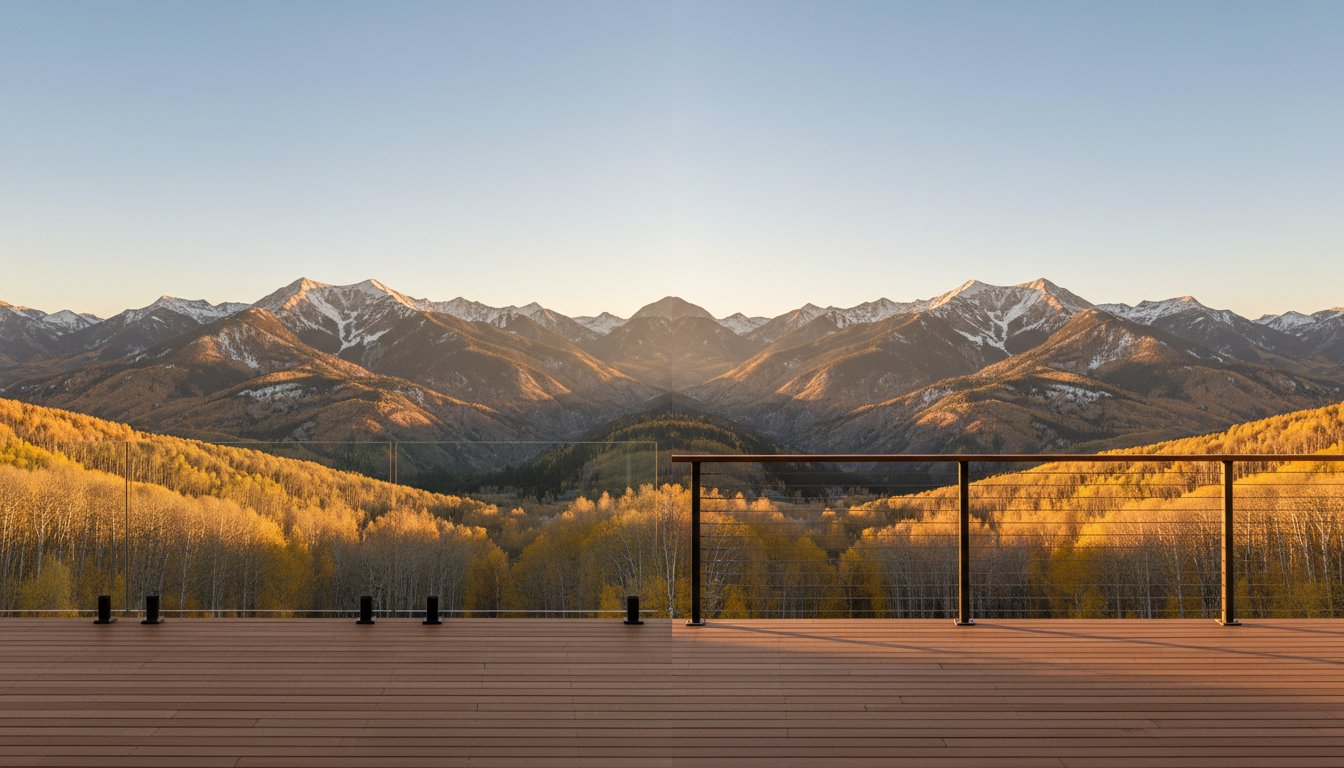
The most sophisticated architectural element in a Park City residence isn’t the one that draws the eye, but the one that allows it to wander. You’ve likely stood on a Wasatch Range balcony and felt that even a 1/8-inch stainless cable creates a visual lattice over the landscape, or perhaps you’ve worried that glass panels would require constant attention in our dusty, high-altitude winds. It’s a tension between the desire for an unobstructed horizon and the reality of Summit County’s rigorous safety standards.
This guide provides a technical analysis of glass vs cable railing for mountain homes, focusing on how these materials respond to the 40-degree diurnal temperature swings common in the Rockies. We’ll explore the engineering behind 98% transparent structural glazing and the industrial nuances of cable systems to help you select a solution that honors the “Mountain Modern” philosophy. From local building code compliance to long-term ROI, we’ll detail the precise trade-offs required to perfect your home’s connection to the outdoors.
Key Takeaways
- Learn how to select the ideal architectural solution by weighing the aesthetic and technical trade-offs of glass vs cable railing for mountain homes in high-altitude environments.
- Discover how frameless glass configurations, including standoff and base shoe systems, provide unparalleled transparency for Park City’s most prestigious panoramas.
- Explore the minimalist appeal of high-grade stainless steel cable railings and their unique ability to blend seamlessly into the rugged mountain landscape.
- Identify the critical engineering requirements necessary for railing systems to withstand the extreme snow loads and intense UV radiation characteristic of the Utah climate.
- Understand why precision craftsmanship and custom-engineered solutions are essential for maintaining structural integrity and safety on complex mountain terrain.
The Architectural Dilemma: Preserving Park City Views
In the high-altitude environment of the Wasatch Range, architecture serves as a bridge between human comfort and the raw majesty of nature. Railings are no longer mere safety features; they’ve evolved into critical design elements that define the perimeter of mountain modern estates. This aesthetic relies on the deliberate fusion of organic textures like reclaimed cedar or local stone with the sharp, clean lines of industrial components. When a homeowner invests in a property overlooking Snyderville Basin, the primary objective is visual continuity. Standard railings, often bulky and opaque, create a visual cage that fragments the landscape. The 2026 invisible railing concept centers on structural minimalism where the barrier serves as a silent, high-performance medium that dissolves the boundary between the interior living space and the alpine horizon.
The Priority of Transparency in Summit County
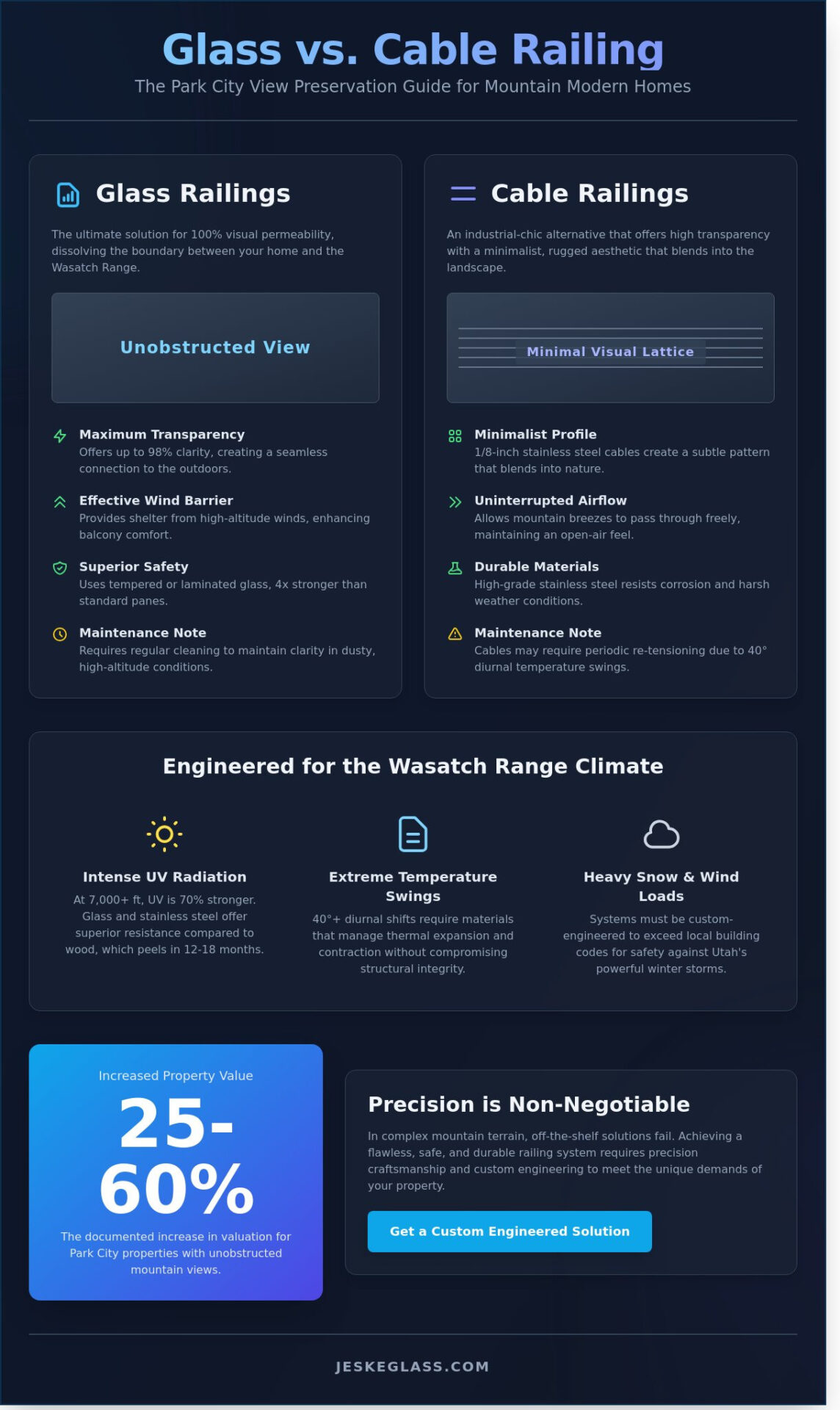
For Park City residents, transparency isn’t just a design choice; it’s a financial and psychological imperative. Real estate data from 2023 indicates that unobstructed mountain views can increase property valuations by 25% to 60% compared to similar structures with blocked sightlines. Both glass and cable systems prioritize this clarity, removing the mental friction caused by traditional balusters. This transparency fosters an open-concept deck environment where the transition from the Great Room to the exterior feels seamless. While some worry about privacy, the strategic use of topographic positioning allows for a sense of seclusion without sacrificing the expansive feeling of a 180-degree vista. Choosing between glass vs cable railing for mountain homes requires a deep understanding of how light interacts with the surrounding peaks at different times of day.
Why Traditional Materials are Fading
The era of heavy timber and ornate wrought iron is ending in luxury mountain builds. These materials often conflict with the sleek silhouettes favored by modern architects. Beyond aesthetics, the harsh climate of Summit County poses significant challenges. At elevations exceeding 7,000 feet, UV radiation is roughly 70% more intense than at sea level, causing traditional wood stains to peel and crack within 12 to 18 months. Maintenance becomes a relentless cycle that many owners wish to avoid. Modern builders now prioritize low-profile, high-durability metals and tempered glass that withstand extreme thermal expansion. Every installation must strictly adhere to building code requirements for railings to ensure that safety remains as robust as the aesthetic is refined. The shift toward these innovative materials reflects a broader commitment to longevity and architectural integrity in the face of Utah’s demanding seasons. This transition ensures that the home remains a sanctuary where the view is the centerpiece, rather than a distraction behind a lattice of decaying wood.
Glass Railings: The Ultimate Transparency for Luxury Homes
For Park City estates, the landscape isn’t just a backdrop; it’s the primary architectural asset. When choosing between glass vs cable railing for mountain homes, the decision often hinges on how much of that view you’re willing to compromise. A frameless glass system offers 100% visual permeability, effectively dissolving the boundary between the interior living space and the Wasatch Range. This transparency allows the home to feel integrated into the mountain rather than separated from it.
Homeowners typically select from three primary structural configurations. Standoff systems utilize heavy-duty stainless steel pins to “float” glass panels against the fascia, creating a minimalist profile. Base shoe systems hide the structural support in a metal channel for a clean, bottom-up look that emphasizes the glass surface. Post-mounted systems provide a more traditional architectural rhythm, using vertical supports to frame the panels. Each choice impacts the final silhouette of the residence and its relationship with the surrounding terrain.
Engineering for Safety and Clarity
Safety in high-altitude environments requires rigorous adherence to railing safety and construction codes. In 2026, the distinction between tempered glass vs annealed glass remains a critical point of education for our clients. Tempered glass is 4 times stronger than standard glass, while laminated layers ensure that if a break occurs, the fragments remain bonded to an interlayer. For Park City homes at 7,000 feet, we specify glass thickness of 12mm to 19mm to withstand wind loads exceeding 90 mph. Anti-reflective coatings are also essential, as they reduce glare from the intense high-altitude sun by up to 98%.
Beyond the visual appeal, glass serves as a structural windbreak. This thermal barrier can increase the ambient temperature on a balcony by 5 to 10 degrees, effectively extending the outdoor season into the shoulder months of late October and early May. It creates a microclimate that allows for comfortable outdoor dining even when mountain breezes become brisk.
The Aesthetic Versatility of Glass
Modern mountain architecture thrives on the juxtaposition of heavy and light elements. Glass integrates seamlessly with 12-inch timber beams or reclaimed stone masonry. While many prefer the “floating” look of clear panels, frosted or tinted options provide privacy for hot tubs or master suites without sacrificing the modern profile. This flexibility makes glass a superior choice when considering glass vs cable railing for mountain homes where privacy and vista must coexist. If you’re ready to elevate your home’s exterior, explore our architectural glass solutions to see how we transform mountain views into living art.
Cable Railings: The Industrial-Chic Alternative
While glass provides an uninterrupted canvas for the Wasatch Range, cable systems offer a structured, linear elegance that resonates with the rugged character of Utah’s topography. The minimalist appeal of stainless steel cables lies in their architectural transparency. By utilizing thin, high-tensile strands, these systems create an optical illusion where the horizontal lines seem to dissolve into the background. This allows homeowners to maintain a clear connection with the outdoors without the maintenance profile of large glass panes. When debating glass vs cable railing for mountain homes, the choice often hinges on whether you prefer the invisible barrier of glass or the rhythmic, industrial precision of steel.
Durability remains a non-negotiable factor in Park City, where elevations exceed 7,000 feet and winter temperatures frequently plummet below zero. We specify Marine-grade 316 stainless steel for these environments because its molybdenum content provides superior resistance to chlorides and salt de-icers. Standard 304 steel often succumbs to surface oxidation in harsh mountain climates, but 316 grade maintains its luster through decades of heavy snowfall and freeze-thaw cycles. It’s a material choice that reflects a commitment to longevity and engineering excellence.
Structural Integrity and Tension
The engineering of a cable system is defined by its tension. A properly installed railing utilizes mechanical swaging to ensure each cable remains taut, preventing the unsightly sag that compromises both aesthetics and safety. Precision is vital here. Local regulations are strict, particularly regarding the 4-inch sphere rule. This mandate ensures that a four-inch sphere cannot pass through any opening in the railing, a critical safety measure for families. Adhering to building code requirements for railings ensures that the tension levels meet the necessary lateral load-bearing standards, typically requiring cables to withstand significant pressure without deflecting beyond legal limits. Maintenance is straightforward; a biannual check of the tensioning terminals and a wipe-down with a specialized cleaner will keep the system performing at its peak.
Style Pairings for Mountain Homes
Cable railings offer exceptional versatility in material composition. For a Mountain Contemporary aesthetic, pairing stainless cables with a broad cedar or mahogany top rail introduces a necessary organic warmth that softens the coldness of the steel. Conversely, all-black powder-coated aluminum or steel frames provide a sharp, high-contrast edge that defines the perimeter of a modern deck. This design language isn’t limited to the exterior. We often see these systems mirrored in interior loft spaces to create a cohesive architectural narrative. Applying the glass vs cable railing for mountain homes logic indoors allows for better airflow and light penetration in high-ceilinged great rooms, maintaining the home’s expansive feel while ensuring structural security.
Climate Considerations: Snow, Wind, and UV in Utah
Park City’s geography demands more than just aesthetic consideration; it requires an engineering response to extreme environmental stressors. At elevations exceeding 7,000 feet, the structural integrity of a residence faces relentless tests from the elements. Choosing between glass vs cable railing for mountain homes involves understanding how these materials respond to 300 to 400 inches of annual snowfall and intense high-altitude solar exposure. Every component, from the mounting brackets to the infill material, must withstand the freeze-thaw cycles that characterize the Wasatch Back.
The Snow Load Challenge
In the high-altitude environment of Utah, snow isn’t just a visual element; it’s a significant structural load. Solid glass panels can act as a “snow fence,” causing drifts to accumulate against the railing. This creates immense lateral pressure. Engineers must specify thicker tempered glass or reinforced mounting systems to manage these forces. Cable railings offer a functional advantage here. The open design allows snow to shed naturally through the lines, preventing the buildup that can lead to deck drainage issues or excessive weight on the perimeter. To prevent ice buildup on glass surfaces, we often recommend specialized hydrophobic coatings that encourage moisture to bead and roll away before it freezes.
Maintenance Realities in the Mountains
The thin atmosphere in Park City allows for higher concentrations of UV radiation, which increases by approximately 10% to 12% for every 1,000 feet of elevation gain. This intensity can degrade inferior finishes on hardware and cause discoloration in low-quality laminates. Premium architectural glass and marine-grade stainless steel are essential for longevity. Maintenance cycles differ significantly between the two systems:
- Glass Railings: These require periodic cleaning to remove mountain pollen, dust, and mineral spots from snowmelt. While the transparency is unmatched, smudges are visible.
- Cable Railings: These are more forgiving with “invisible” dust. The thin profile of the cables hides environmental debris well. However, they require annual tension checks to ensure the lines haven’t slackened during the extreme temperature shifts between summer and winter.
The choice ultimately hinges on whether the homeowner prioritizes the absolute clarity of structural glazing or the rugged, lower-maintenance profile of steel cables. Both systems, when engineered with precision, provide safety and elegance. If you are ready to elevate your property’s exterior with a system designed for the Utah climate, explore our bespoke glass solutions for mountain residences.
Structural stability remains our primary focus. We ensure that every installation accounts for the wind tunnel effects common on mountain ridges, where gusts can reach 70 miles per hour. By utilizing point-fixing systems or heavy-duty base channels, we guarantee that your view remains secure regardless of the season.
The Jeske Precision: Custom Engineering for Park City
Generic railing kits frequently fail when faced with the volatile topography of the Wasatch Range. While a pre-fabricated system might function on a level suburban patio, Park City architecture demands a higher level of technical rigor. Mountain homes often feature complex elevations, varying deck gradients, and integrated natural stone elements that lack uniform surfaces. Our approach utilizes custom glass Utah expertise to ensure that every structural component accounts for these environmental variables. With over 70 years of combined experience in high-end glass installation, we understand that the debate between glass vs cable railing for mountain homes often comes down to the quality of the engineering behind the aesthetic.
We act as the vital link between an architect’s ambitious vision and the uncompromising laws of structural physics. It’s not enough for a railing to look transparent; it must withstand wind loads that can exceed 90 miles per hour in exposed canyons. Our team evaluates the specific load-bearing requirements of your property, ensuring that the attachment points are secure and the glass thickness is calibrated for maximum safety. This meticulous planning prevents the common issues of rattling panels or sagging cables that plague inferior installations.
3D Laser Measuring for a Perfect Fit
Precision is the foundation of every successful luxury build. We employ advanced 3D laser scanning technology to create a digital twin of your deck or balcony before a single piece of glass is cut. This process is essential for mountain homes where stone pillars or timber beams may have shifted or settled over time. By capturing measurements within a 1/16th inch margin of error, we eliminate the need for unsightly shims or oversized gaps. This technical accuracy ensures that transitions between glass panels remain seamless, maintaining the “invisible” look that makes glass the premier choice for preserving mountain views.
Your Local Park City Partner
Working with a local specialist provides distinct advantages when navigating the specific building codes of Summit County. We’re intimately familiar with local requirements for rail heights and snow load distribution, ensuring your project passes inspection without delays. Because we handle fabrication locally, we provide faster project timelines than out-of-state competitors. We don’t just deliver materials; we provide a collaborative partnership that prioritizes the longevity of your investment. If you’re ready to elevate your home’s exterior with professional engineering, you can Request a free estimate for your Park City railing project today.
- Expertise: 70+ years of specialized glass installation experience.
- Technology: 3D laser measuring for sub-millimeter accuracy.
- Compliance: Deep knowledge of Summit County and Park City building regulations.
- Durability: Engineering designed for high-altitude wind and snow loads.
Elevating Your Park City Architectural Legacy
The decision between glass vs cable railing for mountain homes hinges on your specific relationship with the surrounding landscape. Glass systems offer a seamless transition to the outdoors, while cable railings introduce a rhythmic, industrial elegance that defines a space without obstructing it. Both must be engineered to withstand Utah’s relentless snow cycles and wind pressures. It’s a choice that shapes the daily experience of your home’s most vital viewpoints.
Jeske Glass brings a combined 70+ years of local glass expertise to this selection process, ensuring every detail meets the highest architectural standards. We employ advanced 3D laser technology to capture precise site dimensions, which allows for a sophisticated fit that traditional methods can’t replicate. Our specialization in Park City and Salt Lake County luxury homes means we understand the structural demands of high-altitude environments. We don’t just install railings; we craft enduring boundaries that prioritize both safety and aesthetic purity.
Get a Free Estimate for Your Custom Railing Project
We look forward to helping you realize a vision that captures the true essence of mountain living.
Frequently Asked Questions
Which is more expensive in Park City: glass or cable railing?
Glass railings typically require a higher initial investment than cable systems because of the specialized manufacturing and installation expertise required for structural glazing. According to the 2024 Cost vs. Value Report, premium architectural glass projects command a higher price point due to the weight of the tempered panels and the precision of the hardware. The long-term value remains high as these installations don’t require the periodic tensioning often associated with cable alternatives.
Do glass railings meet Summit County building codes for safety?
Yes, glass railings meet the 2021 International Residential Code standards adopted by Summit County when they’re engineered with laminated tempered glass. These systems are designed to withstand a concentrated load of 200 pounds applied at the top rail. Because a solid glass panel doesn’t have openings, it naturally exceeds the 4 inch sphere rule that governs safety for children and pets in residential construction.
How often do I need to clean glass railings in a mountain environment?
Most Park City homeowners find that a thorough cleaning twice per year is sufficient to maintain the clarity of their glass vs cable railing for mountain homes. Unlike coastal regions, the Utah mountains lack salt spray, so maintenance usually involves removing seasonal pollen or dust. Applying a professional hydrophobic coating can reduce water spots by 60 percent, allowing the panels to stay pristine with minimal effort between seasons.
Are cable railings safe for homes with small children or pets?
Cable railings are safe for families if they’re installed with a maximum 3 inch spacing to ensure that the cables don’t deflect beyond the legal 4 inch limit. To address the “ladder effect” where children might try to climb horizontal strands, many 2026 mountain designs utilize vertical cable configurations. This orientation maintains the industrial aesthetic while providing a climb-resistant barrier that satisfies the most stringent safety concerns.
Can I use glass railings on an uneven or sloped mountain deck?
You can install glass railings on sloped or complex terrain by using custom-milled panels that are cut to the specific angle of your deck’s pitch. We use digital templates to ensure each piece of glass follows the contour of the architecture with 1 millimeter accuracy. This bespoke approach ensures that even the most challenging ridge-line properties can achieve a seamless, transparent perimeter without compromising structural integrity.
Do cable railings rust in the Utah winter snow?
High-quality cable systems won’t rust in the Utah winter if they’re constructed from Grade 316 stainless steel. This specific alloy contains molybdenum, which provides 50 percent more resistance to corrosion from de-icing salts and heavy snow melt compared to standard steel. Choosing marine-grade components ensures that the hardware remains bright and functional even after decades of exposure to Park City’s harsh alpine climate.
Which railing type is better for high-wind areas like ridge lines?
Glass railings are the preferred choice for high-wind environments because they function as a transparent windbreak, extending the time you can comfortably spend outdoors. When evaluating glass vs cable railing for mountain homes, glass panels can reduce wind velocity on a terrace by up to 90 percent. This creates a calm microclimate on your deck while protecting your view from the turbulence common on exposed mountain peaks.
How does the 3D laser measuring process work for custom railings?
The 3D laser measuring process uses a digital scanner to capture 2 million data points per second, creating a perfect three-dimensional map of your installation site. This technology identifies slight variations in the deck level that the human eye can’t see. By designing the railing system based on this digital twin, we ensure that every post and glass panel fits perfectly the first time, eliminating the need for on-site adjustments.